
Lenovo Legion Go S Retail Mini-Game Case Study: When the Game Becomes the Product Demo
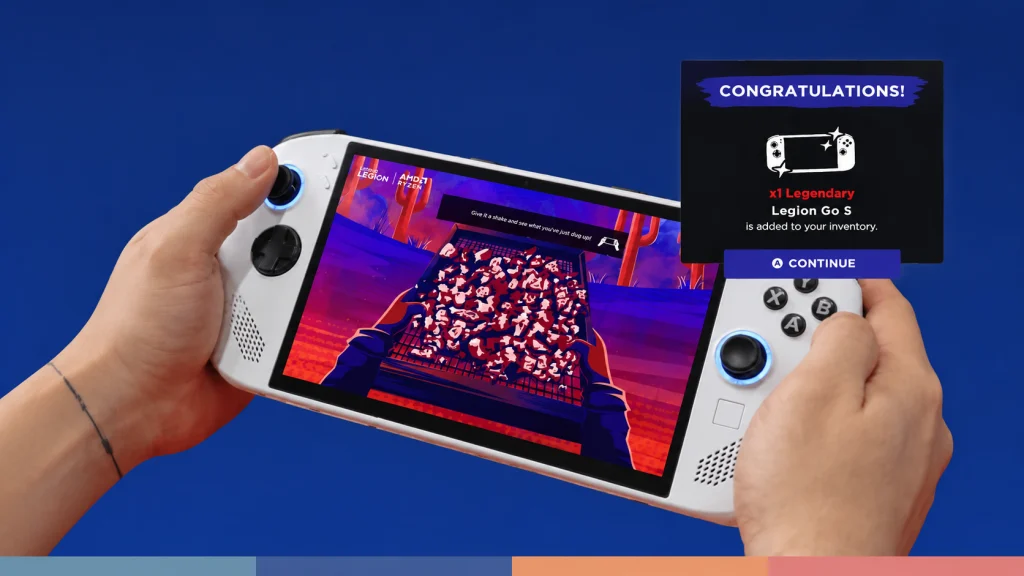
Home Services Our Works Gamification 101 Gamification Case Studies Turnkey Product Game Based Assessment Potentia Level Up RCD Contact English Bahasa Indonesia English Home Services Our Works Gamification 101 Gamification Case Studies Turnkey Product Game Based Assessment Potentia Level Up RCD Contact English Bahasa Indonesia English Home Services Our Works Gamification 101 Gamification Case Studies Turnkey Product Game Based Assessment Potentia Level Up RCD Contact English Bahasa Indonesia English Home Services Our Works Gamification 101 Gamification Case Studies Turnkey Product Game Based Assessment Potentia Level Up RCD Contact English Bahasa Indonesia English Edit Template Lenovo Legion Go S Retail Mini-Game Case Study: When the Game Becomes the Product Demo The Lenovo Legion Go S has three control innovations (gyro, touch, tilt) that do not translate to a spec sheet on a retail shelf. Level Up powered by Agate built a retail mini-game in which every mechanic maps to one of those hardware capabilities. Gyro steering tests motion tracking, touch swipe tests rapid input, and tilt-based selection tests spatial control without buttons. The format is designed for a 90-second in-store session with a zero learning curve, so walk-in customers can engage immediately. This format works best for products where differentiation is sensory, such as haptics, button feel, motion control, or screen response. The handheld gaming category has a retail-floor problem. Every device on the shelf looks similar in its box. Specs differentiate, but specs do not translate into the 90-second decision that a walk-in customer actually makes. The Lenovo Legion Go S has three control innovations: gyro motion tracking, rapid touch input, and tilt-based spatial selection. None of those land via a spec sheet. They land when the customer’s hands learn what the device can do. This case study describes how Level Up powered by Agate solved that retail problem by turning the demo into a game. The Retail Problem in One Line A box on a shelf cannot show you what gyro feels like. This is the core problem for any product whose advantage is sensory. The spec sheet is read by buyers who already know they want the product. Walk-in customers usually decide based on what they can experience in the first 90 seconds at the display, and a sensory advantage that is never experienced is functionally invisible. The Design Brief The team set four design constraints for the activation, each tied directly to the retail context. A mini-game that is playable on the demo unit, not on a separate device. Zero learning curve, with a 90-second floor session that any walk-in customer can complete. Every game mechanic maps to a specific hardware capability of the device. The ‘demo experience’ and the ‘feature explanation’ become the same thing, so the customer does not need a salesperson narrating the spec sheet. Mechanic-to-Capability Mapping The most important design decision was the explicit mapping between game mechanics and hardware capabilities. Each mechanic in the game was selected because it could only be played well using a specific feature of the Legion Go S. Gyro Steering Maps to Motion Tracking The steering mechanic uses small wrist motion rather than a thumbstick. The customer’s hands learn that the device tracks fine motion accurately, without anyone needing to explain that the gyroscope is the differentiator. The hardware feature becomes a felt capability rather than a bullet point. Touch Swipe Maps to Rapid Input The swipe mechanic relies on the screen reading rapid input directly, with no controller layer. The customer learns that the screen is responsive at speed, which is what the device’s touch capability actually provides. The mechanic cannot be played well on a device with slower screen response, which makes the demo a real differentiation test. Tilt Selection Maps to Spatial Control The selection mechanic uses tilt-based input that works regardless of how the device is held. The customer experiences spatial control without buttons, which is the practical benefit of tilt-based selection. The mechanic also makes the device feel comfortable in any orientation, which becomes a sensory memory tied to the brand. Side-by-Side: Traditional Retail Demo vs Game-Based Retail Demo Dimension Traditional Retail Demo Game-Based Retail Demo Format Salesperson explains specs Customer plays a mini-game on the device Cognitive load Customer parses technical claims Customer learns through motion and play Behavioral memory Low, the spec sheet fades quickly High, motor memory is durable Time to engage Depends on salesperson availability Walk-up and play, no staff dependency Feature visibility Stated but not felt Felt directly through gameplay Brand association Mostly logo and packaging Brand tied to a sensory experience Table 1. Side-by-side comparison of a traditional retail demo and a game-based retail demo, based on the Lenovo Legion Go S activation built by Level Up powered by Agate. Why the Format Works The mechanism behind this format is simple. Traditional retail demo creates a moment in which the salesperson explains a spec, the customer nods, and the customer walks away with limited behavioral memory of the device. A game demo creates a moment in which the customer’s body learns the input. Motor memory is denser than memory of marketing copy, and the product becomes physically associated with the brand in the customer’s mind. Lenovo’s published case write-up frames the outcome qualitatively, focusing on engagement time at the display, product memorability, and perception of innovation. The specific numbers behind retail-activation lift are typically reported privately between agency and client. The publishable part is the design principle, and the design principle is reusable across the category. Where This Format Fits Best The retail mini-game format is most useful when a product’s differentiation is sensory rather than purely functional. Categories where this fits include the following. Handheld devices with haptic feedback, motion control, or screen response that does not appear on a spec sheet. Audio products where the differentiator is feel, frequency response, or noise cancellation. Smart home and wearable products where the value is the moment-to-moment interaction. Automotive showroom experiences for features like driver assist, gesture control, or steering response. Any product where the salesperson is the bottleneck for differentiation. The Broader Level Up Brand Engagement Pattern The Legion Go S retail mini-game sits within a broader brand engagement pattern that Level
World Cup 2026 and Roblox: The Indonesian Brand Activation Window CMOs Should Not Miss
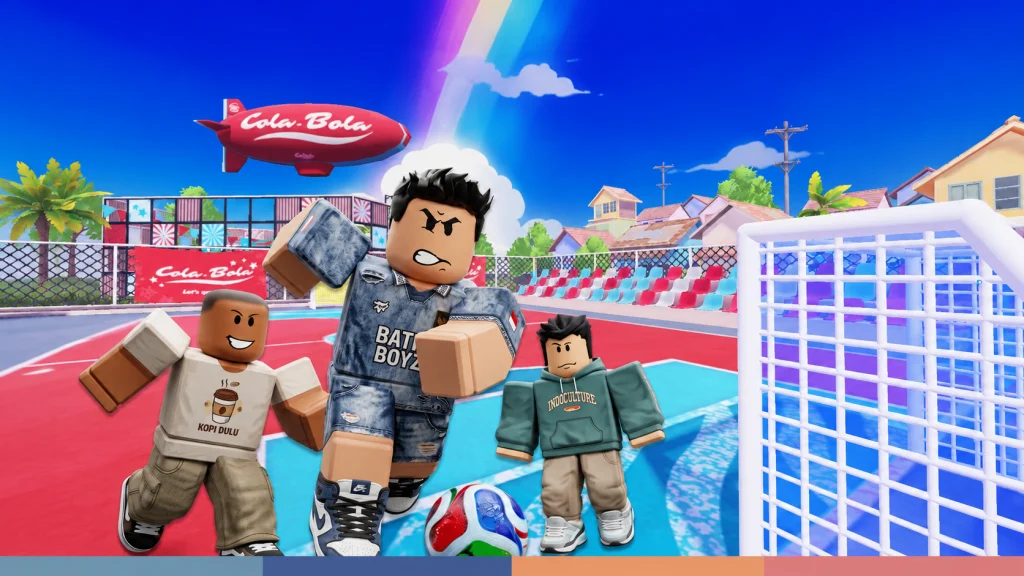
Home Services Our Works Gamification 101 Gamification Case Studies Turnkey Product Game Based Assessment Potentia Level Up RCD Contact English Bahasa Indonesia English Home Services Our Works Gamification 101 Gamification Case Studies Turnkey Product Game Based Assessment Potentia Level Up RCD Contact English Bahasa Indonesia English Home Services Our Works Gamification 101 Gamification Case Studies Turnkey Product Game Based Assessment Potentia Level Up RCD Contact English Bahasa Indonesia English Home Services Our Works Gamification 101 Gamification Case Studies Turnkey Product Game Based Assessment Potentia Level Up RCD Contact English Bahasa Indonesia English Edit Template World Cup 2026 and Roblox: The Indonesian Brand Activation Window CMOs Should Not Miss Roblox has 7.2 million monthly active users in Indonesia, mostly Gen Z and Alpha, which makes it the largest single Gen Z marketing surface in the country. World Cup 2026 is the most-distributed digital event in history, and brand attention from Gen Z is concentrated around it for a limited window. The GrindBlox 3-mechanic playbook for World Cup activation uses UGC jerseys with brand watermark, a branded mini-stadium with event mechanics, and pitch-side virtual ads. Indonesian cultural twists matter. The 3-in-1 stadium with main football pitch, sepak takraw mini-court, and public futsal pitch, plus warung kaki lima food stalls, is what separates a local activation from a copied global template. Brief windows for World Cup activation close near the end of July because production lead time is a minimum of 8 weeks. World Cup 2026 is the most-distributed digital event in history. For Indonesian brands, the most underestimated marketing surface around it is not television or social. It is Roblox. The reason is simple. Roblox has 7.2 million monthly active users in Indonesia, mostly Gen Z and Alpha, and the platform is actively expanding its ad infrastructure in 2026 with UGC monetization and homepage ad inventory. Combined with World Cup attention, this creates a marketing window that closes when the briefs do. Why This Window Closes Faster Than Most CMOs Realize Production lead time for a high-quality Roblox brand activation is a minimum of 8 weeks. The brief window for World Cup activations therefore closes near the end of July, not when the tournament starts. Brands that begin scoping in August or September will land after the peak attention window. This is the planning constraint most Indonesian CMOs underestimate. The marketing window for the event is months wide, but the production window is much narrower. The GrindBlox 3-Mechanic Playbook for World Cup 2026 Across the GrindBlox brand activation portfolio, three mechanics have proven to work for sports and event-tied campaigns in the Indonesian Roblox audience. Mechanic 1: UGC Jerseys With Brand Watermark Users customize jerseys inside the experience, and the brand watermark stays visible across all variants. The viral loop is the strongest in the playbook because avatars wear the jerseys in other games across Roblox, which spreads the brand beyond the original world. UGC jerseys behave less like an ad and more like a wearable that the user wants to keep. Mechanic 2: Branded Mini-Stadium With Event Mechanic A standalone world with scheduled events such as match prediction and mini-game watch parties. The mini-stadium produces concentrated engagement during the event windows and provides always-on inventory outside the event window. The event mechanic gives the brand a reason to invite users back, which is the most important driver of week-2 retention. Mechanic 3: Pitch-Side Virtual Ads Rotating inventory in the stadium, with click-through to web or Roblox shop. This is the most familiar format for brand teams transitioning from traditional sports sponsorship, because the format mirrors physical pitch-side advertising. It works best as a layer on top of the mini-stadium, not as a standalone activation. The Indonesian Cultural Layer That Separates Local From Global Global brand templates rarely land in the Indonesian Roblox audience because the cultural texture is different. The GrindBlox local playbook adds specific Indonesian elements that turn a generic football world into one that Indonesian Gen Z players actually want to spend time in. Main football pitch with a FIFA-tier mode that ties directly to World Cup hype. Sepak takraw mini-court in the stadium plaza, which brings Asian sport heritage into the experience with a trick-shot mechanic. Public futsal pitch, which is the favorite informal sport of Indonesian Gen Z, played in a casual mode. Virtual food stalls based on warung kaki lima, used as loyalty rewards. Indonesian supporter chants and national team scarf customization for cultural identification. Side-by-Side: The 3 Mechanics at a Glance Mechanic Main Strength Viral or Retention? UGC jerseys with brand watermark Cross-world brand visibility Viral spread Branded mini-stadium with events Scheduled engagement and always-on inventory Retention Pitch-side virtual ads Click-through to web or Roblox shop Direct response Table 1. The 3 mechanics of the GrindBlox World Cup 2026 playbook, with the main strength and primary marketing outcome of each. Why GrindBlox Has Proven Capability for This GrindBlox already operates a Roblox world with more than 118,000 visits, used as the live capability proof for Indonesian brand activations. The Indonesian cultural activation layer is scalable and measurable, and the World Cup football tier is built on top of this proven capability rather than as a from-zero experiment. For brands deciding between agencies, the most useful diligence question is not which agency has the best deck. It is which agency has a live Roblox world with real Indonesian Gen Z traffic that you can play right now. Frequently Asked Questions (FAQ) How long does a Roblox brand activation usually take? Light activations such as a single-zone mini-game can be built in a shorter timeline. Full custom worlds with sustaining content are longer. The real range becomes clear after Discovery and Design, which together produce the scope document that drives the Build estimate. How big is Roblox in Indonesia in 2026? Roblox has 7.2 million monthly active users in Indonesia in 2026, mostly Gen Z and Alpha. This makes it the largest single Gen Z and Alpha marketing surface in the country. Why is World Cup 2026 specifically a Roblox opportunity? World Cup 2026 is the most-distributed digital event in history, and the Roblox audience is in the same age bracket that drives most cultural and brand attention around the event.