
Exploring the Current State of AR & VR in Education
Home Services Our Works Gamification 101 Case Studies Turnkey Event Contact Languages Home Services Our Works Gamification 101 Case Studies Turnkey Event Contact Languages Home Services Our Works Gamification 101 Case Studies Turnkey Event Contact Languages Home Services Our Works Gamification 101 Case Studies Turnkey Event Contact Languages Edit Template Exploring the Current State of AR & VR in Education The world of education has witnessed a significant transformation in recent years with the integration of Augmented Reality (AR) and Virtual Reality (VR) technologies. These immersive technologies have revolutionized the way students learn and interact with educational content. In this article, we will delve into the current state of AR & VR in education, highlighting their benefits, challenges, and potential applications for businesses and institutions. The Rise of AR & VR in Education AR and VR technologies have gained immense popularity in the education sector due to their ability to enhance the learning experience. According to a report by ClassPoint, the use of AR and VR in education is expected to increase dramatically over the next five years. This growth is driven by the increasing adoption of these technologies in various educational settings, from primary schools to universities. Benefits of AR & VR in Education AR and VR technologies offer numerous benefits for students and educators alike. Some of the key advantages include: Enhanced Engagement AR and VR technologies have been shown to increase student engagement and participation in the learning process. By providing immersive and interactive experiences, these technologies can captivate students’ attention and make learning more enjoyable. Personalized Learning AR and VR technologies can be tailored to individual students’ needs, allowing for personalized learning experiences. This can be particularly beneficial for students with special needs or those who require additional support. Cost-Effective AR and VR technologies can be more cost-effective than traditional teaching methods. For instance, VR field trips can replace expensive physical trips, reducing costs and increasing accessibility. Challenges of AR & VR in Education While AR and VR technologies offer numerous benefits, there are also several challenges that need to be addressed. Some of the key challenges include: Content Creation The creation of high-quality AR and VR content can be time-consuming and expensive. This can be a significant barrier to adoption, particularly for smaller educational institutions. Accessibility AR and VR technologies require specialized hardware and software, which can be a barrier to accessibility for some students. Cyber-Sickness Some students may experience cyber-sickness, a condition characterized by dizziness, nausea, and headaches, when using VR technology. This can be a significant challenge for educators who need to ensure the well-being of their students. Applications of AR & VR in Education AR and VR technologies have a wide range of applications in education. Some of the key areas where these technologies are being used include: Simulation-Based Learning AR and VR technologies can be used to create simulation-based learning experiences that mimic real-world scenarios. This can be particularly beneficial for subjects such as medicine, aviation, and the military. Language Learning AR and VR technologies can be used to create immersive language learning experiences that simulate real-world conversations and interactions. Science and Technology AR and VR technologies can be used to create interactive and engaging science and technology lessons that make complex concepts more accessible and understandable. Conclusion AR and VR technologies have the potential to revolutionize the way we learn and interact with educational content. While there are challenges to adoption, the benefits of these technologies make them an exciting and promising area of development for the education sector. For businesses and institutions looking to stay ahead of the curve, investing in AR and VR technologies can be a valuable strategy for enhancing the learning experience and improving student outcomes. Frequently Asked Questions Q: What are the benefits of using AR and VR in education? A: AR and VR technologies offer numerous benefits for students and educators alike, including enhanced engagement, personalized learning, and cost-effectiveness. Q: What are the challenges of using AR and VR in education? A: Some of the key challenges of using AR and VR in education include content creation, accessibility, and cyber-sickness. Q: How can businesses and institutions get started with AR and VR in education? A: Businesses and institutions can start by exploring the various applications of AR and VR in education and identifying areas where these technologies can be used to enhance the learning experience. They can also consider partnering with educational institutions and technology providers to develop and implement AR and VR-based educational programs. Q: How can Level Up powered by Agate help businesses and institutions with AR and VR in education? A: Level Up powered by Agate can help businesses and institutions with marketing, increase return on investment, finding the right candidate for hiring, create a more effective assessment, and so on. If you are interested in learning more about gamification and how it can benefit you or your organization Check out our gamification services page and contact us today. We are ready to help you create a gamification experience that aligns with your needs and preferences. All Posts All Literasi Keuangan Lebih Baik dengan Gamifikasi: Kolaborasi dengan Bank Jago October 30, 2024/ Level Up powered by Agate Berpartisipasi sebagai Pembicara di Studium Generale BINUS University October 24, 2024/ Aplikasi Gamifikasi Terbaik untuk Pendidikan October 4, 2024/ Menciptakan Game yang Menyenangkan untuk Upaya Pemasaran October 3, 2024/ Bagaimana Membangun Game Dapat Memberdayakan Bisnis Anda October 2, 2024/ Contoh Gamifikasi Terbaik yang Perlu Kamu Ketahui October 1, 2024/ Memilih Partner Gamification dengan Perusahaan Pengembang Game September 30, 2024/ Memanfaatkan Mini Game dalam Aplikasi Loyalitas untuk Meningkatkan Keterikatan Pelanggan September 27, 2024/ Apakah VR dalam Pendidikan Menjanjikan? September 26, 2024/ Load More End of Content. All company names, brand names, trademarks, logos, illustrations, videos and any other intellectual property (Intellectual Property) published on this website are the property of their respective owners. Any non-authorized usage of Intellectual Property is strictly prohibited and any violation will be prosecuted under the law. © 2023 Agate.
Is Immersive Virtual Reality the Future? We Explain Why!
Home Services Our Works Gamification 101 Case Studies Turnkey Event Contact Languages Home Services Our Works Gamification 101 Case Studies Turnkey Event Contact Languages Home Services Our Works Gamification 101 Case Studies Turnkey Event Contact Languages Home Services Our Works Gamification 101 Case Studies Turnkey Event Contact Languages Edit Template Is Immersive Virtual Reality the Future? We Explain Why! Immersive Virtual Reality (VR) is swiftly moving from a niche technology to a mainstream tool, with applications sprawling across various industries, from healthcare to real estate, education to entertainment. As technology continues to advance and accessibility improves, immersive VR is poised to redefine our interaction with digital content. In this article, we delve into why immersive VR is likely the future of digital interaction, and how it is reshaping industry standards and consumer expectations. What is Immersive Virtual Reality? Defining Immersive VR Immersive VR refers to a fully-engulfing visual and sensory experience that transports users to a virtual world. Utilizing head-mounted displays (HMDs), spatial audio, and sometimes haptic feedback systems, immersive VR creates a compelling sense of presence that makes the virtual feel real. Defining Immersive VR Immersive VR refers to a fully-engulfing visual and sensory experience that transports users to a virtual world. Utilizing head-mounted displays (HMDs), spatial audio, and sometimes haptic feedback systems, immersive VR creates a compelling sense of presence that makes the virtual feel real. Technological Foundations At its core, immersive VR relies on advanced technologies such as 6DoF (six degrees of freedom) tracking, which allows users to move naturally in the virtual space. High-resolution displays and real-time rendering contribute to the realism, making immersive VR particularly effective for training simulations and experiential marketing. Statistical Insights and Advancements According to a report by MarketsandMarkets, the immersive VR sector is expected to grow from USD 10.5 billion in 2019 to over USD 34 billion by 2024, indicating a robust expansion driven by applications in training, education, and marketing. Businesses are finding that VR not only enhances learning outcomes with an increase in retention rates by up to 75% but also significantly boosts customer engagement and brand loyalty. The Evolution of Immersive VR Technological Advancements The rapid advancement in VR technology has significantly reduced barriers to entry. Modern VR headsets offer higher resolutions, wider field of view, and more accurate tracking systems, making the experience increasingly realistic and engaging. These improvements not only enhance user satisfaction but also expand the use cases for VR across different sectors. Increasing Accessibility As hardware costs decrease and VR software becomes more ubiquitous, immersive VR is becoming more accessible to the general public. This democratization of technology is crucial for its adoption on a global scale, ensuring it reaches a critical mass of users and industries. Why Immersive VR is the Future Enhanced Immersive Experiences Immersive VR uniquely offers a three-dimensional, interactive environment that traditional screens cannot provide. This capability allows users to feel truly present in a digital world, which is invaluable for applications such as virtual travel, immersive education, and detailed training simulations. Transformative Educational and Training Tools In education and training, immersive VR has shown to improve retention rates and engagement significantly. For example, medical students using VR can perform surgical procedures in a risk-free, controlled environment, enhancing their learning speed and comprehension. The recent surge in remote work has highlighted the need for better virtual collaboration tools. Immersive VR can create virtual workspaces that mimic the dynamics of real office environments and facilitate a new level of collaboration among global teams. In entertainment, VR is pushing the boundaries of storytelling and user interaction, providing experiences that are profoundly engaging and personal. Social VR platforms, where users can interact with each other in a fully virtual environment, are also gaining traction, redefining social connectivity. Level Up Powered by Agate: Pioneering in Immersive VR Level Up powered by Agate is at the forefront of developing immersive VR solutions that cater to businesses looking to harness the power of this technology. By integrating immersive VR into their operations, businesses can enhance their training programs, marketing strategies, and customer engagement initiatives, ultimately leading to increased ROI and improved customer satisfaction. Conclusion Immersive VR is not just a fleeting trend; it is rapidly becoming a fundamental technology that is reshaping how we interact with the world and each other. With its ability to deliver highly engaging, personalized experiences, immersive VR holds the potential to revolutionize industries, making it a pivotal element in the future of digital interaction. Frequently Asked Questions Q: What industries can benefit most from immersive VR? A: While almost all industries can benefit from VR, sectors like healthcare, education, real estate, and entertainment are currently seeing the most significant impacts due to their high reliance on visual and experiential content. Q: Are there any risks associated with immersive VR? A: Challenges include the potential for VR sickness due to prolonged use, privacy concerns with data collection in VR, and the need for substantial initial investments in VR setup and content creation. Q: How can businesses start integrating immersive VR? A: Businesses should start by identifying areas where VR can significantly impact, such as training, product demos, or customer service, and then partner with experienced VR developers like Level Up powered by Agate to create tailored solutions. Q: Is immersive VR cost-effective in the long run? A: Yes, while the initial setup for immersive VR can be costly, the long-term benefits of improved training efficiency, enhanced customer experiences, and innovative marketing can outweigh the initial investments. If you are interested in learning more about gamification and how it can benefit you or your organization Check out our gamification services page and contact us today. We are ready to help you create a gamification experience that aligns with your needs and preferences. All Posts All Literasi Keuangan Lebih Baik dengan Gamifikasi: Kolaborasi dengan Bank Jago October 30, 2024/ Level Up powered by Agate Berpartisipasi sebagai Pembicara di Studium Generale BINUS University October 24, 2024/ Aplikasi Gamifikasi Terbaik untuk Pendidikan October 4, 2024/
Create Powerful Gamified VR Education Apps (We Can Help!)
Home Services Our Works Gamification 101 Case Studies Turnkey Event Contact Languages Home Services Our Works Gamification 101 Case Studies Turnkey Event Contact Languages Home Services Our Works Gamification 101 Case Studies Turnkey Event Contact Languages Home Services Our Works Gamification 101 Case Studies Turnkey Event Contact Languages Edit Template Create Powerful Gamified VR Education Apps (We Can Help!) In today’s educational landscape, the integration of gamification and Virtual Reality (VR) is revolutionizing how institutions engage with learners. Gamified VR education apps not only enhance learning experiences but also significantly improve retention rates and engagement, making them indispensable tools for educational institutions and businesses alike. This article explores the immense benefits of gamified VR apps, supported by statistics and unique insights, and discusses how Level Up powered by Agate can assist organizations in developing these cutting-edge educational tools. The Impact of Gamified VR in Education Enhanced Engagement and Retention Studies show that VR can increase retention rates by up to 75% and boost engagement significantly compared to traditional learning methods. When combined with gamification elements like points, badges, and leaderboards, these apps create an immersive learning environment that motivates and captivates learners, encouraging continuous interaction and study. Tailored Learning Experiences Gamified VR apps allow for highly personalized learning pathways. Adaptive learning technology can adjust challenges and content in real-time based on the user’s performance, providing a customized experience that caters to the needs of diverse learners. A 2020 study in the International Journal of Emerging Technologies in Learning (IJETL) emphasizes the importance of learning analytics in identifying student progress and knowledge gaps ([learning analytics in VR]). Gamified VR can track user progress through challenges, quizzes, and interactions within the virtual world. This data can then be analyzed to pinpoint areas where a learner might be struggling, allowing educators or the VR platform to provide targeted support and resources. Practical Application and Skill Development By simulating real-world scenarios, VR apps enable learners to practice skills in a risk-free environment. This is particularly beneficial in fields such as medicine, engineering, and business, where practical experience is crucial. For instance, medical students using VR can perform surgical procedures in a controlled, virtual setting, enhancing their skills without the risks associated with real-life practice. Diverse Applications of VR in Education Language Learning VR apps can transform language learning by simulating real-world conversations and cultural immersions. For instance, students can practice Spanish by navigating a virtual marketplace in Barcelona or improve their English while interacting with virtual characters in New York. Importantly, VR also holds significant potential for teaching sign language, providing an interactive environment where students with hearing disabilities can learn and practice sign language through visual and kinesthetic experiences. Geography Virtual reality can take students on immersive journeys around the world. From the Amazon rainforest to the Sahara Desert, VR enables exploration of diverse ecosystems and cultures without leaving the classroom. This not only enhances geographic literacy but also fosters a deeper understanding of global interconnections. History VR can bring historical events to life, allowing students to witness historical events or explore ancient civilizations firsthand. Through these vivid reenactments, students gain a deeper appreciation and understanding of historical contexts and their impacts on modern society. Science For science courses, VR can offer virtual labs where students conduct experiments in physics, chemistry, or biology that might be too dangerous or expensive to perform in a school setting. These simulations can help clarify complex theories through hands-on practice and real-time manipulation of scientific elements. Mathematics VR apps can help demystify complex mathematical concepts by visualizing them in three dimensions. For example, students can interact with geometric shapes, visualize algebraic equations, and explore calculus functions in a more intuitive and engaging way. Art In art education, VR provides a virtual canvas and an unlimited supply of materials for creative expression. Students can create 3D sculptures and paintings in an immersive setting, explore different styles, and learn about art history by visiting virtual galleries featuring digital replicas of famous artworks from around the world. These diverse applications showcase the flexibility and vast potential of VR in revolutionizing educational methodologies across various disciplines. By leveraging these technologies, educators can create a dynamic learning environment that caters to all students, making complex subjects more accessible and engaging. Level Up Powered by Agate: Your Partner in VR Education Level Up powered by Agate has demonstrated a strong track record in developing innovative educational applications, blending gamification with practical learning objectives. A prime example of their expertise is seen in their collaboration with PT Bank Jago Tbk to create Jago Money Quest. This financial literacy app employs gamification to teach users about managing finances effectively using the UN Financial Health Framework. The app simulates various financial scenarios across eight game levels, guiding players from their student days to their early professional careers. This immersive approach helps players understand the importance of comprehensive factors such as health and time when making financial decisions, not just monetary ones. Additionally, Level Up has partnered with Universitas Gadjah Mada to develop Batique, a game-based intelligence assessment tool. This pioneering project showcases how gamification can be utilized in higher education to assess and enhance students’ cognitive abilities in an engaging and innovative way. Batique is a testament to Level Up’s ability to create VR education apps that are not only educational but also deeply engaging, making complex concepts more accessible and enjoyable for learners. These projects illustrate Level Up powered by Agate’s capability in creating effective educational solutions that cater to the specific needs of learners in diverse fields. With their extensive experience and creative approach, Level Up is an ideal partner for institutions looking to harness the power of VR and gamification in education. Conclusion Gamified VR education apps offer a future-forward approach to learning and training, providing immersive, engaging experiences that improve both educational outcomes and business processes. With the expert assistance of Level Up powered by Agate, organizations can harness the full potential of these innovative tools to achieve their strategic objectives.
Finding VR App Developers for Gamified Training

Home Services Our Works Gamification 101 Case Studies Turnkey Event Contact Languages Home Services Our Works Gamification 101 Case Studies Turnkey Event Contact Languages Home Services Our Works Gamification 101 Case Studies Turnkey Event Contact Languages Home Services Our Works Gamification 101 Case Studies Turnkey Event Contact Languages Edit Template Finding VR App Developers for Gamified Training As businesses and institutions increasingly recognize the value of immersive learning, the demand for skilled VR app developers specializing in gamified training solutions has surged. Gamified training leverages the engaging elements of games and the immersive quality of virtual reality to enhance learning outcomes, boost retention, and motivate learners. This article explores key considerations when searching for VR app developers capable of creating effective gamified training experiences, with insights that go beyond common knowledge. Understanding the Market Landscape The Rise of VR in Training Virtual reality has proven to be particularly effective in training environments across various industries. According to a report by Grand View Research, the global VR market in education and training is expected to grow significantly, driven by the increasing adoption of e-learning solutions and technological advancements in VR software and hardware. This trend underscores the growing need for VR developers who can integrate gamification strategies effectively. Specialized Skills and Experience Finding a VR developer who not only understands the technical aspects of VR but also grasps the nuances of gamified learning is crucial. Developers with experience in gamification understand how to apply game mechanics such as points, levels, and rewards in a training context to enhance engagement and learning outcomes. Key Considerations for Choosing VR Developers Finding the right VR app developers for gamified training can be a challenging task. However, by following these tips, you can increase your chances of finding the right developer for your business or institution: Portfolio and Past Projects Review the developer’s previous projects to assess their experience and success in creating VR applications, especially those that include gamified elements. Look for diversity in their projects and attention to user engagement and educational outcomes. Understanding of Educational Objectives A competent VR developer should demonstrate a robust understanding of how gamification can meet educational goals. They should be able to align game mechanics with learning outcomes to ensure the VR training program is both engaging and effective. Technical Proficiency and Tools Ensure the developers are proficient in the latest VR development tools and platforms, such as Unity or Unreal Engine. Their ability to use advanced features and create scalable VR solutions is essential for delivering high-quality training applications. Client Testimonials and Reviews Client feedback can provide insights into the developer’s reliability, support, and ability to deliver projects on time and within budget. Positive testimonials from previous clients, particularly from similar industries, are a strong indicator of a developer’s expertise and professionalism. Level Up Powered by Agate: Tailoring VR Solutions Level Up powered by Agate specializes in creating customized VR solutions for gamified training. Their expertise in integrating immersive technologies with gamification elements makes them an ideal partner for businesses and institutions looking to enhance their training programs. Level Up’s approach ensures that each VR solution is tailored to meet specific training objectives, thereby maximizing engagement and ROI. Conclusion Selecting the right VR app developer for gamified training involves understanding both the technical skills required and the unique aspects of gamified learning. With the VR training market expanding rapidly, partnering with experienced developers like those at Level Up powered by Agate can help institutions and businesses achieve their educational and training objectives, enhancing both learner engagement and overall ROI. Frequently Asked Questions Q: What are the benefits of using VR for training? A: VR training offers immersive, interactive experiences that can significantly improve learning retention, engage learners effectively, and provide hands-on practice in a safe, controlled environment. Q: How does gamification enhance VR training? A: Gamification introduces elements like points, badges, and leaderboards into the training scenario, which can increase motivation, encourage competition, and make learning more enjoyable and effective. Q: What should I look for in a VR development company? A: Key aspects include experience in VR and gamification, a proven track record with similar projects, strong client testimonials, and an understanding of educational objectives. Q: How can VR training impact ROI? A: VR training can reduce training costs, decrease training time, and improve employee performance and satisfaction, all of which contribute to a positive ROI. Q: How does Level Up powered by Agate ensure the effectiveness of their VR training solutions? A: Level Up works closely with clients to understand their specific needs and tailors VR solutions that align with the organization’s training goals and industry standards, ensuring effectiveness and relevance. If you are interested in learning more about gamification and how it can benefit you or your organization Check out our gamification services page and contact us today. We are ready to help you create a gamification experience that aligns with your needs and preferences. All Posts All Literasi Keuangan Lebih Baik dengan Gamifikasi: Kolaborasi dengan Bank Jago October 30, 2024/ Level Up powered by Agate Berpartisipasi sebagai Pembicara di Studium Generale BINUS University October 24, 2024/ Aplikasi Gamifikasi Terbaik untuk Pendidikan October 4, 2024/ Menciptakan Game yang Menyenangkan untuk Upaya Pemasaran October 3, 2024/ Bagaimana Membangun Game Dapat Memberdayakan Bisnis Anda October 2, 2024/ Contoh Gamifikasi Terbaik yang Perlu Kamu Ketahui October 1, 2024/ Memilih Partner Gamification dengan Perusahaan Pengembang Game September 30, 2024/ Memanfaatkan Mini Game dalam Aplikasi Loyalitas untuk Meningkatkan Keterikatan Pelanggan September 27, 2024/ Apakah VR dalam Pendidikan Menjanjikan? September 26, 2024/ Load More End of Content. All company names, brand names, trademarks, logos, illustrations, videos and any other intellectual property (Intellectual Property) published on this website are the property of their respective owners. Any non-authorized usage of Intellectual Property is strictly prohibited and any violation will be prosecuted under the law. © 2023 Agate. All rights reserved. Home Services Our Works Contact Gamification 101 Case Studies Gamification for Marketing Gamification for Learning Instagram Linkedin Twitter Facebook Youtube
What is the Biggest Virtual Reality Company?
Home Services Our Works Gamification 101 Case Studies Turnkey Event Contact Languages Home Services Our Works Gamification 101 Case Studies Turnkey Event Contact Languages Home Services Our Works Gamification 101 Case Studies Turnkey Event Contact Languages Home Services Our Works Gamification 101 Case Studies Turnkey Event Contact Languages Edit Template What is the Biggest Virtual Reality Company? In the dynamic world of virtual reality (VR), industry giants are defining the future of immersive technologies. For businesses and institutions aiming to incorporate VR into their operations—whether for marketing, training, or enhancing operational efficiency—it’s crucial to understand who leads the market and why. This article explores the major VR companies, their impacts, and unique offerings, while highlighting specific ways businesses can leverage VR for growth. The Titans of Virtual Reality Meta Platforms (Facebook) After acquiring Oculus VR in 2014 for $2 billion, Meta Platforms has become synonymous with consumer-focused virtual reality experiences. With a strong push towards creating an interconnected VR ecosystem, Meta is not just selling hardware but also fostering a platform for immersive social and gaming experiences. Sony Interactive Entertainment Sony’s PlayStation VR (PSVR) is another key player, capitalizing on its robust gaming ecosystem. As one of the best-selling VR headsets, PSVR has made VR more accessible to the mainstream gaming community, blending high-quality VR experiences with popular gaming titles. HTC Vive HTC Vive targets the premium segment of the VR market, offering high-end VR solutions particularly favored for enterprise applications. HTC has focused on expanding VR’s use beyond gaming, into realms like simulation training and professional development. Valve Corporation Valve, with its Valve Index, has carved out a space for itself among VR enthusiasts seeking high fidelity experiences. Known for its superior tracking and display technology, Valve Index is a favorite for its quality and the extensive library of VR content available through SteamVR. How VR is Transforming Business and Institutional Practices VR technology is revolutionizing several business practices: Marketing: VR creates deeply immersive marketing experiences that are more engaging than traditional media. Training and Simulation: VR provides realistic simulations in safe, controlled environments, ideal for training employees in various scenarios without the associated risks. Recruitment and Assessment: VR can simulate job-specific tasks for potential hires, providing a deeper insight into candidate capabilities and fit. Level Up powered by Agate: Tailored VR Solutions Level Up powered by Agate excels in developing custom VR solutions that align with business objectives. With a robust portfolio that includes: Venhall Venhall revolutionizes the concept of virtual events by merging gaming excitement with traditional event platforms’ functionality. This solution is ideal for hosting immersive trade shows, conferences, and exhibitions. It provides event organizers with a versatile and customizable virtual venue while offering participants an engaging and immersive experience. Venhall represents the fusion of gamification and practicality, transforming how industry-specific events are conducted. More about Venhall Sky Cage Sky Cage is an on-ground crowd activation VR game that combines virtual reality with physical props, enhancing user immersion and interaction. Players must escape from a high-rise prison by solving puzzles before time expires, creating a thrilling escape experience that captivates participants and onlookers alike, fostering genuine reactions and engagement. Explore Sky Cage Fire Drill Training Simulation This VR simulation offers a realistic and immersive experience of navigating a building during a fire. It’s designed to train participants in recognizing dangers and responding effectively to emergencies, thereby increasing safety awareness and preparedness in high-stress situations. Learn about Fire Drill Training These offerings demonstrate Level Up’s capability to blend innovative VR content with strategic business applications, enhancing ROI, marketing reach, and operational efficiency. Conclusion The landscape of VR companies is diverse, with leaders like Meta, Sony, HTC, and Valve each bringing unique strengths to the table. For businesses looking to leverage VR, partnering with an experienced provider like Level Up powered by Agate can ensure that VR initiatives are not only innovative but also aligned with strategic business objectives. As VR continues to evolve, its potential to transform business practices only grows, making it an essential consideration for future-oriented companies. Frequently Asked Questions Q: What should businesses consider when choosing a VR company? A: Key considerations include the company’s track record, the relevance of their VR offerings to specific business needs, and the scalability of solutions. Q: How does VR enhance customer engagement? A: VR offers immersive experiences that are more interactive and memorable than traditional engagement methods, significantly enhancing customer interaction and satisfaction. Q: What are the risks of investing in VR for businesses? A: Risks include the high cost of technology, the need for continuous content development, and ensuring the VR experiences remain compatible with rapidly evolving VR hardware. Q: Can VR technologies provide a tangible ROI? A: Absolutely. VR can significantly enhance training and operational processes, reduce costs associated with traditional methods, and create standout marketing that drives sales and brand loyalty. Q: How do Level Up’s VR solutions cater to specific business needs? A: Level Up collaborates closely with clients to understand their unique challenges and objectives, designing VR solutions that are both innovative and directly aligned with business goals. If you are interested in learning more about gamification and how it can benefit you or your organization Check out our gamification services page and contact us today. We are ready to help you create a gamification experience that aligns with your needs and preferences. All Posts All Literasi Keuangan Lebih Baik dengan Gamifikasi: Kolaborasi dengan Bank Jago October 30, 2024/ Level Up powered by Agate Berpartisipasi sebagai Pembicara di Studium Generale BINUS University October 24, 2024/ Aplikasi Gamifikasi Terbaik untuk Pendidikan October 4, 2024/ Menciptakan Game yang Menyenangkan untuk Upaya Pemasaran October 3, 2024/ Bagaimana Membangun Game Dapat Memberdayakan Bisnis Anda October 2, 2024/ Contoh Gamifikasi Terbaik yang Perlu Kamu Ketahui October 1, 2024/ Memilih Partner Gamification dengan Perusahaan Pengembang Game September 30, 2024/ Memanfaatkan Mini Game dalam Aplikasi Loyalitas untuk Meningkatkan Keterikatan Pelanggan September 27, 2024/ Apakah VR dalam Pendidikan Menjanjikan? September 26, 2024/ Load More End of Content. All company
Should You Build a Virtual Reality Website? The Pros & Cons for Businesses

Home Services Our Works Gamification 101 Case Studies Turnkey Event Contact Languages Home Services Our Works Gamification 101 Case Studies Turnkey Event Contact Languages Home Services Our Works Gamification 101 Case Studies Turnkey Event Contact Languages Home Services Our Works Gamification 101 Case Studies Turnkey Event Contact Languages Edit Template Should You Build a Virtual Reality Website? The Pros & Cons for Businesses Virtual Reality (VR) should be accessible to everyone because it has the potential to enable exploration, play, and creation in amazing new ways. However, VR is currently quite complicated since it is still quite a niche. Developers may need to learn a new language to create VR content and then invest additional time to ensure compatibility across multiple headsets. Moreover, users must possess the appropriate headset to experience VR content. The complexity of VR undermines its potential. Developers should be able to create VR content quickly and share it with everyone, regardless of the device they use. This vision parallels the ease of sharing content on the web but within the realm of VR. This is the concept of a virtual reality website, making VR experiences accessible to all via the web. Here’s how it works: Imagine you’re browsing the web and stumble upon a virtual reality experience. Simply click the link, put on your headset, and voila! You’re immersed in VR. Developers can construct virtual reality website experiences just as they would build web content utilizing JavaScript. Since it operates within a browser, it’s straightforward to ensure compatibility with various VR devices, whether it’s a smartphone, computer, or an entire VR room. The Current Virtual Reality Websites Pioneering Examples Several pioneering VR websites offer inspiration and demonstrate the potential of virtual reality websites in web design: Google’s WebVR This platform allows users to explore VR experiences directly through their browsers, making VR more accessible to a broader audience without the need for expensive hardware. Dance Tonite by Google An interactive VR music experience that uses room-scale VR to bring users into a dynamic dance scene, showcasing the potential of VR in creating engaging user content. Showroom by Little Workshop This virtual showroom provides a three-dimensional, interactive exploration space, demonstrating how products can be showcased and explored in VR. ZOO A VR experience that invites users to explore artistic expressions in a virtual space, pushing the boundaries of how art can be interacted with and perceived online. These are just a few examples of what virtual reality websites can do, and these innovations in VR have begun to inspire other companies and organizations. Consequently, virtual reality websites offer boundless potential for enriching user experience and fostering greater engagement. The Pros of Building a Virtual Reality Website Enhanced User Engagement VR websites can captivate users like no other medium. By offering an immersive experience, businesses can hold a user’s attention longer and create a memorable brand experience. For sectors like real estate, tourism, and retail, VR allows customers to explore properties, destinations, or products in three-dimensional space, providing a level of interaction and engagement that traditional images or videos cannot match. Competitive Advantage Adopting VR on a website can give businesses a significant competitive edge. Being an early adopter of this technology showcases a brand as innovative and forward-thinking. It can differentiate a company from competitors, attracting tech-savvy consumers and those seeking novel experiences. Improved Conversion Rates VR experiences can be incredibly persuasive. For example, a VR car showroom lets potential buyers explore different models and customization options virtually, which can increase the likelihood of a purchase. Similarly, architectural firms using VR can help clients visualize a finished project more effectively, leading to quicker decision-making and increased satisfaction. The Cons of Building a Virtual Reality Website High Development Costs One of the most significant barriers to entry for VR websites is the cost. Developing a fully interactive VR experience requires significant investment in both technology and expertise. Businesses need to consider the cost of VR content creation, software development, and ongoing maintenance and updates. Technology Limitations and Accessibility While VR technology is advancing rapidly, it still has limitations. Not all consumers have access to VR headsets or the necessary computing power to run sophisticated VR experiences. Additionally, designing a VR website that is accessible to people with disabilities can present challenges, potentially excluding a portion of the market. Potential for Low ROI The return on investment (ROI) for a VR website may not always justify the initial costs, especially for small to medium-sized enterprises. The effectiveness of a VR website heavily depends on the industry and target audience. If the target demographic is less inclined to use VR technology, the impact and benefits of a VR website might be minimal. Balancing the Decision When deciding whether to invest in a VR website, businesses should consider their specific needs, budget, and customer base. Industries that benefit most from visual displays (like real estate, travel, or high-end retail) are more likely to see a favorable ROI. It’s also crucial to consider the brand’s long-term strategy and how VR aligns with its goals. Conclusion A virtual reality website can offer businesses a unique tool for engaging with customers and providing immersive experiences that promote brand loyalty and increase sales. However, the decision to build one must be carefully weighed against the potential high costs, technological challenges, and uncertain ROI. Businesses considering this step should conduct thorough market research, consult with VR development experts, and carefully analyze their financial capability and technological readiness. Ultimately, while a VR website can be a game-changer for some, it is not a one-size-fits-all solution and should be pursued with a clear understanding of the strategic benefits and risks involved. Frequently Asked Questions Q: What are the main benefits of implementing a virtual reality website for a business? A: The primary benefits include enhanced user engagement through immersive experiences, a competitive edge as an early adopter of innovative technology, and improved conversion rates by allowing customers to explore products and environments virtually. Q: What
VR Education Apps Ideas for the Classroom in Higher Education

Home Services Our Works Gamification 101 Case Studies Turnkey Contact Home Services Our Works Gamification 101 Case Studies Turnkey Contact Home Services Our Works Gamification 101 Case Studies Turnkey Contact Home Services Our Works Gamification 101 Case Studies Turnkey Contact Edit Template VR Education Apps Ideas for the Classroom in Higher Education As higher education continues to evolve, universities and colleges are increasingly turning to Virtual Reality (VR) to enhance the learning experience. VR education apps can provide immersive, interactive experiences that are not possible through traditional teaching methods. These apps can help students in higher education grasp complex concepts, experience real-world applications of their studies, and engage more deeply with their learning material. This article explores several innovative VR education app ideas that can be integrated into higher education settings to revolutionize classroom learning. Innovative VR Education App Ideas for Higher Education Virtual Labs and Simulations In fields such as chemistry, biology, physics, and engineering, practical labs are crucial for understanding complex theories. VR can create detailed simulations of laboratory environments where students can conduct experiments without the risk of handling dangerous substances or expensive equipment. These virtual labs can offer scenarios that mimic real-life challenges engineers or scientists might face, providing practical problem-solving experiences. Architectural and Spatial Design Architecture and design students can benefit immensely from VR apps that allow them to visualize and walk through their 3D models. These tools can help students better understand spatial relationships and design aesthetics, and also facilitate more interactive critiques between students and instructors. Historical and Cultural Immersion History and cultural studies courses can use VR to transport students back in time or to distant places. Whether it’s walking through ancient Rome, experiencing the 1963 March on Washington, or exploring an indigenous tribe, VR can bring historical events and cultures to life, providing a richer context and a deeper understanding of the subject matter. Medical and Anatomical Education Medical students can use VR apps to perform virtual surgeries or dissections, offering hands-on experience without the ethical concerns or logistical challenges of working with real cadavers. These apps can simulate different scenarios a doctor might encounter, from routine procedures to emergency situations, enhancing decision-making skills under pressure. Business and Entrepreneurial Simulation VR can simulate real-world business environments where students can practice negotiations, pitches, and other business interactions. For entrepreneurship education, VR can create simulations of startup environments, allowing students to experience the lifecycle of a company from inception to market execution without real-world consequences. Language and Cultural Competence VR environments that simulate immersion in a language and culture can greatly enhance language learning. Students can interact with native speakers, navigate everyday situations, and practice language skills in a variety of real-life contexts, speeding up the learning process and improving their cultural awareness. Implementation Strategies For successful integration of virtual reality in higher education, institutions should consider the following strategies: Collaborative Projects: Utilize VR to facilitate collaborative projects among students, even those who may be participating remotely. This promotes teamwork and enhances communication skills in a virtual setting. Enhanced Accessibility: Ensure that VR content is accessible to all students, including those with disabilities, by incorporating features that adjust to various needs. Professional Development: Offer training sessions for faculty and staff to become proficient in using VR technology and integrating it into their teaching. Feedback and Iteration: Regularly collect feedback from students and educators on VR experiences to continuously improve the content and its delivery. Conclusion VR education apps in higher education can transform traditional learning environments, providing students with immersive, interactive experiences that enhance understanding and retention. By adopting VR technology, institutions can offer innovative, engaging educational experiences that prepare students more effectively for their professional futures. As VR technology continues to evolve, its integration into higher education settings is likely to expand, offering even more possibilities for enhancing educational outcomes. Frequently Asked Questions Q: What are the key benefits of using VR education apps in higher education? A: VR education apps enhance learning by providing immersive, interactive experiences that help students understand complex concepts, simulate real-world applications, and increase engagement with course material. These apps can also facilitate hands-on training in safe, controlled environments, which is particularly beneficial in fields like medicine, engineering, and science. Q: How can VR apps be integrated into the higher education curriculum? A: VR apps can be integrated by aligning them with specific course objectives, using them to supplement traditional lectures with practical, immersive experiences. Institutions should provide training for faculty to ensure effective implementation and consider developing custom VR content that specifically addresses the unique needs of different academic disciplines. Q: What are the challenges of implementing VR in higher education? A: Challenges include the high cost of VR hardware and software development, the need for technical support and infrastructure, and ensuring accessibility for all students. Additionally, there can be a learning curve for both instructors and students in adapting to this new form of technology-enhanced learning. Q: Are there specific disciplines that benefit more from VR apps? A: While VR can enhance learning in virtually any discipline, fields that involve complex spatial relationships, practical simulations, or visual learning (such as STEM fields, architecture, and medical training) tend to benefit the most from immersive VR experiences. Q: Can VR replace traditional learning methods in higher education? A: VR should not be seen as a replacement for traditional learning methods but rather as a powerful complement that enhances educational experiences. It offers unique advantages in simulating real-life situations and providing immersive learning, which traditional methods cannot fully replicate. If you are interested in learning more about gamification and how it can benefit you or your organization Check out our gamification services page and contact us today. We are ready to help you create a gamification experience that aligns with your needs and preferences. All Posts All Mengapa Kita Perlu Gamification di dalam Marketing? February 28, 2024/ Mengapa Pengembang Game Lebih Unggul dalam Menyediakan Solusi Gamifikasi January 22, 2024/ Bagaimana Astra International Menggunakan Asesmen berbasis Game untuk
How Virtual Experiences Are Transforming Gamification

Home Services Our Works Gamification 101 Case Studies Turnkey Event Contact Languages Home Services Our Works Gamification 101 Case Studies Turnkey Event Contact Languages Home Services Our Works Gamification 101 Case Studies Turnkey Event Contact Languages Home Services Our Works Gamification 101 Case Studies Turnkey Event Contact Languages Edit Template How Virtual Experiences Are Transforming Gamification Gamification has long been a powerful tool in engaging and motivating users across various sectors. Recently, the integration of virtual experiences has begun to reshape the gamification landscape, enhancing its effectiveness and broadening its application. This article delves into recent journal research findings, explores future possibilities, and addresses ongoing debates within the field. The Synergy Between Virtual Experiences and Gamification The fusion of virtual experiences with gamification introduces a unique level of interaction and immersion that traditional methods cannot replicate. Virtual reality (VR), augmented reality (AR), and other immersive technologies are at the forefront of this transformation, creating immersive environments that not only engage users but also deepen their involvement in gamified activities. Research Findings A systematic review titled Virtual Reality and Gamification in Education found that gamified virtual reality learning environments were more motivating, engaging, and interactive compared to traditional learning environments. Another study titled Can Virtual Reality Have a Positive Influence on Student Engagement highlighted a 23% higher pass rate and a 180% higher engagement level in students using VR as opposed to students studying via online distance learning. These studies suggest that incorporating VR into gamified learning environments can indeed increase student engagement and retention rates, although the exact figures might vary depending on the specific context and implementation. Future Exploration These findings underscore the immense potential for further exploration, particularly in how virtual experiences can revolutionize gamification strategies. The prospect of dynamically adapting virtual scenarios in real-time based on user behavior and preferences could redefine how personalized feedback and challenges are integrated within gamified systems. Further Arguments and Questions While the integration of virtual experiences into gamification presents exciting opportunities, it also raises several questions and challenges: 1. Accessibility and Inclusivity One argument posed in the Journal of Technology in Behavioral Science concerns the accessibility of VR and AR technologies, particularly for users with disabilities or those from lower socio-economic backgrounds. There is a growing need for more inclusive designs that accommodate a wider range of users. 2. Ethical Considerations Another critical debate involves the ethical implications of highly immersive virtual experiences. For instance, the extent to which they should influence user decision-making and behavior in educational or corporate settings remains a contentious issue. 3. Technological Dependence A further question raised by scholars involves the risk of over-reliance on technology in gamification strategies, potentially leading to a detachment from real-world interactions and consequences. How Level Up Powered by Agate Can Help Level Up powered by Agate, can address these challenges by developing accessible, ethical, and balanced gamified solutions that integrate virtual experiences. With a strong focus on inclusivity, Level Up ensures that its products are usable by a diverse audience. They are committed to ethical practices, ensuring that virtual experiences enhance, rather than manipulate, user decision-making. Applications and Solutions Education: Level Up can create immersive educational platforms where students experience historical events or scientific phenomena, making learning an engaging, interactive process. Corporate Training: For businesses, Level Up can design VR-enhanced training modules that simulate real-world scenarios for risk-free, hands-on practice. Healthcare: In healthcare, Level Up’s gamified VR simulations can train medical staff in complex procedures under various conditions without real-world consequences. Conclusion Virtual experiences are set to transform the gamification landscape significantly. By leveraging immersive technologies, gamification can become more engaging, personalized, and effective. Level Up powered by Agate is at the forefront of this transformation, offering innovative solutions that ensure gamification remains a powerful tool for education, training, and beyond. The research community continues to explore the boundaries of these technologies, promising even more sophisticated gamified solutions in the future. Frequently Asked Questions Q: What are virtual experiences in gamification? A: Virtual experiences in gamification refer to the use of immersive technologies such as virtual reality (VR) and augmented reality (AR) to enhance gamified applications. These technologies create interactive environments that deeply engage users, making the gamification experience more compelling and effective. Q: How do virtual experiences enhance traditional gamification methods? A: Virtual experiences add a layer of immersion that traditional gamification methods lack. By placing users in simulated environments, they can interact with scenarios that feel real, increasing engagement and motivation. This leads to higher retention rates and more profound learning or training outcomes. Q: What are the ethical considerations in using VR and AR for gamification? A: Ethical considerations include ensuring that the use of VR and AR does not manipulate user decisions or behaviors inappropriately. It’s important to use these technologies to enhance user experiences and learning outcomes without infringing on personal autonomy or privacy. Q: Can virtual experiences in gamification be accessible to all users? A: Accessibility is a major concern, but many developers, including Level Up powered by Agate, are working to make VR and AR more accessible. This includes designing interfaces that are usable by people with disabilities and creating affordable solutions that schools and businesses can implement regardless of their budget. Q: How does Level Up powered by Agate ensure the effectiveness of its VR-enhanced gamification solutions? A: Level Up powered by Agate employs rigorous testing and feedback loops to refine their solutions. They also stay abreast of the latest research and technological advances to ensure their applications are both cutting-edge and highly effective. If you are interested in learning more about gamification and how it can benefit you or your organization Check out our gamification services page and contact us today. We are ready to help you create a gamification experience that aligns with your needs and preferences. All Posts All Literasi Keuangan Lebih Baik dengan Gamifikasi: Kolaborasi dengan Bank Jago October 30, 2024/ Level Up powered by Agate Berpartisipasi sebagai Pembicara di Studium Generale BINUS University October 24, 2024/
Theory to Experience: Implementing VR Technology in Your Curriculum

Home Services Our Works Gamification 101 Case Studies Turnkey Event Contact Languages Home Services Our Works Gamification 101 Case Studies Turnkey Event Contact Languages Home Services Our Works Gamification 101 Case Studies Turnkey Event Contact Languages Home Services Our Works Gamification 101 Case Studies Turnkey Event Contact Languages Edit Template Theory to Experience: Implementing VR Technology in Your Curriculum In our previous discussion, we covered the fundamental benefits of VR in schools, types of VR content such as historical simulations and virtual field trips, and best practices for its adoption in educational settings. Highlighting the promising future of VR in education, it’s evident that this technology is not just a fleeting trend but a transformative tool poised to redefine traditional teaching methodologies. Building on that foundation, this article will delve deeper into the practical aspects of implementing VR technology in your curriculum, focusing on developing immersive and interactive content, integrating assessment methods within VR, and overcoming common technical challenges. Additionally, we’ll explore strategies to ensure inclusivity and safety for all students, ensuring that VR technology serves as a beneficial educational tool. Types of VR Content for Educational Use 1. Interactive Simulations VR enables the creation of detailed simulations that can mimic real-world processes or historical events. For instance, students can virtually participate in historical events, conduct complex scientific experiments, or explore ecosystems, all within the safety and control of the classroom. These simulations are not only engaging but also provide a hands-on learning experience that can be hard to achieve through traditional teaching methods. 2. Virtual Field Trips With VR, geographical limitations disappear. Students can visit the pyramids of Egypt, explore the surface of Mars, or dive into the depths of the ocean without leaving their classroom. These virtual field trips are particularly valuable for providing students with contextual and experiential learning opportunities that would otherwise be inaccessible due to logistical or financial constraints. 3. Skill-Based Training Certain subjects require specific skills that are often taught through repetitive practice, such as in medical, engineering, or technical education. VR can simulate environments where students can practice these skills. For example, medical students can perform virtual surgeries, which allow them to make mistakes and learn from them without the risk of harming a real patient. 4. Language and Cultural Immersion VR can immerse students in environments where language and culture intersect, offering them a unique opportunity to practice language skills in context. This can include interacting with native speakers, navigating foreign cities, or experiencing cultural festivals, which can significantly enhance language acquisition and cultural appreciation. Best Practices for Implementing VR in Your Curriculum 1. Align VR Experiences with Educational Goals It’s crucial that VR sessions are aligned with the curriculum and learning objectives. Before implementing VR, identify clear educational outcomes for each session and ensure that the content supports these goals. This alignment helps in maximizing the impact of VR learning and ensures that the technology serves as a complement to traditional teaching methods, rather than a distraction. 2. Ensure Accessibility and Inclusivity While VR offers unique educational opportunities, it’s important to ensure that all students have equal access to this technology. Consider potential barriers such as motion sickness or physical disabilities and seek VR solutions that accommodate these needs. Additionally, it provides alternative learning options for students who may not be able to participate in VR-based activities. 3. Integrate Assessment into VR Learning To effectively measure the impact of VR on learning outcomes, integrate assessment strategies that can evaluate both knowledge acquisition and the development of skills like problem-solving and critical thinking. This could be through quizzes within the VR environment or reflective assignments post-session that assess students’ understanding and ability to apply their experiences. 4. Prepare for Technical Challenges Implementing VR technology can come with technical hurdles, such as software updates, hardware management, and troubleshooting. It’s important for educators to have basic technical knowledge of the VR systems used and have support systems in place, whether through IT staff at the school or direct support from VR content providers. 5. Foster a Safe Learning Environment Create guidelines and procedures to ensure a safe environment when using VR. This includes supervising students to prevent physical accidents and discussing with them the psychological impacts of immersive experiences, especially when dealing with intense simulations or historical reenactments. Conclusion As VR technology continues to evolve, its integration into educational curricula offers exciting possibilities for enhancing student engagement and learning outcomes. By adopting best practices for implementation, educators can maximize the benefits of VR in schools, making learning an immersive, interactive, and inclusive experience. Frequently Asked Questions Q: What are the initial costs involved in integrating VR into schools? A: Costs can vary based on the VR hardware and software chosen. Initial expenses include purchasing VR headsets and possibly upgrading existing hardware to support VR software. However, many educational grants and programs can help offset these costs. Q: How can teachers without technical backgrounds manage VR technology in the classroom? A: It is essential for schools to provide professional development for teachers to get comfortable with VR technology. Additionally, choosing user-friendly VR platforms and maintaining a good relationship with VR support specialists can alleviate some of the technical burdens. Q: Can VR replace textbooks and other traditional learning materials? A: VR should be viewed as a supplementary tool that enhances traditional educational materials, not as a replacement. It offers unique experiences that are difficult to achieve through textbooks alone but works best when integrated alongside traditional educational resources. Q: Are there privacy concerns with using VR in education? A: Yes, like any technology used in schools, VR applications must comply with student privacy laws. Schools should ensure that VR content providers adhere to these regulations and that student data is protected. By addressing these practical considerations, educators can successfully incorporate VR into their curricula, opening up new and exciting pathways for student learning and engagement. If you are interested in learning more about gamification and how it can benefit you or your organization Check
Everything You Need to Implement With VR for Education in Your School
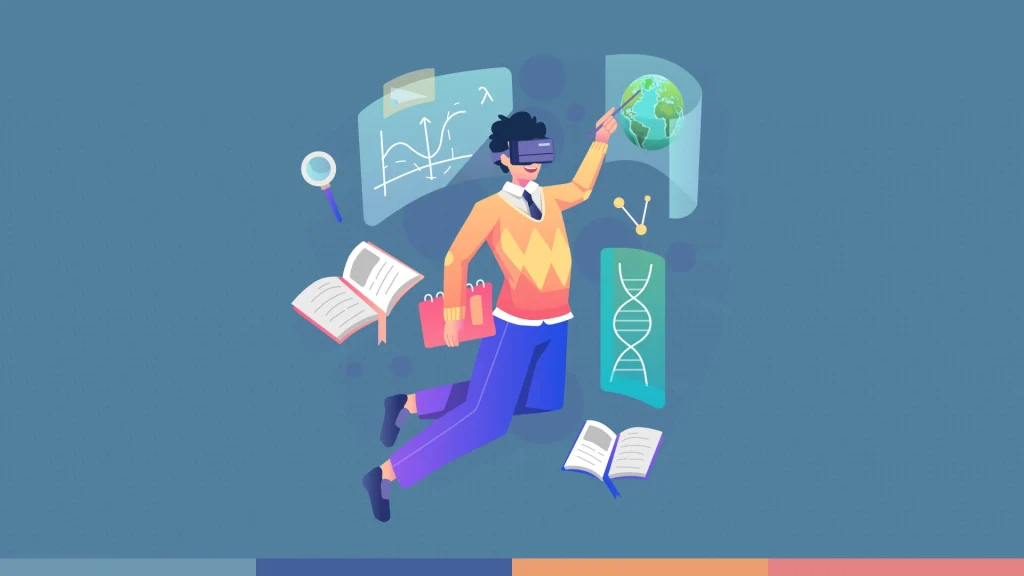
Home Services Our Works Gamification 101 Case Studies Turnkey Event Contact Languages Home Services Our Works Gamification 101 Case Studies Turnkey Event Contact Languages Home Services Our Works Gamification 101 Case Studies Turnkey Event Contact Languages Home Services Our Works Gamification 101 Case Studies Turnkey Event Contact Languages Edit Template Everything You Need to Implement With VR for Education in Your School The emergence of Virtual Reality (VR) has revolutionized education by providing immersive learning experiences that were once only imaginable in science fiction. Recent research, such as the study published in Interactive Learning Environments, highlights the significant benefits of integrating VR into school curricula. This study, involving 55 10th-grade students, reveals that VR not only enhances the perception of teaching equipment and classroom environment but also bolsters social and teaching presence. With VR’s ability to effectively convey complex, ill-structured knowledge and positively impact student interaction, attention, and interest, its implementation in schools promises a transformative shift in educational paradigms. As we explore the potential of VR in education, it becomes clear that this technology is not just a tool but a gateway to a more engaging and effective learning journey. Understanding VR in Education 1. What is VR for Education? VR for education refers to the use of virtual reality technology to create immersive learning experiences that can simulate real-world or imaginary environments. Unlike traditional learning methods, VR allows students to explore and interact with 3D worlds, providing a deeper understanding of the subject matter through experiential learning. 2. Types of VR Content for Schools Historical Simulations: Students can virtually visit ancient civilizations, walk through historical events, and interact with historical figures. Science and Biology: VR can take students inside complex biological systems or allow them to experience the vastness of space. Geographical Exploration: Students can explore different parts of the world, from the depths of the oceans to the peaks of the highest mountains, all from their classroom. Art and Design: VR offers a new dimension in art education, where students can create and walk through their 3D art creations. Benefits of Using VR in Education 1. Enhanced Engagement and Retention Studies have shown that VR can significantly increase student engagement and retention rates. The immersive nature of VR stimulates multiple senses, which can lead to better understanding and recall of information. 2. Accommodates Different Learning Styles VR caters to various learning styles, particularly visual and kinesthetic learners, by providing interactive and engaging ways to absorb information. 3. Safe Simulation of Complex Scenarios VR allows students to experiment with chemical reactions, explore hazardous geographical locations, or perform virtual dissections without any of the risks associated with real-life training. Implementing VR in Schools 1. Choosing the Right VR Hardware When integrating VR into the classroom, selecting the right hardware is crucial. Options range from more affordable mobile VR headsets to more sophisticated systems like the Meta Quest, which offer a more immersive experience. 2. Developing or Sourcing Educational VR Content While some schools might have the resources to develop their own VR content, most will likely rely on pre-existing educational VR applications available commercially. It’s important to choose content that is not only educational but also age-appropriate and aligned with curriculum standards. 3. Preparing the Classroom Environment Implementing VR in a classroom setting requires some preparation, such as ensuring there is sufficient space for students to use VR headsets safely and configuring necessary hardware like PCs or mobile devices. Best Practices for VR Integration Start Small: Begin by integrating VR into one or two lessons to see how students respond before planning a broader integration. Focus on Curriculum Alignment: Use VR as a tool to supplement and enhance the curriculum, not replace it. Ensure that VR activities are tied to learning objectives. Provide Adequate Support and Training: Both teachers and students will need guidance on how to use VR technology effectively. Consider professional development sessions for teachers. Monitor and Evaluate: Regularly assess the effectiveness of VR lessons to determine their impact on learning outcomes and student engagement. Conclusion and FAQs As VR technology continues to evolve, its potential in education settings grows. Teachers who understand and embrace this technology can provide their students with unique and powerful learning experiences that are both engaging and informative. FAQs about VR for Education Q: Is VR for education expensive? A: The cost can vary. Basic VR setups using smartphones and low-cost viewers can be very affordable, while high-end systems may require significant investment. Often, grants and educational discounts are available. Q: Can VR replace traditional teaching methods? A: VR should not be seen as a replacement but as a powerful supplement that offers experiences not possible in a traditional classroom. Q: What are the main challenges of integrating VR in schools? A: Challenges include the initial cost, the need for technical support, and ensuring content quality and relevance to the curriculum. Q: How do I ensure student safety while using VR? A: Monitor students during VR activities, use equipment according to guidelines, and ensure the content is age-appropriate. By understanding and utilizing VR, teachers can significantly enhance the educational landscape, providing students with immersive and impactful learning experiences that go beyond the textbooks. If you are interested in learning more about gamification and how it can benefit you or your organization Check out our gamification services page and contact us today. We are ready to help you create a gamification experience that aligns with your needs and preferences. All Posts All Literasi Keuangan Lebih Baik dengan Gamifikasi: Kolaborasi dengan Bank Jago October 30, 2024/ Level Up powered by Agate Berpartisipasi sebagai Pembicara di Studium Generale BINUS University October 24, 2024/ Aplikasi Gamifikasi Terbaik untuk Pendidikan October 4, 2024/ Menciptakan Game yang Menyenangkan untuk Upaya Pemasaran October 3, 2024/ Bagaimana Membangun Game Dapat Memberdayakan Bisnis Anda October 2, 2024/ Contoh Gamifikasi Terbaik yang Perlu Kamu Ketahui October 1, 2024/ Memilih Partner Gamification dengan Perusahaan Pengembang Game September 30, 2024/ Memanfaatkan Mini Game dalam Aplikasi Loyalitas untuk Meningkatkan Keterikatan Pelanggan September 27, 2024/