
How to Choose the Right Gamification App for Your Needs

Home Services Our Works Gamification 101 Case Studies Turnkey Event Contact Languages Home Services Our Works Gamification 101 Case Studies Turnkey Event Contact Languages Home Services Our Works Gamification 101 Case Studies Turnkey Event Contact Languages Home Services Our Works Gamification 101 Case Studies Turnkey Event Contact Languages Edit Template How to Choose the Right Gamification App for Your Needs Gamification has become an essential tool for enhancing engagement, whether in education, corporate training, or marketing. However, with so many options available, it can be challenging to find the right app that aligns with your specific goals. This guide will help you understand key factors to consider when choosing a gamification app to maximize its impact on your business or institution. Identify Your Objectives Before exploring different apps, it’s crucial to define your objectives clearly. Are you looking to improve student engagement, enhance training programs, or boost customer loyalty? Your goals will determine the features and functionalities required in the app. For instance, a training-focused app might require modules and assessment tools, while a customer-oriented solution would emphasize rewards and personalized offers. Consider the Audience Knowing your audience will guide you in selecting the right gamification elements: Age Group: Different age groups respond to varying gamified elements. Younger audiences may prefer colorful graphics and avatars, while adults might appreciate a cleaner, more professional design. Skill Level: An app must be adaptable to different skill levels, ensuring both beginners and advanced users can find it engaging. Feature Requirements Different gamification apps come with distinct feature sets. Here are some features to consider based on common needs: Progress Tracking: Allows users to monitor their achievements and receive personalized feedback. Adaptive Challenges: Dynamic difficulty levels keep the app challenging yet achievable. Multiplayer Capabilities: Social competition through leaderboards or team challenges can increase engagement. Data Analytics: Robust analytics help organizations track performance and adjust strategies accordingly. Integration with Existing Systems The app should integrate seamlessly with your existing platforms. For educational institutions, compatibility with Learning Management Systems (LMS) is essential. Businesses may need Customer Relationship Management (CRM) or Human Resources (HR) system integrations to streamline data flow. Budget and Scalability Choosing an app that fits your budget while also considering future scalability is important. Some apps offer flexible pricing models based on user numbers or usage frequency, which can be adjusted as your organization grows. Case Study: Level Up by Agate Level Up powered by Agate, is a versatile gamification solution that helps both educational and business institutions achieve their goals. Its customizable features adapt to specific training, marketing, and assessment needs. The platform provides comprehensive analytics and integrates with various systems to offer seamless data flow. With a focus on enhancing ROI and engagement, Level Up ensures that your objectives are met effectively. User Reviews and Community Support Before finalizing your decision, read user reviews to understand real-world experiences. Active communities and responsive support teams can be invaluable for troubleshooting and maximizing the app’s potential. Frequently Asked Questions Q: What gamification features are essential for corporate training? A: Progress tracking, quizzes, leaderboards, and adaptive challenges are crucial for monitoring employee improvement and maintaining motivation throughout training programs. Q: How do I ensure the app aligns with my teaching or training style? A: Look for apps that offer customizable modules and challenges. This way, you can tailor the experience to align with your preferred approach while catering to the audience’s needs. Q: What budget considerations should I keep in mind? A: Consider the initial cost and any ongoing subscription fees. If the app will need to grow with your organization, account for scalability costs. Q: How can a gamification app benefit my business beyond training? A: Gamification can be used in marketing campaigns to boost customer engagement, loyalty programs, and the recruitment process through engaging candidate assessments. Choosing the right gamification app requires careful consideration of your goals, audience, and required features. With the right selection, you’ll be well-positioned to leverage gamification’s power to inspire learning, boost productivity, or enhance customer loyalty effectively. If you are interested in learning more about gamification and how it can benefit you or your organization Check out our gamification services page and contact us today. We are ready to help you create a gamification experience that aligns with your needs and preferences. All Posts All Literasi Keuangan Lebih Baik dengan Gamifikasi: Kolaborasi dengan Bank Jago October 30, 2024/ Level Up powered by Agate Berpartisipasi sebagai Pembicara di Studium Generale BINUS University October 24, 2024/ Aplikasi Gamifikasi Terbaik untuk Pendidikan October 4, 2024/ Menciptakan Game yang Menyenangkan untuk Upaya Pemasaran October 3, 2024/ Bagaimana Membangun Game Dapat Memberdayakan Bisnis Anda October 2, 2024/ Contoh Gamifikasi Terbaik yang Perlu Kamu Ketahui October 1, 2024/ Memilih Partner Gamification dengan Perusahaan Pengembang Game September 30, 2024/ Memanfaatkan Mini Game dalam Aplikasi Loyalitas untuk Meningkatkan Keterikatan Pelanggan September 27, 2024/ Apakah VR dalam Pendidikan Menjanjikan? September 26, 2024/ Load More End of Content. All company names, brand names, trademarks, logos, illustrations, videos and any other intellectual property (Intellectual Property) published on this website are the property of their respective owners. Any non-authorized usage of Intellectual Property is strictly prohibited and any violation will be prosecuted under the law. © 2023 Agate. All rights reserved. Home Services Our Works Contact Gamification 101 Case Studies Gamification for Marketing Gamification for Learning Instagram Linkedin Twitter Facebook Youtube Edit Template
Are Gamification Sites Worth the Investment?
Home Services Our Works Gamification 101 Case Studies Turnkey Event Contact Languages Home Services Our Works Gamification 101 Case Studies Turnkey Event Contact Languages Home Services Our Works Gamification 101 Case Studies Turnkey Event Contact Languages Home Services Our Works Gamification 101 Case Studies Turnkey Event Contact Languages Edit Template Are Gamification Sites Worth the Investment? Gamification sites have become increasingly popular in recent years, offering a unique blend of entertainment and education. These sites use game design elements to create engaging and interactive experiences that can be applied to various aspects of life, from personal development to business and education. In this article, we’ll explore the benefits and advantages of using gamification sites, highlighting their potential to transform the way we learn, work, and interact. What are Gamification Sites? Gamification sites are designed to incorporate game-like elements into non-game contexts, such as education, marketing, or personal development. These sites use features like points, badges, leaderboards, and rewards to create a more engaging and interactive experience for users. Benefits of Gamification Sites Improved Engagement: Gamification sites have been found to increase user engagement by up to 90%, compared to traditional methods. Enhanced Retention: Interactive learning experiences have been shown to improve knowledge retention by up to 75%, compared to passive learning methods. Personalized Learning: Gamification sites can adapt to individual users’ needs and abilities, providing a more personalized learning experience. How Gamification Sites Can Help Boosting Sales Performance: Gamification sites can be used to improve sales team performance by providing interactive and engaging training experiences that enhance product knowledge and sales skills. Enhancing Employee Training: Gamification sites can be used to create more effective employee training programs, improving knowledge retention and overall performance. Customer Loyalty Programs: Gamification sites can be used to create engaging customer loyalty programs, encouraging customers to participate and engage with the brand. Level Up Powered by Agate: A Leader in Gamification Level Up powered by Agate is a leading provider of gamification solutions, offering a range of innovative and engaging experiences for various industries. Focusing on creating personalized and interactive experiences, Level Up powered by Agate has helped numerous organizations achieve significant improvements in employee engagement, customer loyalty, and overall performance. 1. Enhancing Employee Productivity Gamification sites are designed to incentivize productivity and motivation by turning work into a series of challenges and rewards. Level Up powered by Agate uses this principle to help businesses create engaging activities like leaderboards, goal-tracking systems, and rewards programs that encourage employees to exceed their targets consistently. 2. Strengthening Customer Engagement For many companies, customer engagement is a critical driver of loyalty and revenue. Gamification sites can help you transform the customer experience into a more interactive and enjoyable journey, with rewards, points systems, and challenges. By implementing these elements through Level Up’s customizable platform, businesses can encourage customers to complete valuable actions like repeat purchases or content sharing, building a loyal user base that contributes to long-term profitability. 3. Streamlining Recruitment and Onboarding Finding and retaining the right talent is essential for any business. Gamification can simplify this process by creating assessments and onboarding challenges that reveal candidates’ skills and adaptability. Companies using Level Up powered by Agate can build gamified recruitment modules that engage candidates, revealing soft skills and cultural fit more effectively than traditional interviews. 4. Measuring ROI and Data Insights A common concern is whether the initial investment will yield significant returns. Gamification sites provide detailed analytics on user engagement and behavior, offering data-driven insights that can help refine strategies and achieve a better return on investment ROI. With Level Up powered by Agate, organizations gain access to comprehensive data analytics that highlight areas of success and identify improvement opportunities, enabling a strategic approach to engagement. 5. Tailoring to Specific Business Goals One of the key advantages of investing in a gamification platform is the ability to customize the user experience to align with specific business objectives. Whether it’s boosting employee morale, driving customer engagement, or improving retention, Level Up offers flexible tools that can be tailored to your unique goals. Conclusion Investing in a gamification site is worth it if approached strategically. Platforms like Level Up powered by Agate deliver significant value by enhancing productivity, improving engagement, and offering data-driven insights that align with business goals. When implemented thoughtfully, these sites provide a measurable return on investment by transforming how businesses motivate and interact with employees and customers. Frequently Asked Questions Q: How quickly can I see a return on investment after implementing a gamification site? A: The timeline varies depending on specific goals and current engagement levels. Some businesses observe improvements in metrics like employee productivity or customer retention within a few weeks, while others notice significant changes over several months as strategies mature and optimize. Q: Is it challenging to integrate gamification into existing workflows? A: Most gamification sites, including Level Up powered by Agate, offer flexible integrations that work seamlessly with existing software and processes. Start with one or two objectives, and gradually expand as employees and customers become accustomed to the platform. Q: Can gamification sites be tailored for different industries and business sizes? A: Yes, gamification sites can be customized for a wide range of industries and business sizes. Their adaptable nature ensures that challenges, rewards, and analytics align with specific organizational needs and user preferences. Q: How do gamification sites maintain long-term engagement without losing novelty? A: A good gamification platform evolves with its users, regularly offering new challenges, leaderboards, and rewards to keep things fresh. Consistently updating goals and introducing new incentives ensure long-term engagement. Q: Are there data security concerns with gamification platforms? A: Reputable gamification platforms, like Level Up powered by Agate, adhere to stringent data security protocols. They ensure user information is protected and used only for the intended engagement purposes. Q: How can I measure the effectiveness of a gamification site? A: Platforms usually provide comprehensive analytics and reporting features. Metrics like engagement rates, productivity improvements, and customer satisfaction can be tracked and
Why Should You Use a Gamification App?
Home Services Our Works Gamification 101 Case Studies Turnkey Event Contact Languages Home Services Our Works Gamification 101 Case Studies Turnkey Event Contact Languages Home Services Our Works Gamification 101 Case Studies Turnkey Event Contact Languages Home Services Our Works Gamification 101 Case Studies Turnkey Event Contact Languages Edit Template Why Should You Use a Gamification App? In the rapidly evolving landscape of business and institutional strategies, gamification has emerged as a potent tool to engage users, streamline processes, and amplify outcomes. The use of a gamification app goes beyond just superficial engagement, bringing measurable benefits to diverse organizational goals. Here’s a deep dive into why integrating a gamification app is a strategic choice. 1. Boost Marketing Impact Gamification apps can boost marketing strategies by offering a more immersive and personalized experience. A report by Research and Markets indicates that the global gamification market is projected to reach $30.7 billion by 2025, driven mainly by its use in marketing campaigns. Apps that reward users for sharing content or completing challenges build a community around your brand, improving organic reach and fostering loyalty. 2. Increase Return on Investment Using gamification to influence user behavior can also lead to significant gains in return on investment. According to a survey by M2 Research, businesses that integrated gamification into their strategies experienced a 700% increase in conversion rates. By turning mundane tasks into enjoyable challenges and rewarding users for achieving specific goals, companies can streamline their processes and drive engagement. 3. Improve Recruitment and Hiring Recruitment processes often struggle to identify the best candidates from a pool of applicants. Gamification apps can assist by transforming the assessment process into engaging challenges that reveal critical soft skills. Companies like Deloitte and PwC have incorporated gamified assessments into their hiring process, leading to more accurate candidate filtering. 4. Streamline Employee Training and Assessments A study by TalentLMS shows that 83% of employees who received gamified training felt more motivated at work, while 61% reported improved productivity and engagement. Gamification apps make learning enjoyable, turning training modules into adventures that employees are eager to complete. They can also create more accurate assessments by simulating real-world scenarios that measure specific competencies. Gamification apps have gained popularity for their ability to boost engagement, improve productivity, and provide practical learning experiences. By using game mechanics like challenges, rewards, and leaderboards, these apps make tasks enjoyable while delivering measurable results. This article explores why you should use a gamification app, providing examples and key benefits for marketing, learning, and assessment. Benefits of a Gamification App Increased Customer Engagement Gamification apps can transform how customers interact with your brand. These apps encourage repeat engagement and build brand loyalty by incorporating quizzes, challenges, and rewards. Data-Driven Insights Advanced analytics in gamification apps provide valuable insights into customer behavior, learner progress, and skill gaps. This data helps organizations refine their marketing strategies, identify training needs, and deliver more effective recruitment assessments. Improved Productivity Gamification apps can increase employee productivity by turning daily tasks into rewarding challenges. Leaderboards, progress tracking, and badges foster a sense of accomplishment, driving employees to achieve their goals. Examples of Effective Gamification Apps GoPay Suwit Gojek, a leading on-demand platform, collaborated with Level Up powered by Agate to launch GoPay Suwit, a gamified campaign integrated with their GoPay payment method. Using rock-paper-scissors mechanics, this interactive game encourages users to compete in challenges for rewards and leaderboard rankings, fostering brand loyalty and consistent GoPay usage. Jago Money Quest Jago Money Quest, developed by Level Up, is a financial literacy app that teaches users crucial budgeting and investment strategies through quests and challenges. By managing their in-game finances, learners practice saving and investing in a practical, enjoyable way. Batique Batique is a game-based assessment tool designed by Level Up in collaboration with the Learning Development Institute and Universitas Gadjah Mada to evaluate children’s cognitive abilities through eight mini-games. Detailed insights help educators identify children’s strengths and areas for improvement, ensuring tailored learning paths. How Level Up Powered by Agate Can Help Level Up powered by Agate specializes in creating innovative gamification apps tailored to businesses and institutions. From marketing campaigns to learning platforms and assessment tools, Level Up’s solutions can help organizations increase customer loyalty, improve training, and streamline recruitment. Frequently Asked Questions About Gamification Apps Q1. How do gamification apps improve engagement? A: Gamification apps motivate users with challenges, rewards, and leaderboards, making tasks enjoyable and rewarding. This drives consistent participation and keeps users motivated. Q2. How do gamification apps provide data insights for businesses? A: These apps use quizzes, challenges, and assessments to collect data on customer preferences and learner performance. Analytics reveal gaps and refine strategies for better outcomes. Q3. Can gamification apps be customized for different industries? A: Yes, gamification apps can be tailored to align with unique industry goals and customer needs. Game mechanics can be adjusted to suit specific business requirements. Q4. What makes gamification apps effective for productivity? A: Leaderboards, progress tracking, and badges foster a sense of accomplishment, encouraging employees to work towards their goals while staying motivated. Q5. How can businesses implement a gamification app efficiently? A: Turnkey services offer ready-to-deploy apps that can be customized for your brand and goals, providing a scalable solution with minimal development time. If you are interested in learning more about gamification and how it can benefit you or your organization Check out our gamification services page and contact us today. We are ready to help you create a gamification experience that aligns with your needs and preferences. All Posts All Literasi Keuangan Lebih Baik dengan Gamifikasi: Kolaborasi dengan Bank Jago October 30, 2024/ Level Up powered by Agate Berpartisipasi sebagai Pembicara di Studium Generale BINUS University October 24, 2024/ Aplikasi Gamifikasi Terbaik untuk Pendidikan October 4, 2024/ Menciptakan Game yang Menyenangkan untuk Upaya Pemasaran October 3, 2024/ Bagaimana Membangun Game Dapat Memberdayakan Bisnis Anda October 2, 2024/ Contoh Gamifikasi Terbaik yang Perlu Kamu Ketahui October 1, 2024/ Memilih Partner Gamification dengan Perusahaan Pengembang Game
The Best Gamification Apps for Education: A Comprehensive Guide

Home Services Our Works Gamification 101 Case Studies Turnkey Event Contact Languages Home Services Our Works Gamification 101 Case Studies Turnkey Event Contact Languages Home Services Our Works Gamification 101 Case Studies Turnkey Event Contact Languages Home Services Our Works Gamification 101 Case Studies Turnkey Event Contact Languages Edit Template The Best Gamification Apps for Education: A Comprehensive Guide Gamification has proven to be a transformative force in various industries, and education is no exception. In recent years, educators and institutions have harnessed the power of gamified apps to increase student engagement, knowledge retention, and performance. This comprehensive guide introduces the best gamification apps for education, exploring unique features that most websites often overlook. The Impact of Gamification on Education Studies show that gamification can lead to a significant increase in student motivation and engagement. According to research published in the “Journal of Educational Psychology,” students involved in gamified learning experienced a 14% higher retention rate compared to those in traditional classrooms. Additionally, a report by MarketsandMarkets projects that the global gamification market will grow to $30.7 billion by 2025, highlighting its expanding role in educational strategies. Top Gamification Apps for Education 1. Brainscape Brainscape leverages cognitive science to create personalized flashcard decks. Using spaced repetition, it helps students master information at an optimal pace. The app’s ‘Confidence-Based Repetition’ algorithm adapts to individual learning styles, providing a level of personalization that many educational apps overlook. 2. Duolingo Known primarily as a language learning app, Duolingo’s gamification techniques include streaks, rewards, and timed challenges. Its competitive leaderboards foster a global learning community while encouraging learners to improve. An interesting feature often overlooked is Duolingo’s personalized learning paths, which adapt to individual skill levels and learning pace. 3. Level Up by Agate Level Up powered by Agate, focuses on helping businesses and institutions use gamification to boost ROI, enhance marketing strategies, and improve the hiring process by evaluating candidates through interactive assessments. For educational institutions, the platform’s customizable features help tailor content to different learning goals and provide robust data analytics, allowing educators to measure and optimize learning outcomes. How Gamification Benefits Educational Institutions Gamification has several benefits for educational institutions: Increased Engagement: Interactive game elements make learning enjoyable and motivate students to participate actively. Improved ROI: By enhancing educational outcomes, gamified platforms reduce the need for additional remedial resources. Better Assessment Accuracy: Gamified quizzes and challenges offer precise insights into student performance. Efficient Hiring and Training: Gamification helps identify the right candidates through simulated challenges and creates engaging onboarding training. Benefits of Gamification Apps for Education Improved Engagement: Gamification apps for education have been found to increase learner engagement by up to 90%, compared to traditional educational methods. Enhanced Retention: Interactive learning experiences have been shown to improve knowledge retention by up to 75%, compared to passive learning methods. Personalized Learning: Gamification apps for education can adapt to individual learners’ needs and abilities, providing a more personalized learning experience. The Best Gamification Apps for Education Jago Money Quest: Jago Money Quest is a gamification app that uses interactive games and challenges to teach children about financial literacy. This app has been found to increase learner engagement and knowledge retention. The Code: The Code is a gamification app that uses coding challenges and rewards to encourage learners to develop their coding skills. This app has been shown to increase learner engagement and motivation. GoPay Suwit: GoPay Suwit is a gamification app that uses a points system to reward learners for completing specific tasks and achieving milestones. This app has been found to increase learner engagement and motivation. How to Choose the Best Gamification App for Education Set Clear Goals and Objectives: Establish clear goals and objectives for the gamification app, ensuring that it aligns with the educational goals and objectives. Choose the Right Platform: Select a gamification platform that is user-friendly and easy to navigate, ensuring that learners can easily access and engage with the app. Incorporate Game-Like Elements Gradually: Incorporate game-like elements gradually, starting with simple challenges and gradually increasing complexity. Provide Immediate Feedback and Rewards: Provide immediate feedback and rewards to learners for completing challenges and achieving milestones. Frequently Asked Questions Q: How do gamification apps maintain student engagement over time? A: Gamification apps use features like daily challenges, rewards, leaderboards, and evolving narratives to keep students engaged long-term. Personalized feedback and adaptive difficulty also contribute to sustained motivation. Q: Can gamification apps cater to different learning styles? A: Yes, many apps use algorithms to personalize content based on individual strengths and weaknesses, ensuring that visual, auditory, and kinesthetic learners all receive tailored experiences. Q: How can gamification improve ROI in education? A: Gamification improves ROI by increasing student retention rates and reducing the need for remediation. Additionally, data analytics help identify the most effective teaching strategies, optimizing resource allocation. Q: How can Level Up by Agate assist institutions specifically? A: Level Up by Agate can enhance assessment strategies through customized quizzes and challenges, streamline onboarding processes with gamified training, and identify potential candidates through interactive evaluation. Gamification is an ever-evolving field that brings a world of opportunities for educators and institutions alike. By implementing the right apps and strategies, educational organizations can achieve higher engagement and improved ROI while fostering a love for learning. If you are interested in learning more about gamification and how it can benefit you or your organization Check out our gamification services page and contact us today. We are ready to help you create a gamification experience that aligns with your needs and preferences. All Posts All Literasi Keuangan Lebih Baik dengan Gamifikasi: Kolaborasi dengan Bank Jago October 30, 2024/ Level Up powered by Agate Berpartisipasi sebagai Pembicara di Studium Generale BINUS University October 24, 2024/ Aplikasi Gamifikasi Terbaik untuk Pendidikan October 4, 2024/ Menciptakan Game yang Menyenangkan untuk Upaya Pemasaran October 3, 2024/ Bagaimana Membangun Game Dapat Memberdayakan Bisnis Anda October 2, 2024/ Contoh Gamifikasi Terbaik yang Perlu Kamu Ketahui October 1, 2024/ Memilih Partner Gamification dengan Perusahaan Pengembang Game September 30,
How to Use Gamification Apps to Increase Employee Engagement

Home Services Our Works Gamification 101 Case Studies Turnkey Event Contact Languages Home Services Our Works Gamification 101 Case Studies Turnkey Event Contact Languages Home Services Our Works Gamification 101 Case Studies Turnkey Event Contact Languages Home Services Our Works Gamification 101 Case Studies Turnkey Event Contact Languages Edit Template How to Use Gamification Apps to Increase Employee Engagement Employee engagement is a crucial aspect of any organization’s success. It not only boosts productivity but also enhances job satisfaction and overall performance. In today’s competitive market, companies are constantly looking for innovative ways to keep their employees engaged and motivated. One such approach is the use of gamification apps for employee engagement. In this article, we’ll explore the benefits and best practices of using gamification apps to increase employee engagement. What are Gamification Apps for Employee Engagement? Gamification apps for employee engagement are designed to empower employees by incorporating game-like elements into the workplace. These apps encourage employees to participate and engage in various activities, fostering a sense of ownership and motivation. Features like points, badges, leaderboards, and rewards create a more engaging and interactive experience, making work feel like a game they can win. Benefits of Gamification How to Use Gamification Apps to Increase Employee Engagement The significance of maintaining high employee engagement for productivity and retention in today’s competitive business environment cannot be overstated. However, traditional engagement strategies often struggle to effectively capture and sustain the attention of a diverse workforce. This is where gamification apps step in, transforming mundane tasks into rewarding challenges that make work more enjoyable and engaging. Here’s how businesses can harness the power of these free gamification apps to bolster employee engagement. 1. Turning Training into an Adventure Training is often considered a tedious task, but gamification can transform it into a fun and enjoyable experience. Free gamification apps usually offer quiz-based training modules that help employees learn new skills in a fun, competitive format. Companies can turn the training process into an interactive adventure by presenting training materials in the form of challenges, quizzes, or timed missions, making learning a fun and engaging activity. 2. Creating Healthy Competition Leaderboards and points systems are key features of gamification apps that encourage friendly competition among employees. Gamification tools reward users for achieving personal goals or team milestones, creating a sense of accomplishment and camaraderie. This approach motivates employees to participate actively in both work-related tasks and wellness challenges. 3. Recognizing Achievements with Rewards A crucial element of employee engagement is recognition. Gamification apps let companies award badges, points, and virtual trophies to employees who meet specific objectives. Rewards can range from digital accolades to tangible incentives like gift cards, making achievements more meaningful and creating a positive feedback loop. 4. Encouraging Team Collaboration Team-based challenges within apps like Slack’s gamified integrations allow teams to collaborate and celebrate victories together. By creating joint objectives that require collective effort, businesses can foster a culture of cooperation and mutual support. 5. Collecting Valuable Feedback Gamification apps often incorporate feedback mechanisms to measure employee engagement and satisfaction. Surveys, polls, and quizzes help organizations understand employee preferences, pain points, and suggestions for improvement. This data can be leveraged to refine engagement strategies and make informed decisions that align with the workforce’s interests. Apps for Employee Engagement Improved Engagement: Gamification apps have been found to increase employee engagement by up to 90%, compared to traditional methods. Enhanced Retention: Interactive learning experiences have been shown to improve employee retention by up to 75%, compared to passive learning methods. Personalized Learning: Gamification apps can adapt to individual employees’ needs and abilities, providing a more personalized learning experience. How to Use Gamification Apps for Employee Engagement Set Clear Goals and Objectives: Establish clear goals and objectives for the gamification app, ensuring that it aligns with the company’s overall strategy. Choose the Right Platform: Select a gamification platform that is user-friendly and easy to navigate, ensuring that employees can easily access and engage with the app. Incorporate Game-Like Elements Gradually: Incorporate game-like elements gradually, starting with simple challenges and gradually increasing complexity. Provide Immediate Feedback and Rewards: Provide immediate feedback and rewards to employees for completing challenges and achieving milestones. Getting Started with Level Up Powered by Agate Level Up powered by Agate offers customizable gamification solutions that align with your business’s unique goals and culture. While free apps can be beneficial, Level Up provides advanced features like comprehensive data analytics and personalized challenges to drive long-term engagement and productivity. If you are interested in learning more about gamification and how it can benefit you or your organization Check out our gamification services page and contact us today. We are ready to help you create a gamification experience that aligns with your needs and preferences. All Posts All Literasi Keuangan Lebih Baik dengan Gamifikasi: Kolaborasi dengan Bank Jago October 30, 2024/ Level Up powered by Agate Berpartisipasi sebagai Pembicara di Studium Generale BINUS University October 24, 2024/ Aplikasi Gamifikasi Terbaik untuk Pendidikan October 4, 2024/ Menciptakan Game yang Menyenangkan untuk Upaya Pemasaran October 3, 2024/ Bagaimana Membangun Game Dapat Memberdayakan Bisnis Anda October 2, 2024/ Contoh Gamifikasi Terbaik yang Perlu Kamu Ketahui October 1, 2024/ Memilih Partner Gamification dengan Perusahaan Pengembang Game September 30, 2024/ Memanfaatkan Mini Game dalam Aplikasi Loyalitas untuk Meningkatkan Keterikatan Pelanggan September 27, 2024/ Apakah VR dalam Pendidikan Menjanjikan? September 26, 2024/ Load More End of Content. All company names, brand names, trademarks, logos, illustrations, videos and any other intellectual property (Intellectual Property) published on this website are the property of their respective owners. Any non-authorized usage of Intellectual Property is strictly prohibited and any violation will be prosecuted under the law. © 2023 Agate. All rights reserved. Home Services Our Works Contact Gamification 101 Case Studies Gamification for Marketing Gamification for Learning Instagram Linkedin Twitter Facebook Youtube Edit Template
Best Gamification Examples You Should Know About
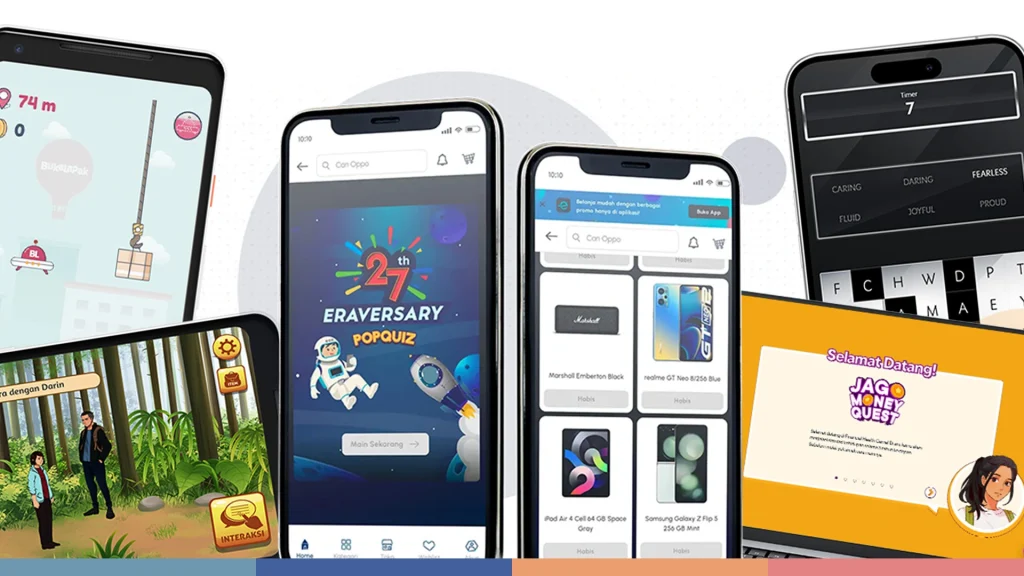
Home Services Our Works Gamification 101 Case Studies Turnkey Event Contact Languages Home Services Our Works Gamification 101 Case Studies Turnkey Event Contact Languages Home Services Our Works Gamification 101 Case Studies Turnkey Event Contact Languages Home Services Our Works Gamification 101 Case Studies Turnkey Event Contact Languages Edit Template Best Gamification Examples You Should Know About Gamification leverages game mechanics to transform how businesses engage customers, train employees, and assess talent. By creating challenges, rewards, and leaderboards, organizations can make learning and marketing more captivating and memorable. This article explores the best gamification examples across marketing, learning, and assessment, showcasing how these strategies have been successfully applied. Gamification for Marketing GoPay Suwit Gojek is a leading on-demand platform that offers over 20 products and services in Indonesia, Singapore, and Vietnam. It started as a ride-hailing service but has since expanded to include a variety of services such as food delivery, logistics, payment, and daily services. Gojek collaborated with Level Up powered by Agate to launch GoPay Suwit, a gamified feature within the GoPay payment method. This interactive game uses rock-paper-scissors mechanics to drive customer engagement and loyalty. Users compete in challenges to win rewards and participate in leaderboards, fostering brand loyalty and consistent GoPay usage. Bukalapak Bukalapak, one of Indonesia’s largest e-commerce platforms, partnered with Level Up powered by Agate to create a gamified marketing campaign that engages users through challenges and quests called Bukalapak Kurir. The game engages users through challenges and quests, and customers can earn rewards for completing tasks like shopping and reviewing products. This approach drives customer engagement and increases brand loyalty. The HTML5 game is embedded within the Bukalapak app, allowing easy access without separate installations, and features a system for tracking and displaying users’ progress, high scores, and achievements, promoting friendly competition and social sharing. Eraversary Erajaya Group, a leading consumer electronics retailer in Indonesia, entrusted Level Up, powered by Agate, to create engaging games for their website during their 27th-anniversary campaign, Eraversary. This collaboration aimed to enhance the customer experience and foster deeper relationships. Erajaya’s online store, Eraspace, offers a wide variety of gadgets, lifestyle, and entertainment products at affordable prices. As part of the Erajaya Group, which includes several other retail brands such as Erafone, iBox, Urban Republic, and iT, Eraspace has integrated its offline retail outlets with its online platform and mobile application available on Google Play. This integration allows customers to easily shop from leading brands right from the palm of their hand. Eraspace also offers various promotions, cashback, and a comprehensive and secure service called MyEraspace, further enhancing the online shopping experience for its users. The gamified experience created by Level Up included quizzes and challenges where customers could win rewards. This innovative campaign promoted new product awareness, encouraged repeat purchases, and strengthened customer relationships. During Eraversary 2023, held from August 14th to October 1st, 2023, the Eraspace website featured a variety of attractive promotions. Customers had the chance to win tens of thousands of exciting prizes, including vouchers, smart home devices, video game consoles, smartphones, and much more, with a total value of Rp. 2.7 billion. The event offered a variety of games and activities to engage customers, including Popquiz, Guess the Logo, Giveaway, MyEraspace Flash Sale, and Treasure Hunt. The games were hosted across various platforms, including Eraspace.com, TikTok, and Instagram. The event also included a Journalist Writing Competition to acknowledge the collaboration with media partners. This comprehensive approach to customer engagement showcases Erajaya and Eraspace’s commitment to providing a unique and rewarding shopping experience. L’Oreal YSL Myself Discovery L’Oréal Indonesia collaborated with Level Up powered by Agate, to launch an innovative campaign for their new YSL MYSLF perfume. Level Up created the “MYSLF Discovery Game,” a word search experience that allows players to discover words reflecting the essence of the fragrance and their personality. This engaging mini-game incentivizes user engagement and exploration of the fragrance, enhancing brand awareness and fostering a deeper connection between customers and the product. Participants could also win a perfume sample by referring friends, adding a social element to the campaign. The game was launched swiftly within two weeks, showcasing a unique approach to brand promotion beyond traditional advertising methods. Gamification for Learning In the realm of web design, companies can leverage gamification to enhance user engagement. Imagine a progress bar embedded within blog posts, encouraging readers to finish the entire article. Or, an e-commerce store could implement a system where shoppers earn points or discounts for sharing brand links with friends, ultimately boosting product sales. Gamified Websites Jago Money Quest Jago Money Quest is a financial literacy game app designed by Level Up and powered by Agate for the digital bank Jago. It helps users learn crucial financial skills through quests and challenges. By managing in-game finances, learners practice budgeting, saving, and investment strategies in a practical, enjoyable way that reinforces real-world financial literacy. The Code The Code, also developed by Level Up, teaches programming through fun challenges and puzzles. Learners solve problems using coding principles, progressing through increasingly difficult missions. This approach helps build logical thinking and programming fundamentals in an immersive learning environment. Gamification for Assessment Batique Batique is a game-based assessment tool designed for children aged 5-12. Developed by Level Up in collaboration with the Learning Development Institute, it evaluates cognitive abilities through eight mini-games based on recognized educational frameworks. The app provides detailed insights into a child’s cognitive strengths and areas for improvement. Astra Underwater Maze Astra International, in collaboration with Level Up, developed Astra Underwater Maze, a game-based assessment tool that identifies top talent for recruitment. Players navigate a maze, revealing traits like persistence, adaptability, and decision-making. The game’s measurable data correlates with real-world performance, ensuring better candidate matching. Jejak Penjelajah WSKT Level Up developed Jejak Penjelajah WSKT, a gamified assessment tool for Waskita Karya, a state-owned construction company. The app uses mini-games and puzzles to evaluate multiple intelligences like IQ, EQ, and AQ. Personalized results help identify applicant strengths and weaknesses, ensuring
5 Examples of Gamification Website: A Masterclass in Gamified Websites

Home Services Our Works Gamification 101 Case Studies Turnkey Event Contact Languages Home Services Our Works Gamification 101 Case Studies Turnkey Event Contact Languages Home Services Our Works Gamification 101 Case Studies Turnkey Event Contact Languages Home Services Our Works Gamification 101 Case Studies Turnkey Event Contact Languages Edit Template 5 Examples of Gamification Website: A Masterclass in Gamified Websites The web design industry is a prime example of how businesses can seamlessly integrate gamification into their websites. Gamification, the practice of incorporating game-like elements to boost user engagement and retention, has become a powerful tool for websites of all kinds. By adding these engaging features, businesses can keep users hooked and coming back for more. This article dives into 5 examples of gamification websites in action. But before we explore those, let’s establish a foundation. What is a Gamified Website? A gamified website incorporates game-like mechanics, features, and dynamics into a non-game context. Think loyalty programs like Starbucks Rewards or user feedback scores in Strava, the running and cycling app. These examples gamify everyday tasks, reward users for engaging with the community, complete challenges, and collect points or prizes. Gamification on Web Design Websites In the realm of web design, companies can leverage gamification to enhance user engagement. Imagine a progress bar embedded within blog posts, encouraging readers to finish the entire article. Or, an e-commerce store could implement a system where shoppers earn points or discounts for sharing brand links with friends, ultimately boosting product sales. Gamified Websites Gamification on websites goes beyond offering literal games. In fact, most successful implementations involve subtle adaptations of game elements to guide the user experience and promote a brand. Are you curious to see how others have mastered the art of gamified websites? In the next section, we’ll delve into specific tactics for adding a layer of fun and engagement to your own website. Linkedin Reddit Twitter X BuzzFeed Eraspace 1. LinkedIn LinkedIn employs a clever mechanic that subtly nudges users to complete their profiles. It gamifies profile building by treating each completed section as an achievement, visualized with a progress bar. This taps into our natural desire to “finish what we start” – the completionist instinct. More importantly for LinkedIn, it leverages the perception that detailed profiles equate to better networkers. This subtly injects a touch of competition, motivating users to create a more impressive profile. It’s a fantastic example of how a well-designed feedback system can subtly guide users towards a desired action – a complete and impressive profile in this case. 2. Reddit Since the beginning, Reddit has embraced gamification principles. The platform thrives on user-generated content, where links and text posts are submitted for community evaluation. Users can upvote or downvote these submissions, acting as judges and curators. This system fosters a dynamic environment: popular content rises to the top of relevant subreddits (communities), gaining visibility, while less-favored posts sink. This inherent competition incentivizes users to create engaging content, sparking social interaction through comments and discussions. Further emphasizing gamification, Reddit assigns a “karma score” to each profile. This score reflects the perceived quality of a user’s contributions, based on the upvote/downvote system. Upvotes boost your karma, signaling valuable contributions, while downvotes lower it. While intangible, karma serves as a social currency within Reddit, signifying a user’s reputation and expertise. Though it doesn’t translate to physical rewards, the pursuit of a high karma score fosters a sense of accomplishment and bragging rights among Redditors. 3. Twitter X Twitter, now known as X, is one of the most commonly used social media platforms, and because of this, it’s important for businesses to understand how to use it to their advantage. One way X uses gamification is through its poll system. Polls are a great way to get feedback from users, and they’re also a great way to engage with followers and get them involved in your brand. Twitter has helped users to create an online social environment that can allow for interaction and the exchange of ideas. 4. BuzzFeed As much as BuzzFeed wishes to be seen as a news source, many of us appreciate it for its capacity to offer a random diversion during the workday. That being said, they do a fantastic job creating these quiz-like diversions. While they don’t necessarily drive the bottom line (other than to get more blog subscribers), they are effective in driving brand awareness. While the quizzes themselves usually don’t drive business-related interaction directly (although they can), they are often used quite effectively as a marketing campaign tool. Buzzfeed’s quizzes are a perfect example of how a business can effectively use marketing in a fun way to garner more engagement from its users. 5. Eraspace Eraspace is a prominent online store in Indonesia that sells a variety of products related to gadgets, lifestyle, and entertainment. It offers affordable prices and guarantees the quality of its products. Eraspace is part of the Erajaya Group, which includes several other retail brands such as Erafone, iBox, Urban Republic, and iT. The integration of these offline retail outlets with Eraspace provides a comprehensive shopping experience for customers. In addition to the website, Eraspace also has a mobile application available on Google Play. This app allows customers to easily shop from leading brands right from the palm of their hand. Eraspace also offers various promotions, cashback, and a comprehensive and secure service called MyEraspace. This service enhances the online shopping experience for its users. During Erajaya Group’s 27th-anniversary celebration, known as Eraversary 2023 (held from August 14th to October 1st, 2023), the Eraspace website featured a variety of attractive promotions. Customers had the chance to win tens of thousands of exciting prizes, including vouchers, smart home devices, video game consoles, smartphones, and much more, with a total value of Rp. 2.7 billion. Eraversary 2023 offered a variety of games and activities to engage customers. These included Popquiz, Guess the Logo, Giveaway, MyEraspace Flash Sale, and Treasure Hunt. The games were hosted across various platforms, including Eraspace.com,
Top Gamification Learning Apps

Home Services Our Works Gamification 101 Case Studies Turnkey Event Contact Languages Home Services Our Works Gamification 101 Case Studies Turnkey Event Contact Languages Home Services Our Works Gamification 101 Case Studies Turnkey Event Contact Languages Home Services Our Works Gamification 101 Case Studies Turnkey Event Contact Languages Edit Template Top Gamification Learning Apps Gamification learning apps are reshaping how learners approach education, making learning more immersive and motivating. These apps harness game mechanics like challenges, rewards, and leaderboards to make educational content engaging and memorable. This article spotlights some of the top gamification learning apps available, each offering unique features that cater to diverse learning needs. What are Gamification Learning Apps? Gamification learning apps are designed to make learning more enjoyable and interactive by incorporating elements such as points, badges, leaderboards, and rewards. These apps are specifically tailored to the educational context, using game design principles to create a more immersive and engaging experience for learners. How Gamification Learning Apps Can Help Educators Boosting Student Motivation: Gamification learning apps can help motivate students by providing a sense of accomplishment and progress through rewards and recognition. Enhancing Teacher-Student Interaction: Gamification learning apps can facilitate more effective teacher-student interaction by encouraging students to participate and engage in the learning process. Personalized Learning Paths: Gamification learning apps can provide personalized learning paths tailored to individual learners’ needs and abilities, ensuring that each student receives the right level of support and challenge. Top Gamification Learning Apps Jago Money Quest Developed by Level Up powered by Agate, Jago Money Quest is a gamified learning app that blends finance education with immersive gameplay. In a world full of challenges and rewards, players learn crucial financial literacy skills by managing their in-game finances through various quests and challenges. This practical approach teaches learners about budgeting, saving, and investment strategies in an enjoyable way. Key Features Quests and Challenges: Players complete quests that simulate real-world financial challenges, building practical knowledge. Rewards and Leaderboards: Rewards like badges and leaderboards drive competition and engagement. Story-Based Learning: The engaging storyline immerses learners in a world where every decision impacts their progress. The Code Another standout is The Code, an educational gamification app designed to teach coding concepts through fun challenges for Gunung Sewu Group. Also created by Level Up powered by Agate, The Code introduces learners to programming languages via puzzles and missions. By solving real-world problems through coding, learners can master logical thinking, computational skills, and programming fundamentals. Key Features Problem-Solving Challenges: Learners apply coding concepts to complete challenges and unlock new missions. Progress Tracking: Progress bars and leaderboards provide visual feedback on learner advancement. Adaptive Difficulty: Challenges scale with learner progress, ensuring a suitable level of difficulty. Why Gamification Learning Apps Stand Out Personalization The best gamification learning apps offer tailored challenges and rewards based on the learner’s current skill level. This personalization keeps learners engaged and encourages them to progress at their own pace. Real-World Application Real-world scenarios and quests allow learners to practice their skills in a safe environment. Whether it’s managing finances or writing code, these practical experiences reinforce classroom concepts. Collaborative Learning Social features like team challenges and leaderboards foster collaboration and friendly competition among peers, encouraging learners to support each other while celebrating their successes. How Level Up Powered by Agate Can Help Level Up powered by Agate specializes in developing innovative gamification learning apps that engage students and professionals alike. From interactive financial literacy to coding challenges, Level Up’s apps combine personalized learning paths with immersive gameplay. Organizations can use these apps to empower learners, improve knowledge retention, and create practical learning experiences. Frequently Asked Questions About Gamification Learning Apps Q1. How do gamification learning apps improve engagement? A: They incorporate challenges, rewards, and progress tracking that make learning interactive and enjoyable. This drives consistent participation and keeps learners motivated. Q2. How can gamification learning apps be personalized? A: These apps can tailor challenges and feedback based on learner skill levels. Adaptive difficulty ensures that learners progress at a pace that matches their growth. Q3. What age groups benefit most from gamification learning apps? A: They cater to all age groups by offering age-appropriate challenges and storylines. Each learner engages with content relevant to their learning needs. Q4. What makes real-world scenarios effective in learning apps? A: Real-world scenarios allow learners to apply their skills practically. This reinforces classroom concepts and provides hands-on experience in a safe environment. Q5. How do collaborative features in gamification learning apps help? A: Team challenges and leaderboards promote friendly competition and teamwork, encouraging learners to work together and celebrate each other’s achievements. If you are interested in learning more about gamification and how it can benefit you or your organization Check out our gamification services page and contact us today. We are ready to help you create a gamification experience that aligns with your needs and preferences. All Posts All Literasi Keuangan Lebih Baik dengan Gamifikasi: Kolaborasi dengan Bank Jago October 30, 2024/ Level Up powered by Agate Berpartisipasi sebagai Pembicara di Studium Generale BINUS University October 24, 2024/ Aplikasi Gamifikasi Terbaik untuk Pendidikan October 4, 2024/ Menciptakan Game yang Menyenangkan untuk Upaya Pemasaran October 3, 2024/ Bagaimana Membangun Game Dapat Memberdayakan Bisnis Anda October 2, 2024/ Contoh Gamifikasi Terbaik yang Perlu Kamu Ketahui October 1, 2024/ Memilih Partner Gamification dengan Perusahaan Pengembang Game September 30, 2024/ Memanfaatkan Mini Game dalam Aplikasi Loyalitas untuk Meningkatkan Keterikatan Pelanggan September 27, 2024/ Apakah VR dalam Pendidikan Menjanjikan? September 26, 2024/ Load More End of Content. All company names, brand names, trademarks, logos, illustrations, videos and any other intellectual property (Intellectual Property) published on this website are the property of their respective owners. Any non-authorized usage of Intellectual Property is strictly prohibited and any violation will be prosecuted under the law. © 2023 Agate. All rights reserved. Home Services Our Works Contact Gamification 101 Case Studies Gamification for Marketing Gamification for Learning Instagram Linkedin Twitter Facebook Youtube Edit Template
Gamification Apps for Education: Boosting Engagement and Results

Home Services Our Works Gamification 101 Case Studies Turnkey Event Contact Languages Home Services Our Works Gamification 101 Case Studies Turnkey Event Contact Languages Home Services Our Works Gamification 101 Case Studies Turnkey Event Contact Languages Home Services Our Works Gamification 101 Case Studies Turnkey Event Contact Languages Edit Template Gamification Apps for Education: Boosting Engagement and Results Gamification apps for education have revolutionized the way we approach learning, offering a more engaging and effective way to enhance skills and knowledge. By incorporating game-like elements into educational content, these apps have been shown to significantly improve learner outcomes, including increased motivation, retention, and overall performance. In this article, we’ll explore the benefits and best practices of gamification apps for education, highlighting their potential to transform the way we learn and grow. What are Gamification Apps for Education? Gamification apps for education are designed to make learning more enjoyable and interactive by incorporating elements such as points, badges, leaderboards, and rewards. These apps are specifically tailored to the educational context, using game design principles to create a more immersive and engaging experience for learners. Benefits of Gamification Apps for Education Improved Engagement: Gamification apps for education have been found to increase learner engagement by up to 90%, compared to traditional educational methods. Enhanced Retention: Interactive learning experiences have been shown to improve knowledge retention by up to 75%, compared to passive learning methods. Personalized Learning: Gamification apps for education can adapt to individual learners’ needs and abilities, providing a more personalized learning experience. Key Benefits Key Benefits Increased Student Engagement: Challenges, quizzes, and leaderboards create a sense of competition and achievement, encouraging active participation. Enhanced Knowledge Retention: By turning lessons into fun activities, students better absorb and remember what they learn. Personalized Learning Paths: Gamification apps offer personalized challenges based on each student’s skill level. This tailored approach ensures that learners focus on areas that need improvement and progress at their own pace. Immediate Feedback: Students receive real-time feedback on quizzes and challenges, helping them quickly identify strengths and gaps in their understanding. This feedback empowers students to adjust their learning strategies effectively. Unique Aspects of Gamification Apps for Education Collaborative Learning Gamification apps often include collaborative features like team challenges and leaderboards, promoting teamwork and a sense of camaraderie. This approach encourages students to help each other and celebrate each other’s progress. Real-World Scenarios Many gamification apps simulate real-world scenarios that help students apply their knowledge practically. For instance, business education apps may include case studies where students must make strategic decisions to solve problems. Data Insights Advanced analytics in gamification apps offer actionable insights into student progress, learning gaps, and preferences. Educators can refine their teaching strategies based on this data, ensuring a more effective learning experience. How Level Up Powered by Agate Can Help Level Up powered by Agate, creates innovative gamification apps for education that help institutions engage students, improve knowledge retention, and achieve better educational outcomes. By delivering personalized challenges, quizzes, and real-world scenarios, Level Up provides solutions tailored to specific academic goals. How Gamification Apps for Education Can Help Educators Boosting Student Motivation: Gamification apps for education can help motivate students by providing a sense of accomplishment and progress through rewards and recognition. Enhancing Teacher-Student Interaction: Gamification apps for education can facilitate more effective teacher-student interaction by encouraging students to participate and engage in the learning process. Personalized Learning Paths: Gamification apps for education can provide personalized learning paths tailored to individual learners’ needs and abilities, ensuring that each student receives the right level of support and challenge. Frequently Asked Questions What are the benefits of gamification apps for education? Gamification apps for education offer a range of benefits, including improved engagement, enhanced retention, and personalized learning. How do gamification apps for education work? A: These apps use quizzes, assessments, and progress tracking to collect data on employee performance. Analytics help businesses identify skill gaps and refine training strategies. What are the best practices for implementing gamification apps for education? The best practices for implementing gamification apps for education include setting clear goals and objectives, incorporating game-like elements gradually, and providing immediate feedback and rewards. If you are interested in learning more about gamification and how it can benefit you or your organization Check out our gamification services page and contact us today. We are ready to help you create a gamification experience that aligns with your needs and preferences. All Posts All Literasi Keuangan Lebih Baik dengan Gamifikasi: Kolaborasi dengan Bank Jago October 30, 2024/ Level Up powered by Agate Berpartisipasi sebagai Pembicara di Studium Generale BINUS University October 24, 2024/ Aplikasi Gamifikasi Terbaik untuk Pendidikan October 4, 2024/ Menciptakan Game yang Menyenangkan untuk Upaya Pemasaran October 3, 2024/ Bagaimana Membangun Game Dapat Memberdayakan Bisnis Anda October 2, 2024/ Contoh Gamifikasi Terbaik yang Perlu Kamu Ketahui October 1, 2024/ Memilih Partner Gamification dengan Perusahaan Pengembang Game September 30, 2024/ Memanfaatkan Mini Game dalam Aplikasi Loyalitas untuk Meningkatkan Keterikatan Pelanggan September 27, 2024/ Apakah VR dalam Pendidikan Menjanjikan? September 26, 2024/ Load More End of Content. All company names, brand names, trademarks, logos, illustrations, videos and any other intellectual property (Intellectual Property) published on this website are the property of their respective owners. Any non-authorized usage of Intellectual Property is strictly prohibited and any violation will be prosecuted under the law. © 2023 Agate. All rights reserved. Home Services Our Works Contact Gamification 101 Case Studies Gamification for Marketing Gamification for Learning Instagram Linkedin Twitter Facebook Youtube Edit Template
What Are Gamification Apps for Training?

Home Services Our Works Gamification 101 Case Studies Turnkey Event Contact Languages Home Services Our Works Gamification 101 Case Studies Turnkey Event Contact Languages Home Services Our Works Gamification 101 Case Studies Turnkey Event Contact Languages Home Services Our Works Gamification 101 Case Studies Turnkey Event Contact Languages Edit Template What Are Gamification Apps for Training? Incorporating game mechanics into corporate training programs, gamification apps have emerged as a dynamic solution for boosting employee engagement, skill development, and productivity. These apps leverage elements like challenges, rewards, and leaderboards to transform training into an engaging, results-driven experience. This article delves into gamification apps for training, offering insights, trends, and strategies to help organizations maximize their potential. Understanding Gamification Apps for Training How They Work Gamification apps for training utilize game mechanics to motivate employees to learn and practice new skills. Points, progress bars, quizzes, and badges simulate the experience of playing a game, encouraging employees to complete training tasks and achieve their goals. This interactive approach ensures better engagement and knowledge retention. Key Benefits Higher Employee Engagement: According to a study by TalentLMS, 89% of employees believe gamified training motivates them to learn. These apps foster consistent participation by incorporating challenges, rewards, and instant feedback. Better Skill Development: Research from the University of Colorado found that gamified training programs improve learning outcomes by 14%. Learners can practice new skills in an enjoyable and supportive environment. Personalized Training Paths: Gamification apps can offer personalized challenges based on individual skill levels. This approach ensures that learners focus on areas that need improvement, providing a more tailored training experience. Real-Time Feedback: Employees can quickly identify strengths and gaps in their skills with immediate feedback on quizzes and challenges. This helps them adapt their learning strategies and build confidence. Unique Aspects of Gamification Apps for Training Real-World Scenarios Many gamification apps simulate real-world challenges that learners might encounter in their roles. For example, sales training apps can present negotiation scenarios where employees must make strategic decisions to reach a successful outcome. Team Collaboration Gamification apps often include social features like group challenges and leaderboards, fostering a collaborative environment where employees can support each other and celebrate shared achievements. Advanced Analytics These apps provide data insights that help businesses refine training strategies. Analytics reveal knowledge gaps and track individual progress, enabling organizations to tailor training content for better results. How Level Up Powered by Agate Can Help Level Up powered by Agate, delivers innovative gamification apps for training that empower businesses to increase productivity, identify top talent, and improve training outcomes. From personalized challenges to real-world scenarios, Level Up’s solutions help organizations achieve their assessment and skill development goals. Contact us today to learn how Level Up powered by Agate can create customized gamification apps tailored to your business needs. Frequently Asked Questions About Gamification Apps for Training Q1. How do gamification apps improve employee engagement? A: Gamification apps motivate employees with challenges, rewards, and leaderboards that make training fun and rewarding. This helps employees feel a sense of accomplishment and stay motivated. Q2. How do gamification apps provide data insights for training? A: These apps use quizzes, assessments, and progress tracking to collect data on employee performance. Analytics help businesses identify skill gaps and refine training strategies. Q3. Can gamification apps be customized for different industries? A: Yes, gamification apps can be tailored to align with industry-specific training needs and goals. Challenges and rewards can be customized to suit each organization’s unique requirements. Q4. What makes gamification apps effective for skill development? A: Real-world scenarios and immediate feedback help learners apply their skills in a safe environment. Employees can practice and reinforce their knowledge through interactive challenges. Q5. How can businesses use gamification apps for team collaboration? A: Social features like group challenges and leaderboards foster teamwork and friendly competition, encouraging employees to work together and celebrate their collective success. Let me know if there are additional details you’d like me to expand on! If you are interested in learning more about gamification and how it can benefit you or your organization Check out our gamification services page and contact us today. We are ready to help you create a gamification experience that aligns with your needs and preferences. All Posts All Literasi Keuangan Lebih Baik dengan Gamifikasi: Kolaborasi dengan Bank Jago October 30, 2024/ Level Up powered by Agate Berpartisipasi sebagai Pembicara di Studium Generale BINUS University October 24, 2024/ Aplikasi Gamifikasi Terbaik untuk Pendidikan October 4, 2024/ Menciptakan Game yang Menyenangkan untuk Upaya Pemasaran October 3, 2024/ Bagaimana Membangun Game Dapat Memberdayakan Bisnis Anda October 2, 2024/ Contoh Gamifikasi Terbaik yang Perlu Kamu Ketahui October 1, 2024/ Memilih Partner Gamification dengan Perusahaan Pengembang Game September 30, 2024/ Memanfaatkan Mini Game dalam Aplikasi Loyalitas untuk Meningkatkan Keterikatan Pelanggan September 27, 2024/ Apakah VR dalam Pendidikan Menjanjikan? September 26, 2024/ Load More End of Content. All company names, brand names, trademarks, logos, illustrations, videos and any other intellectual property (Intellectual Property) published on this website are the property of their respective owners. Any non-authorized usage of Intellectual Property is strictly prohibited and any violation will be prosecuted under the law. © 2023 Agate. All rights reserved. Home Services Our Works Contact Gamification 101 Case Studies Gamification for Marketing Gamification for Learning Instagram Linkedin Twitter Facebook Youtube Edit Template