
Progress Bar, Leaderboard, Badge, and Quest in Gamification: Which One Is Most Effective?
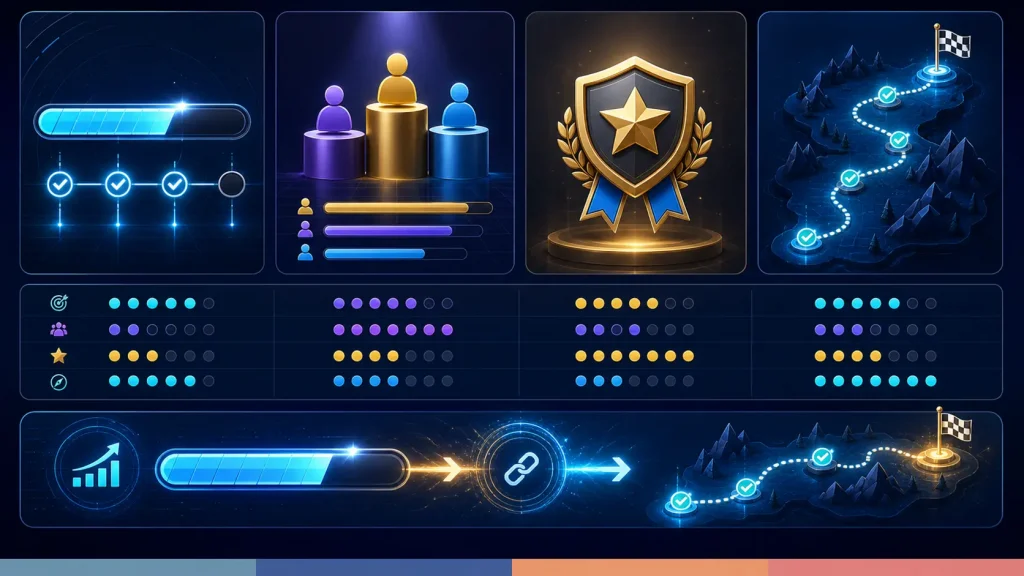
Home Services Our Works Gamification 101 Gamification Case Studies Turnkey Product Game Based Assessment Potentia Level Up RCD Contact English Bahasa Indonesia English Home Services Our Works Gamification 101 Gamification Case Studies Turnkey Product Game Based Assessment Potentia Level Up RCD Contact English Bahasa Indonesia English Home Services Our Works Gamification 101 Gamification Case Studies Turnkey Product Game Based Assessment Potentia Level Up RCD Contact English Bahasa Indonesia English Home Services Our Works Gamification 101 Gamification Case Studies Turnkey Product Game Based Assessment Potentia Level Up RCD Contact English Bahasa Indonesia English Home Services Our Works Gamification 101 Gamification Case Studies Turnkey Product Game Based Assessment Potentia Level Up RCD Contact English Bahasa Indonesia English Home Services Our Works Gamification 101 Gamification Case Studies Turnkey Product Game Based Assessment Potentia Level Up RCD Contact English Bahasa Indonesia English Edit Template Progress Bar, Leaderboard, Badge, and Quest in Gamification: Which One Is Most Effective? When hearing the term gamification, many people immediately imagine points and leaderboards. In fact, gamification is much broader than just ranking systems. Various elements such as progress bars, badges, leaderboards, and quests have different psychological functions and can be used according to business or learning objectives. A common mistake is applying all elements at once without considering user behavior. As a result, an experience that should be fun instead feels confusing or even causes users to lose motivation. So, what exactly are the functions of each gamification element, and when is the right time to use them? Why Are Gamification Elements Important? Gamification works by leveraging a person’s intrinsic and extrinsic motivation. Each element is designed to trigger specific behaviors, such as encouraging task completion, building healthy competition, providing recognition for achievements, or creating a sense of purpose. By choosing the right elements, companies can increase engagement, speed up the learning process, improve user retention, and drive sustainable behavioral change. Here are the four elements most commonly used in gamification implementation. Progress Bar: Providing a Sense of Progress A progress bar is a visual indicator that shows how far someone has completed a process. Examples can be found in: Application onboarding processes. E-learning modules. Employee training programs. Registration forms. Certification programs. Progress bars work because humans tend to be driven to complete something that is almost finished. This phenomenon is known as the goal gradient effect, which is motivation that increases as someone feels closer to the goal. For example, when a training course shows that a participant has completed 80% of the material, the likelihood of them finishing the remaining 20% becomes much higher compared to if there were no progress indicator at all. Progress bars are very suitable for use when the main goal is to increase the completion rate. Leaderboard: Encouraging Healthy Competition A leaderboard displays participant rankings based on specific performance. This element is widely used in: Sales programs. Internal company competitions. Score-based training. Community challenges. Marketing campaigns. Leaderboards leverage social motivation. When someone knows their position compared to other participants, a drive to improve performance emerges. However, leaderboards are not always the best solution. If the score difference is too large or new participants feel it is impossible to catch up to the top positions, motivation can actually decrease. Therefore, leaderboards are often more effective if combined with: Weekly leaderboards. Leaderboards based on division. Leaderboards per group. Periodic score resets. Such approaches keep competition feeling realistic and encourage more participants to continue engaging. Badge: Providing Recognition for Achievements A badge is a digital symbol given when someone successfully reaches a certain target. Examples include: Completing a training module. Reaching a sales target. Attending a webinar. Becoming a mentor. Contributing to the community. Unlike leaderboards that compare individuals with others, badges focus more on personal achievement. Badges provide a sense of pride as well as being a form of recognition for the effort put in. In the learning world, badges can also be used as proof of competence or micro-credentials that show specific skills without having to wait for a major certification. To be effective, badges should have attractive names, clear visual designs, and transparent achievement requirements. Quest: Making Activities More Meaningful A quest is a series of missions that users must complete to reach a certain goal. Instead of just providing a task list, a quest turns an activity into a journey that has challenges and a plot. As an example, the employee onboarding process can be turned into several quests such as: Getting to know the company culture. Completing security training. Meeting a mentor. Participating in a job simulation. Completing the first project. Each quest can provide rewards, unlock the next challenge, or present stories that make the experience feel more engaging. Quests are very effective for activities that take place over a long period because they help users understand what they should do next. Should All Elements Be Used Simultaneously? No. Effective gamification is not about using as many features as possible, but about choosing the elements that best suit the goal. For example: If you want to increase training completion, a progress bar is usually the primary choice. If you want to improve sales team performance, a leaderboard can be a driver of competition. If you want to provide appreciation for individual achievements, badges are more relevant. If you want to make the learning process feel like a journey, quests are the right choice. In many implementations, several elements are indeed often combined. For example, a quest is equipped with a progress bar to show development, then participants earn a badge after completing all missions. How to Choose the Right Gamification Elements Before determining the features to be used, there are several questions that need to be answered: What behavior do you want to change? What is the main motivation of the target users? Is the activity individual or competitive? How long will the program last? How will the program’s success be measured? The answers to these questions help ensure that each gamification element has a clear function
HYROX and Gamification: When Fitness Competition is Built Like a Video Game
Home Services Our Works Gamification 101 Gamification Case Studies Turnkey Product Game Based Assessment Potentia Level Up RCD Contact English Bahasa Indonesia English Home Services Our Works Gamification 101 Gamification Case Studies Turnkey Product Game Based Assessment Potentia Level Up RCD Contact English Bahasa Indonesia English Home Services Our Works Gamification 101 Gamification Case Studies Turnkey Product Game Based Assessment Potentia Level Up RCD Contact English Bahasa Indonesia English Home Services Our Works Gamification 101 Gamification Case Studies Turnkey Product Game Based Assessment Potentia Level Up RCD Contact English Bahasa Indonesia English Edit Template HYROX and Gamification: When Fitness Competition is Built Like a Video Game What is HYROX? HYROX is a global fitness competition that combines running and functional workouts in a standardized race format. In one race, participants must complete eight kilometers of running interspersed with eight workout stations, such as SkiErg, sled push, sled pull, rowing, and wall balls. The consistent format across every country makes HYROX a repeatable, measurable, and scalable competition system. This is what makes HYROX a clear example of gamification in the modern sports world. Collage of HYROX athletes performing intense exercises such as battle ropes, floor workouts, and wall balls. Why Can HYROX Be Called Gamification? Gamification is not just about points, badges, or digital prizes. The core of gamification is how a system is designed to make people keep coming back, developing, and competing. HYROX has all these elements. Every race is built like a gameplay loop, where participants face a challenge, see real-time progress, receive a reward, and are then motivated to try again and achieve a better result. Gamification Elements in HYROX Clear Progression System Every workout station in HYROX acts as a checkpoint. Participants move from one challenge to the next, creating a very clear sense of progression. Just like in a video game, the further someone moves, the closer they get to the final goal. This structured progression provides a strong psychological boost because participants can always see how far they have progressed. HYROX race progression diagram showing the sequence of running segments and workout stations. Global Leaderboard as a Competitive Trigger One of the strongest elements of HYROX is the global leaderboard. After completing the race, participants can compare their time with thousands of other participants worldwide. This system creates a strong social competition. It’s not just about finishing the race, but also about ranking, personal bests, and position in the global community. This mechanism is similar to the ranked system in Valorant or League of Legends. HYROX leaderboard screen displaying participant rankings and race completion times. Addictive Achievement System HYROX also has a very clear achievement system. Starting from a finisher medal, a personal record, to the opportunity to qualify for the world championship. These rewards create a sense of accomplishment that makes participants want to come back. The more difficult the target to achieve, the higher the engagement created. HYROX participants competing in a fitness event featuring reward-based and achievement-driven challenges. Identity Building One of the highest levels of gamification is when the system succeeds in forming a user’s identity. Many HYROX participants start to view themselves as a “HYROX athlete.” When someone begins to build an identity around an activity, engagement is usually no longer temporary but transforms into a lifestyle. What Brands Can Learn from HYROX? HYROX shows that the best gamification is not about a gimmick, but about a clear system. Brands can learn to build a customer journey like race progression, dividing the customer journey into several checkpoints, providing tiered rewards, and offering visual progress so customers feel they are constantly developing. Furthermore, leaderboards or social comparison can be a very powerful tool for increasing retention and community engagement. Frequently Asked Questions What makes HYROX different from other fitness competitions? HYROX has a consistent competition format worldwide, allowing participants to objectively compare their performance from one event to another. Unlike many other fitness competitions whose formats are dynamic, HYROX offers a stable progression system. This makes the competition experience feel like a game with fixed levels, where players continue to improve their skills and performance over time. Why does HYROX keep participants coming back? One of the main reasons HYROX is highly engaging is that it has a clear feedback loop: challenge, progress, reward, compare, repeat. After completing one race, participants immediately know their results, the areas they need to improve, and their position compared to other participants. This system creates a natural drive to return and chase a better result. What is the connection between HYROX and gamification? HYROX is a real-world example of how game mechanics are applied. A progression system, leaderboards, achievement unlocks, and milestone rewards are the main foundations of gamification. These elements are commonly used in digital products, loyalty programs, and employee engagement systems to increase participation and retention. What can companies learn from HYROX? Companies can learn that strong engagement is born from a structured system. Just as HYROX divides the race journey into checkpoints, businesses can also build a customer journey or employee journey with clear milestones, tiered rewards, and transparent progress tracking. This approach helps increase motivation, retention, and participation. Is gamification only effective for fitness and sports? No. The principles of gamification can be applied across many industries such as marketing, brand activation, HR, education, and employee onboarding. The key lies in how a system is designed so that users feel they are constantly developing, challenged, and motivated to return. For companies looking to apply principles like HYROX into customer experience, employee engagement, or learning journeys, gamification solutions are increasingly relevant. Together with Agate through Level Up powered by Agate, brands and organizations can design gamification systems tailored to business goals, ranging from challenge mechanics, leaderboards, reward systems, to immersive experiences that can tangibly increase engagement. Author Related Article All Posts Service Highlight-EN News-EN Education-EN All-EN HYROX and Gamification: When Fitness Competition is Built Like a Video Game July 8, 2026/ Beyond the Leaderboard: Modern Data-Driven Gamification Trends in Marketing,
Beyond the Leaderboard: Modern Data-Driven Gamification Trends in Marketing, Brand, and HR
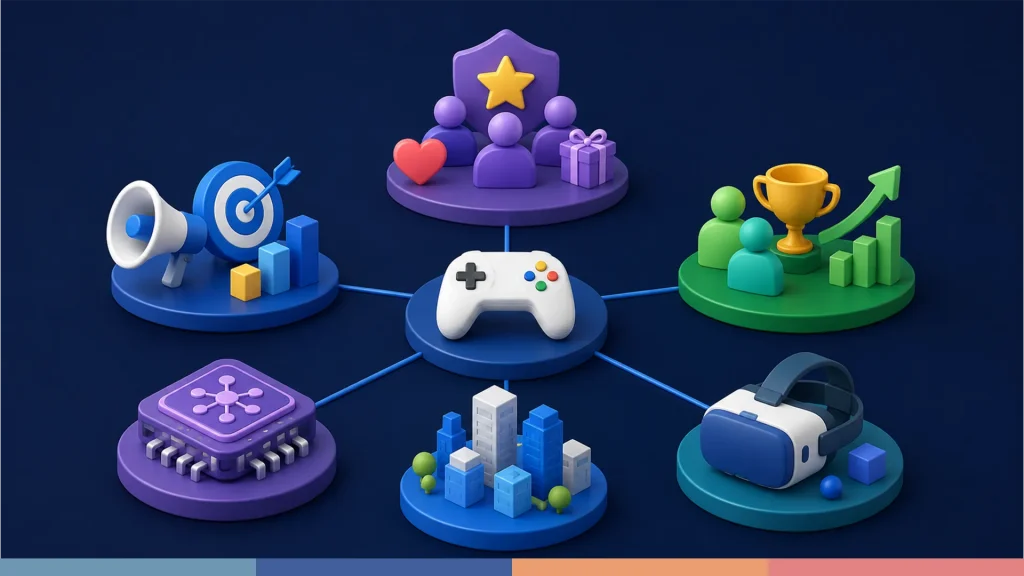
Home Services Our Works Gamification 101 Gamification Case Studies Turnkey Product Game Based Assessment Potentia Level Up RCD Contact English Bahasa Indonesia English Home Services Our Works Gamification 101 Gamification Case Studies Turnkey Product Game Based Assessment Potentia Level Up RCD Contact English Bahasa Indonesia English Home Services Our Works Gamification 101 Gamification Case Studies Turnkey Product Game Based Assessment Potentia Level Up RCD Contact English Bahasa Indonesia English Home Services Our Works Gamification 101 Gamification Case Studies Turnkey Product Game Based Assessment Potentia Level Up RCD Contact English Bahasa Indonesia English Edit Template Beyond the Leaderboard: Modern Data-Driven Gamification Trends in Marketing, Brand, and HR Entering the second half of the 2020s decade, specifically in 2026, gamification has undergone a radical evolution. Obsolete mechanisms like generic point accumulation and meaningless badges are now abandoned, considered merely manipulative psychological tricks. Modern consumers and employees demand agency, transparency, and meaningful play. The exponential growth of this industry is driven by the integration of cutting-edge technologies such as Artificial Intelligence (AI), Digital Twin, and Immersive Experience. This document dissects how three main business pillars—Marketing, Brand, and Human Resources (HR)—are transforming their operational landscape through modern gamification architecture, along with real-world case studies in the industry. Marketing: Ethical Data and Sustainable Retention Systems Marketers today face significant challenges due to soaring customer acquisition costs, fragmented digital attention, and strict data privacy regulations. Marketing strategy no longer focuses on one-off stunts, but shifts towards creating long-term engagement infrastructure. Key Trends: AI-Generated Gamification, Digital Twin of a Customer (DToC) & Zero-Party Data Capture Modern gamification acts as the best zero-party data collection engine. Through personalized mini-games powered by AI, brands offer explicit value exchange in return for consumer behavioral data. AI plays a critical role in adjusting game difficulty levels in real-time based on the player’s profile (Dynamic Difficulty Adjustment). According to industry analysis, the implementation of gamification in marketing strategy has been proven to increase customer loyalty and raise brand interaction metrics by up to 30% (Gartner IT Glossary). Real Case Study: Starbucks (“Deep Brew” AI Ecosystem) Starbucks uses the Deep Brew AI engine to map transaction history data, commute times, local store inventory, and even weather. The app then triggers highly personalized Bonus Star Challenges. If the system detects a customer frequently buys coffee in the morning and the weather is currently rainy, the app automatically triggers an instant mission rewarding double points for a pastry purchase within the next 30 minutes. Illustration of Starbucks Deep Brew featuring a mobile app and four coffee beverage variants, representing an AI-powered customer personalization system. Additional Efficiency Case Study: Autodesk The software giant Autodesk integrates gamification elements into their product free trial period. This interactive approach successfully increased user engagement metrics by 40% and boosted purchase conversions by up to 15% (Autodesk Business Review). Interface display of Autodesk’s gamification system featuring interactive missions, progress tracking, points, and rewards to increase user engagement during the free trial period. Brand: Emotional Loyalty Ecosystem Based on Digital Twin and Immersive Experience Conventional physical card-based loyalty programs are now considered dead. Consumers no longer desire bland transactions; they crave exclusive membership status (insider status) and a sense of ownership within a community. Globally, the gamification market capitalization value is projected to grow rapidly from $9.1 billion in 2020 to $30.7 billion in 2025 with a CAGR of 27.8% (MarketsandMarkets Report). Key Trends: Loyalty Metaverse, Immersive Brand Twin & Phygital AR Global brands are now creating Digital Twins of their physical products or building immersive spaces (AR/VR) where consumers can interact. Consumers are not just buying goods, but completing narrative-driven challenges, unlocking virtual achievements, and attending digital seasonal events. The integration between Immersive Experience and the real world creates a strong loyalty loop. Real Case Study: Nike (Nike Run Club & Nikeland on Roblox) Nike bridges users’ physical activity through the Nike Run Club (NRC) application. Every kilometer completed by the user running in the real world is recorded as a performance metric. The success of completing these physical targets is then converted into rewards in their virtual world on the Roblox platform (Nikeland), where users can unlock exclusive digital wearables for their avatars or gain early access to purchase limited edition physical shoes. Users interact with the NikeLand installation, connecting real-world physical activity with a virtual gamified experience in Roblox. Real Case Study: Coca-Cola (“Create Real Magic” Campaign) Coca-Cola launched a platform based on GPT-4 and DALL-E, challenging consumers to perform visual experiments using the brand’s iconic assets (such as the contour bottle or the polar bear). The gamification element lies in a global creative competition, where the best consumer-created artwork is projected in real-time on giant billboards in New York’s Times Square and London’s Piccadilly Circus. Public billboard for The Coca-Cola Company’s “Create Real Magic” campaign, showcasing AI-generated consumer artwork as part of a global creative initiative. Human Resources: Recruitment Transformation through Game-Based Assessment The most scientifically mature gamification revolution is actually occurring in the human resources (HR) management sector. Traditional recruitment formats are considered obsolete: static Likert scale questionnaires on desktop browsers trigger applicant abandonment rates of up to 60%, coupled with a high bias for manipulating answers (social desirability bias). Key Trends: Psychometric Game-Based Assessment (GBA) & Enterprise Metaverse Modern HR utilizes Game-Based Assessment to measure candidates’ cognitive abilities and personality traits (Big Five personality traits). Instead of answering theoretical questions, candidates complete interactive challenges lasting 5-10 minutes. Through GBA, machine learning algorithms record underlying behavioral data of candidates while playing, such as decision-making speed, post-failure resilience, and problem-solving strategies. The recruitment sector that adopts game elements records an increase in employee productivity by up to 48% and an increase in internal engagement by 60%, based on empirical industry studies (Aberdeen Group Research). In the Learning & Development pillar, competition-based challenges can increase employee knowledge retention thanks to the stimulation of active recall. Real Case Study: Unilever (Global Future Leaders Programme via Pymetrics) Unilever eliminated the traditional document selection stage and replaced it with 12 neuro-science
Officially Launched at The 7th Assessment Centre, Next Chapter Game-Based Assessment is Ready to Change the Face of Indonesian Recruitment
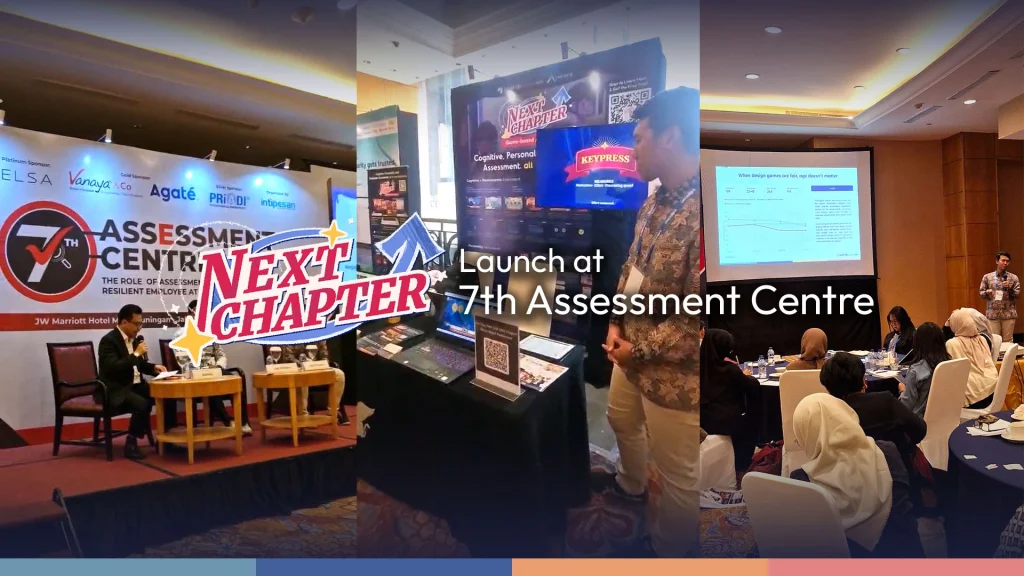
Home Services Our Works Gamification 101 Gamification Case Studies Turnkey Product Game Based Assessment Potentia Level Up RCD Contact English Bahasa Indonesia English Home Services Our Works Gamification 101 Gamification Case Studies Turnkey Product Game Based Assessment Potentia Level Up RCD Contact English Bahasa Indonesia English Home Services Our Works Gamification 101 Gamification Case Studies Turnkey Product Game Based Assessment Potentia Level Up RCD Contact English Bahasa Indonesia English Home Services Our Works Gamification 101 Gamification Case Studies Turnkey Product Game Based Assessment Potentia Level Up RCD Contact English Bahasa Indonesia English Edit Template Officially Launched at The 7th Assessment Centre, Next Chapter Game-Based Assessment is Ready to Change the Face of Indonesian Recruitment The prestigious event for HR practitioners, The 7th Assessment Centre by Intipesan, was successfully held on June 10–11, 2026, at the JW Marriott Hotel, Mega Kuningan, Jakarta. This annual event was particularly special as it witnessed the official grand launching of Next Chapter: Game-Based Assessment (GBA), an innovative recruitment technology developed through a collaboration between Level Up powered by Agate and the Anvesana Research Institute. Before leading HR leaders and assessment centre practitioners in Indonesia, a session titled “Evolution of Assessment: Game-based Assessment” was presented brilliantly by Junialdi Dwijaputra (Head of Level Up powered by Agate) alongside Anjar Kartaputra, S.Psi., M.Psi., Psychologist (Director of Anvesana Research Institute). They dissected how games are no longer just entertainment, but highly accurate psychological measurement tools. Key Highlights at The 7th Assessment Centre: Why is Game-Based Assessment Stealing the Spotlight? So far, the biggest challenge in the employee selection process is candidate boredom while filling out hundreds of questionnaire questions (test fatigue) and their tendency to “manipulate” answers to look perfect. On the stage of The 7th Assessment Centre, Junialdi and Anjar explained that Next Chapter Game-Based Assessment is here to solve these problems. Instead of asking candidates to fill out text questionnaires, this platform invites candidates into a virtual game ecosystem. The “Evolution of Assessment: Game-based Assessment” presentation session on the main stage of The 7th Assessment Centre Intipesan 2026 3 Competency Areas Tested Through 17 Interactive Games Attendees trying out the Next Chapter Game-Based Assessment demo at the Level Up Agate booth at The 7th Assessment Centre Through the product demo showcased throughout the event, visitors could see how Next Chapter Game-Based Assessment utilizes 17 cognitive games and 2 office and leadership simulations to read the candidates’ true character objectively: Cognitive & Neuro-Science Tests: Measures core candidate abilities such as working memory to store and process information, processing speed in understanding situations and responding quickly, and problem solving to see how candidates analyze challenges and find solutions. In addition, this assessment also helps identify the candidate’s level of focus, accuracy, and cognitive flexibility when facing changes or pressure in work situations. Cognitive & Neuro-Science Tests for measuring working memory, processing speed, and candidate agility in problem-solving. Neuroscience-based mini-games and their measured aspects. Big Five Personality: Assesses the five main dimensions of personality, namely Openness, Conscientiousness, Extraversion, Agreeableness, and Neuroticism, through the candidate’s real actions within the game. This approach allows companies to see behavioral tendencies, interaction patterns, and even how candidates adapt in certain situations more authentically compared to conventional questionnaires. Assessment Report based on the Big Five personality evaluation. Leadership Simulation: Candidates are challenged to act as virtual managers in various work scenarios, ranging from strategic decision-making, team management, to conflict resolution. This simulation helps identify leadership style, problem-solving ability, and candidate resilience when working under pressure. Simulation Assessment challenging candidates to act as virtual managers. Celebrating the Launch, Level Up Opens a Free Pilot Program! As part of the grand launching celebration at The 7th Assessment Centre, Level Up powered by Agate is giving an exclusive offer for companies that want to transform. You can try the Game-Based Assessment Pilot Project for free directly for the actual job role you are looking for. This pilot program is low-commitment, where the scale will be assisted and adjusted directly by the Agate Business Development team to suit your company’s unique needs. Register for your free trial here: s.agate.id/nextgba Frequently Asked Questions (FAQ) Why was Next Chapter Game-Based Assessment only officially launched at The 7th Assessment Centre? This event is a gathering place for the largest assessment centre practitioners and HR leaders in Indonesia. This momentum was considered the most appropriate to introduce the evolution of recruitment measurement tools based on real behavior to the industry. Can the assessment results data from these games be accounted for? Absolutely. The entire game architecture in Next Chapter Game-Based Assessment is designed and strictly calibrated with psychologists from the Anvesana Research Institute to ensure assessment results remain scientifically valid and reliable. How can my company participate in the free pilot program announced at the event? Simply visit the official link s.agate.id/nextgba and fill out the available form. The Level Up team will contact you shortly to schedule a pilot scope discussion. What types of assessments are in Next Chapter Game-Based Assessment? Next Chapter Game-Based Assessment covers three main areas: Cognitive Assessment, Personality Assessment, and Leadership Simulation. Ranging from measuring thinking ability, understanding personality through the Big Five, to seeing how candidates make decisions and lead teams. What is the difference between Game-Based Assessment with regular assessment? Game-Based Assessment evaluates candidates through real behavior while playing, not just questionnaire answers. The results are more natural, have minimal bias, and reduce test fatigue. https://www.youtube.com/watch?si=2KNXoF_qH-kiiSid&v=4IoNRk2vgMY&feature=youtu.be More than 2 results are available in the PRO version (This notice is only visible to admin users) The Authors Related Articles Result: Faster creation, broader access, and more efficient workflows. Source: Canva Newsroom All Posts All-EN Education-EN News-EN Service Highlight-EN Level Up powered by Agate Present at Tech for Business 2026, Showcasing Gamification Innovation Through Two Interactive Booths June 26, 2026/ Level Up powered by Agate Hadir di Tech for Business 2026, Tampilkan Inovasi Gamification Lewat Dua Booth Interaktif June 26, 2026/ Officially Launched at The 7th Assessment Centre, Next Chapter Game-Based Assessment is Ready to Change the Face
Lenovo Legion Go S Retail Mini-Game Case Study: When the Game Becomes the Product Demo
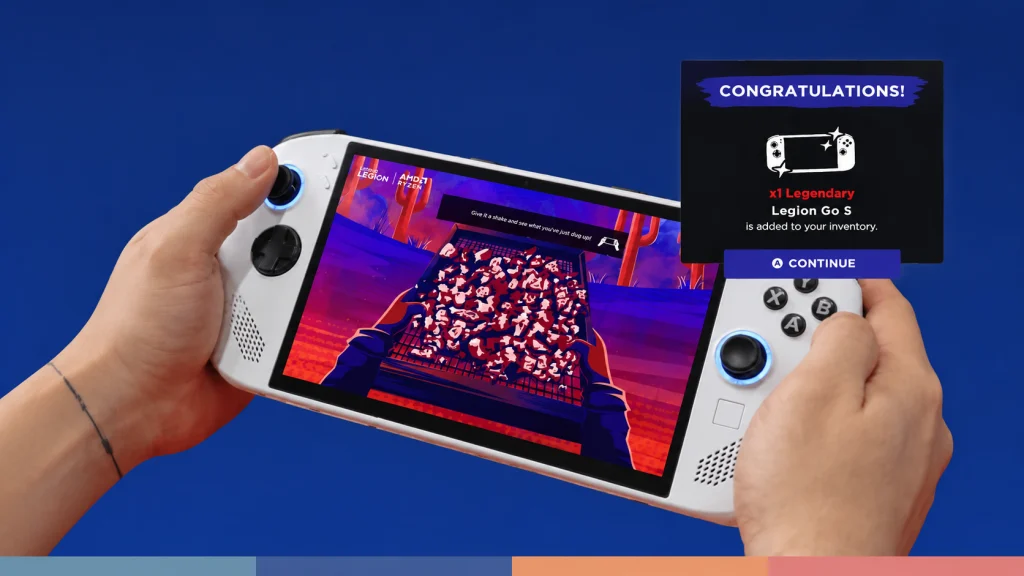
Home Services Our Works Gamification 101 Gamification Case Studies Turnkey Product Game Based Assessment Potentia Level Up RCD Contact English Bahasa Indonesia English Home Services Our Works Gamification 101 Gamification Case Studies Turnkey Product Game Based Assessment Potentia Level Up RCD Contact English Bahasa Indonesia English Home Services Our Works Gamification 101 Gamification Case Studies Turnkey Product Game Based Assessment Potentia Level Up RCD Contact English Bahasa Indonesia English Home Services Our Works Gamification 101 Gamification Case Studies Turnkey Product Game Based Assessment Potentia Level Up RCD Contact English Bahasa Indonesia English Edit Template Lenovo Legion Go S Retail Mini-Game Case Study: When the Game Becomes the Product Demo The Lenovo Legion Go S has three control innovations (gyro, touch, tilt) that do not translate to a spec sheet on a retail shelf. Level Up powered by Agate built a retail mini-game in which every mechanic maps to one of those hardware capabilities. Gyro steering tests motion tracking, touch swipe tests rapid input, and tilt-based selection tests spatial control without buttons. The format is designed for a 90-second in-store session with a zero learning curve, so walk-in customers can engage immediately. This format works best for products where differentiation is sensory, such as haptics, button feel, motion control, or screen response. The handheld gaming category has a retail-floor problem. Every device on the shelf looks similar in its box. Specs differentiate, but specs do not translate into the 90-second decision that a walk-in customer actually makes. The Lenovo Legion Go S has three control innovations: gyro motion tracking, rapid touch input, and tilt-based spatial selection. None of those land via a spec sheet. They land when the customer’s hands learn what the device can do. This case study describes how Level Up powered by Agate solved that retail problem by turning the demo into a game. The Retail Problem in One Line A box on a shelf cannot show you what gyro feels like. This is the core problem for any product whose advantage is sensory. The spec sheet is read by buyers who already know they want the product. Walk-in customers usually decide based on what they can experience in the first 90 seconds at the display, and a sensory advantage that is never experienced is functionally invisible. The Design Brief The team set four design constraints for the activation, each tied directly to the retail context. A mini-game that is playable on the demo unit, not on a separate device. Zero learning curve, with a 90-second floor session that any walk-in customer can complete. Every game mechanic maps to a specific hardware capability of the device. The ‘demo experience’ and the ‘feature explanation’ become the same thing, so the customer does not need a salesperson narrating the spec sheet. Mechanic-to-Capability Mapping The most important design decision was the explicit mapping between game mechanics and hardware capabilities. Each mechanic in the game was selected because it could only be played well using a specific feature of the Legion Go S. Gyro Steering Maps to Motion Tracking The steering mechanic uses small wrist motion rather than a thumbstick. The customer’s hands learn that the device tracks fine motion accurately, without anyone needing to explain that the gyroscope is the differentiator. The hardware feature becomes a felt capability rather than a bullet point. Touch Swipe Maps to Rapid Input The swipe mechanic relies on the screen reading rapid input directly, with no controller layer. The customer learns that the screen is responsive at speed, which is what the device’s touch capability actually provides. The mechanic cannot be played well on a device with slower screen response, which makes the demo a real differentiation test. Tilt Selection Maps to Spatial Control The selection mechanic uses tilt-based input that works regardless of how the device is held. The customer experiences spatial control without buttons, which is the practical benefit of tilt-based selection. The mechanic also makes the device feel comfortable in any orientation, which becomes a sensory memory tied to the brand. Side-by-Side: Traditional Retail Demo vs Game-Based Retail Demo Dimension Traditional Retail Demo Game-Based Retail Demo Format Salesperson explains specs Customer plays a mini-game on the device Cognitive load Customer parses technical claims Customer learns through motion and play Behavioral memory Low, the spec sheet fades quickly High, motor memory is durable Time to engage Depends on salesperson availability Walk-up and play, no staff dependency Feature visibility Stated but not felt Felt directly through gameplay Brand association Mostly logo and packaging Brand tied to a sensory experience Table 1. Side-by-side comparison of a traditional retail demo and a game-based retail demo, based on the Lenovo Legion Go S activation built by Level Up powered by Agate. Why the Format Works The mechanism behind this format is simple. Traditional retail demo creates a moment in which the salesperson explains a spec, the customer nods, and the customer walks away with limited behavioral memory of the device. A game demo creates a moment in which the customer’s body learns the input. Motor memory is denser than memory of marketing copy, and the product becomes physically associated with the brand in the customer’s mind. Lenovo’s published case write-up frames the outcome qualitatively, focusing on engagement time at the display, product memorability, and perception of innovation. The specific numbers behind retail-activation lift are typically reported privately between agency and client. The publishable part is the design principle, and the design principle is reusable across the category. Where This Format Fits Best The retail mini-game format is most useful when a product’s differentiation is sensory rather than purely functional. Categories where this fits include the following. Handheld devices with haptic feedback, motion control, or screen response that does not appear on a spec sheet. Audio products where the differentiator is feel, frequency response, or noise cancellation. Smart home and wearable products where the value is the moment-to-moment interaction. Automotive showroom experiences for features like driver assist, gesture control, or steering response. Any product where the salesperson is the bottleneck for differentiation. The Broader Level Up Brand Engagement Pattern The Legion Go S retail mini-game sits within a broader brand engagement pattern that Level
World Cup 2026 and Roblox: The Indonesian Brand Activation Window CMOs Should Not Miss
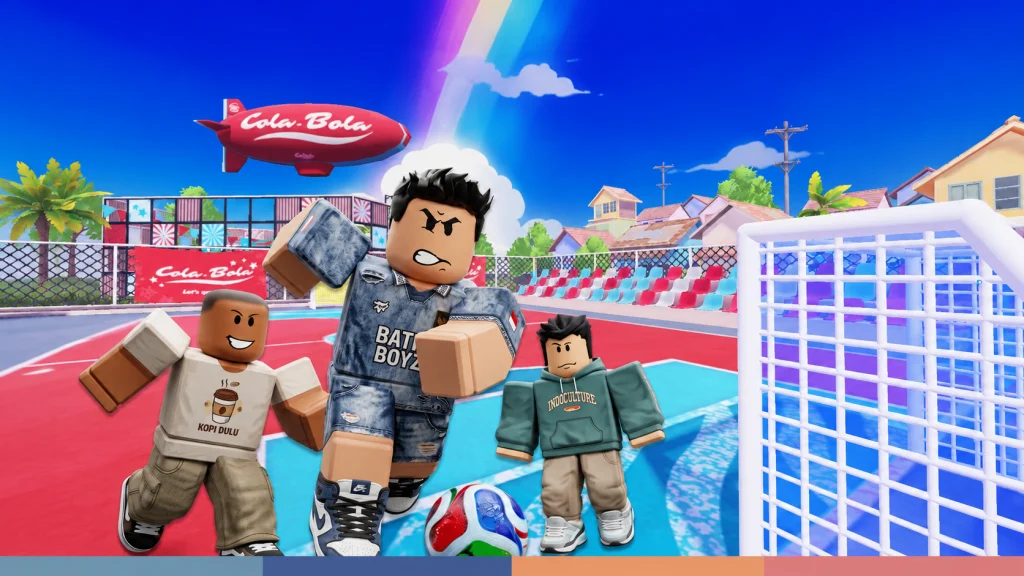
Home Services Our Works Gamification 101 Gamification Case Studies Turnkey Product Game Based Assessment Potentia Level Up RCD Contact English Bahasa Indonesia English Home Services Our Works Gamification 101 Gamification Case Studies Turnkey Product Game Based Assessment Potentia Level Up RCD Contact English Bahasa Indonesia English Home Services Our Works Gamification 101 Gamification Case Studies Turnkey Product Game Based Assessment Potentia Level Up RCD Contact English Bahasa Indonesia English Home Services Our Works Gamification 101 Gamification Case Studies Turnkey Product Game Based Assessment Potentia Level Up RCD Contact English Bahasa Indonesia English Edit Template World Cup 2026 and Roblox: The Indonesian Brand Activation Window CMOs Should Not Miss Roblox has 7.2 million monthly active users in Indonesia, mostly Gen Z and Alpha, which makes it the largest single Gen Z marketing surface in the country. World Cup 2026 is the most-distributed digital event in history, and brand attention from Gen Z is concentrated around it for a limited window. The GrindBlox 3-mechanic playbook for World Cup activation uses UGC jerseys with brand watermark, a branded mini-stadium with event mechanics, and pitch-side virtual ads. Indonesian cultural twists matter. The 3-in-1 stadium with main football pitch, sepak takraw mini-court, and public futsal pitch, plus warung kaki lima food stalls, is what separates a local activation from a copied global template. Brief windows for World Cup activation close near the end of July because production lead time is a minimum of 8 weeks. World Cup 2026 is the most-distributed digital event in history. For Indonesian brands, the most underestimated marketing surface around it is not television or social. It is Roblox. The reason is simple. Roblox has 7.2 million monthly active users in Indonesia, mostly Gen Z and Alpha, and the platform is actively expanding its ad infrastructure in 2026 with UGC monetization and homepage ad inventory. Combined with World Cup attention, this creates a marketing window that closes when the briefs do. Why This Window Closes Faster Than Most CMOs Realize Production lead time for a high-quality Roblox brand activation is a minimum of 8 weeks. The brief window for World Cup activations therefore closes near the end of July, not when the tournament starts. Brands that begin scoping in August or September will land after the peak attention window. This is the planning constraint most Indonesian CMOs underestimate. The marketing window for the event is months wide, but the production window is much narrower. The GrindBlox 3-Mechanic Playbook for World Cup 2026 Across the GrindBlox brand activation portfolio, three mechanics have proven to work for sports and event-tied campaigns in the Indonesian Roblox audience. Mechanic 1: UGC Jerseys With Brand Watermark Users customize jerseys inside the experience, and the brand watermark stays visible across all variants. The viral loop is the strongest in the playbook because avatars wear the jerseys in other games across Roblox, which spreads the brand beyond the original world. UGC jerseys behave less like an ad and more like a wearable that the user wants to keep. Mechanic 2: Branded Mini-Stadium With Event Mechanic A standalone world with scheduled events such as match prediction and mini-game watch parties. The mini-stadium produces concentrated engagement during the event windows and provides always-on inventory outside the event window. The event mechanic gives the brand a reason to invite users back, which is the most important driver of week-2 retention. Mechanic 3: Pitch-Side Virtual Ads Rotating inventory in the stadium, with click-through to web or Roblox shop. This is the most familiar format for brand teams transitioning from traditional sports sponsorship, because the format mirrors physical pitch-side advertising. It works best as a layer on top of the mini-stadium, not as a standalone activation. The Indonesian Cultural Layer That Separates Local From Global Global brand templates rarely land in the Indonesian Roblox audience because the cultural texture is different. The GrindBlox local playbook adds specific Indonesian elements that turn a generic football world into one that Indonesian Gen Z players actually want to spend time in. Main football pitch with a FIFA-tier mode that ties directly to World Cup hype. Sepak takraw mini-court in the stadium plaza, which brings Asian sport heritage into the experience with a trick-shot mechanic. Public futsal pitch, which is the favorite informal sport of Indonesian Gen Z, played in a casual mode. Virtual food stalls based on warung kaki lima, used as loyalty rewards. Indonesian supporter chants and national team scarf customization for cultural identification. Side-by-Side: The 3 Mechanics at a Glance Mechanic Main Strength Viral or Retention? UGC jerseys with brand watermark Cross-world brand visibility Viral spread Branded mini-stadium with events Scheduled engagement and always-on inventory Retention Pitch-side virtual ads Click-through to web or Roblox shop Direct response Table 1. The 3 mechanics of the GrindBlox World Cup 2026 playbook, with the main strength and primary marketing outcome of each. Why GrindBlox Has Proven Capability for This GrindBlox already operates a Roblox world with more than 118,000 visits, used as the live capability proof for Indonesian brand activations. The Indonesian cultural activation layer is scalable and measurable, and the World Cup football tier is built on top of this proven capability rather than as a from-zero experiment. For brands deciding between agencies, the most useful diligence question is not which agency has the best deck. It is which agency has a live Roblox world with real Indonesian Gen Z traffic that you can play right now. Frequently Asked Questions (FAQ) How long does a Roblox brand activation usually take? Light activations such as a single-zone mini-game can be built in a shorter timeline. Full custom worlds with sustaining content are longer. The real range becomes clear after Discovery and Design, which together produce the scope document that drives the Build estimate. How big is Roblox in Indonesia in 2026? Roblox has 7.2 million monthly active users in Indonesia in 2026, mostly Gen Z and Alpha. This makes it the largest single Gen Z and Alpha marketing surface in the country. Why is World Cup 2026 specifically a Roblox opportunity? World Cup 2026 is the most-distributed digital event in history, and the Roblox audience is in the same age bracket that drives most cultural and brand attention around the event.
How Long Does It Take to Build a Roblox World for Your Brand? The GrindBlox 4-Phase Process Explained
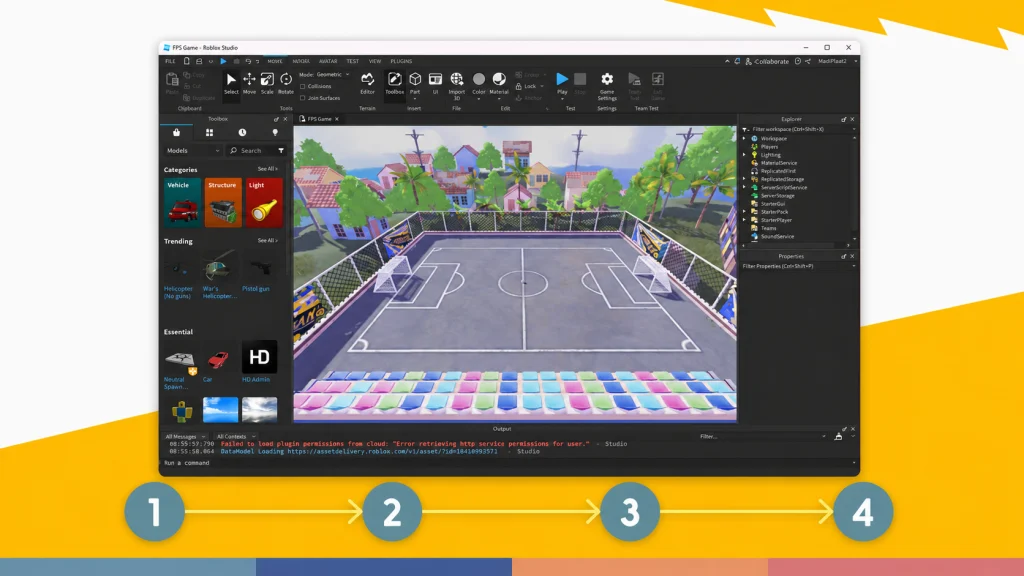
Home Services Our Works Gamification 101 Gamification Case Studies Turnkey Product Game Based Assessment Potentia Level Up RCD Contact English Bahasa Indonesia English Home Services Our Works Gamification 101 Gamification Case Studies Turnkey Product Game Based Assessment Potentia Level Up RCD Contact English Bahasa Indonesia English Home Services Our Works Gamification 101 Gamification Case Studies Turnkey Product Game Based Assessment Potentia Level Up RCD Contact English Bahasa Indonesia English Home Services Our Works Gamification 101 Gamification Case Studies Turnkey Product Game Based Assessment Potentia Level Up RCD Contact English Bahasa Indonesia English Edit Template How Long Does It Take to Build a Roblox World for Your Brand? The GrindBlox 4-Phase Process Explained Every Roblox brand activation goes through 4 phases: Discovery, Design, Build, and Launch. Discovery produces a consolidated brief and a success metric framework, aligned with the brand’s actual goal (awareness, conversion, loyalty, or cultural relevance). Design produces the world concept, mechanic, low-fidelity prototype, and scope document, which is what makes a real timeline estimate possible. Build is the most variable phase. Mechanic complexity, world scale, and custom asset count drive most of the lead time. Launch is not a single moment. It includes soft launch with Indonesian Roblox creator partnerships, measurement go-live, and a sustaining content roadmap for the following quarter. A question we get on almost every first call with a brand: how long does it take to build a Roblox world? The honest answer is that it depends on scope. That is not a great pitch-deck line, but it is the healthier answer for your planning. The reason it depends on scope is that every activation goes through the same 4 phases, and the work inside each phase is what determines the real timeline. The 4 Phases of a Roblox Brand Activation This is the GrindBlox process applied across every Indonesian Roblox brand activation we have run. The phases are sequential, but the depth of each phase varies based on the brand brief. Phase 01: Discovery Discovery is the phase most often underestimated by brand teams. It produces the strategic foundation that determines whether the activation will work or quietly fail. The work in Discovery includes brand strategy alignment, audience mapping for Indonesian Gen Z behavior in Roblox, and cultural insight on what resonates in the Indonesian market versus what feels forced. A global brand that copies a template from another market usually ends up with a flat activation. The output of Discovery is a consolidated brief and a success metric framework that becomes the reference point for the rest of the project. Phase 02: World Design and Mechanic Design is where the activation takes shape. The team selects the world concept, including theme, layout, NPCs, and quest lines, and selects the core mechanic, including UGC, mini-game, event-based, or hybrid formats. Mechanic selection is the single biggest driver of build timeline. UGC architecture, which determines how branded items get adopted by users and spread across avatar feeds, is the most underestimated viral loop in Indonesian Roblox marketing. The output of Design is the design document, a low-fidelity interactive prototype, and a scope document that becomes the basis for a realistic build estimate. Phase 03: Build (the most variable phase) Build is the phase most teams expect to be the longest, and that expectation is correct. The work includes a Roblox Studio development sprint with Lua scripting, asset modeling, and system integration. It also includes texture, animation, and sound design, plus localization into Bahasa Indonesia with brand-specific cultural adaptation, such as warung kaki lima represented as food booths or Indonesian supporter chants. QA is done with an Indonesian Gen Z tester panel of real users aged 13 to 22, not only internal QA. The output of Build is a world that is live-ready and tested. Phase 04: Launch and Measurement Launch is not a single moment. It includes soft launch with Indonesian Roblox creator partnerships, which is critical for bootstrapping day-one visits, plus measurement framework go-live with visit count, average time-in-world, UGC creation rate, and brand recall via in-world survey. A sustaining content roadmap for the next quarter is part of the launch output, because the difference between a world that launches and dies and a world that sustains is the activity that happens after week one. The final output is the world live plus a measurement dashboard. Side-by-Side: What Each Phase Produces Dimension Traditional Personality Test Game-Based Assessment (GBA) Input type Text answers and Likert ratings In-game decisions and timed actions What it measures Self-reported claims Observed behavior Right answer to Google? Yes, often discoverable online Boosts frequent visits and engagement AI co-pilot vulnerability High Low Candidate experience Form-filling, can feel transactional Interactive, often feels like a short game Time to complete 10 to 30 minutes 20 to 30 minutes Output Numerical trait scores Behavioral profile and trait signals combined Table 1. The 4 phases of a GrindBlox Roblox brand activation and the main output of each phase. What Actually Moves the Timeline The real timeline of a Roblox brand activation is driven by five concrete factors. None of these can be guessed from a phone call. They become clear during Discovery and Design. Mechanic complexity, from a simple mini-game to a multi-system world. World scale, from a single-zone activation to a full multi-zone experience. Custom asset count. A reusable Indonesian asset library speeds up parts of the build where it fits, but not every project can use it fully. Brand revision cycles, which depend on the realistic approval rhythm of the buyer organization. Compliance and legal review, which is especially relevant for banking, FMCG with specific claims, and event-tied activations. Why an Honest Scoping Conversation Beats a Pitch-Deck Number A common request from brand teams is a single number on a pitch deck. The problem is that any single number assumes a generic project, which usually leads to either an inflated quote that protects the agency or an undersized quote that creates issues during Build. A 30 to 60 minute scoping conversation produces a more accurate range and a more honest project plan than a pre-calculated number ever can. The fastest path to a real estimate is to share a brief, run a short scoping session, then receive an estimate that reflects the
Game-Based Assessment Explained in 30 Seconds: How GBA Differs From Traditional Personality Tests
Home Services Our Works Gamification 101 Gamification Case Studies Turnkey Product Game Based Assessment Potentia Level Up RCD Contact English Bahasa Indonesia English Home Services Our Works Gamification 101 Gamification Case Studies Turnkey Product Game Based Assessment Potentia Level Up RCD Contact English Bahasa Indonesia English Home Services Our Works Gamification 101 Gamification Case Studies Turnkey Product Game Based Assessment Potentia Level Up RCD Contact English Bahasa Indonesia English Home Services Our Works Gamification 101 Gamification Case Studies Turnkey Product Game Based Assessment Potentia Level Up RCD Contact English Bahasa Indonesia English Edit Template Game-Based Assessment Explained in 30 Seconds: How GBA Differs From Traditional Personality Tests Traditional personality tests ask candidates to describe themselves. Game-Based Assessment records what candidates actually do inside a designed situation. GBA captures behavioral signals such as decision speed, risk-taking, persistence, and learning across trials, which a self-report test cannot measure directly. GBA is harder to game with AI tools because the assessment runs as a game loop, not as a text questionnaire that an AI can answer for the candidate. Modern GBA platforms can include narrative choice modules for personality, mini-games for cognitive ability, and live behavioral signal capture. GBA does not replace interviews. It replaces or supplements the early screening layer that is most exposed to candidate distortion. Most HR teams do not have 30 minutes to read a paper on behavioral assessment. They have 30 seconds before the next meeting. So here is the short version of what Game-Based Assessment actually is and why it differs from a personality test. The Core Difference in One Sentence A personality test asks the candidate what they would do. Game-Based Assessment puts the candidate in a situation and records what they actually do. That single shift changes the type of data you collect. Self-report tests collect claims. GBA collects behavior. Both can be useful, but they are not interchangeable, and in 2026 they are not equally robust. What GBA Looks Like in Practice A Game-Based Assessment is a short interactive session, usually 20 to 30 minutes, in which the candidate plays through a designed scenario. The scenario is built around the traits the company wants to measure. Personality Through Narrative Choice Instead of asking a candidate to agree or disagree with a statement on a Likert scale, a narrative GBA module places the candidate in a story with branching choices. The choices are linked to underlying trait dimensions such as openness, conscientiousness, or risk tolerance. The candidate experiences the story. The system records the decisions. Cognitive Ability Through Mini-Game Tasks Instead of asking the candidate to rate their problem-solving ability, a cognitive GBA module presents a mini-game that requires actual problem-solving under time pressure. The system measures accuracy, speed, error recovery, and learning rate across trials. Behavioral Signals Captured in Real Time Throughout the session, the system records a stream of behavioral signals. Response time, decision consistency, risk-taking under uncertainty, persistence after failure, and willingness to switch strategy. These signals are not visible to the candidate, which makes them harder to optimize against. Side-by-Side: GBA vs Traditional Personality Test Dimension Traditional Personality Test Game-Based Assessment (GBA) Input type Text answers and Likert ratings In-game decisions and timed actions What it measures Self-reported claims Observed behavior Right answer to Google? Yes, often discoverable online Boosts frequent visits and engagement AI co-pilot vulnerability High Low Candidate experience Form-filling, can feel transactional Interactive, often feels like a short game Time to complete 10 to 30 minutes 20 to 30 minutes Output Numerical trait scores Behavioral profile and trait signals combined Table 1. Direct comparison of a traditional personality test and a Game-Based Assessment across the dimensions that matter most for hiring decisions. Why There Is No ‘Right Answer to Google’ One of the most practical advantages of GBA in 2026 is that there is no list of ‘correct answers’ a candidate can study before the session. The scoring is not based on which choice the candidate makes in isolation. It is based on a pattern of decisions across the whole experience, including timing, consistency, and behavioral signals that are invisible to the candidate. This is also why AI interview tools struggle with GBA. A language model can generate the textbook answer to a personality item. It cannot operate a game loop on behalf of the candidate, especially when timing and motor input are part of the signal. Where GBA Fits in a Real Hiring Funnel GBA is not a complete replacement for the entire hiring process. It is most useful at the early screening stage, which is the part of the funnel most exposed to distortion and AI-assisted answering. A practical integration looks like this. Application: standard CV and background fields. Early screening: GBA session as the main behavioral measurement layer. Interview: structured interview informed by the GBA behavioral profile, focusing on role-specific judgement. Final decision: hiring manager review with GBA data and interview notes side by side. Indonesian Enterprise Proof Game-Based Assessment is already running at enterprise scale in Indonesia. A major Indonesian telecommunications enterprise has screened more than 10,000 candidates using a culture-fit GBA built on the Next Chapter platform by Agate Level Up. The same approach has been adapted for other Indonesian enterprises that need to screen high volumes without losing behavioral signal quality. Frequently Asked Questions (FAQ) What is Game-Based Assessment in one sentence? Game-Based Assessment is a hiring measurement method that places a candidate inside a short, designed game scenario and records their actual decisions and behavioral signals instead of asking them to describe themselves. How is GBA different from a gamified test? A gamified test is usually a traditional questionnaire with game-style visuals on top. The underlying questions are still self-report. GBA is structurally different because the underlying measurement is based on observed decisions inside the game, not on questionnaire items dressed up as a game. Does GBA measure personality? Yes. Modern GBA platforms include narrative choice modules that map to recognized personality frameworks, including Big Five trait dimensions. The difference is that the trait estimate comes from observed in-story choices, not from self-rated agreement with statements. Does GBA measure cognitive ability? Yes. GBA can include mini-game modules that require actual
Most Distorted Psychometric Tests in Indonesia 2026
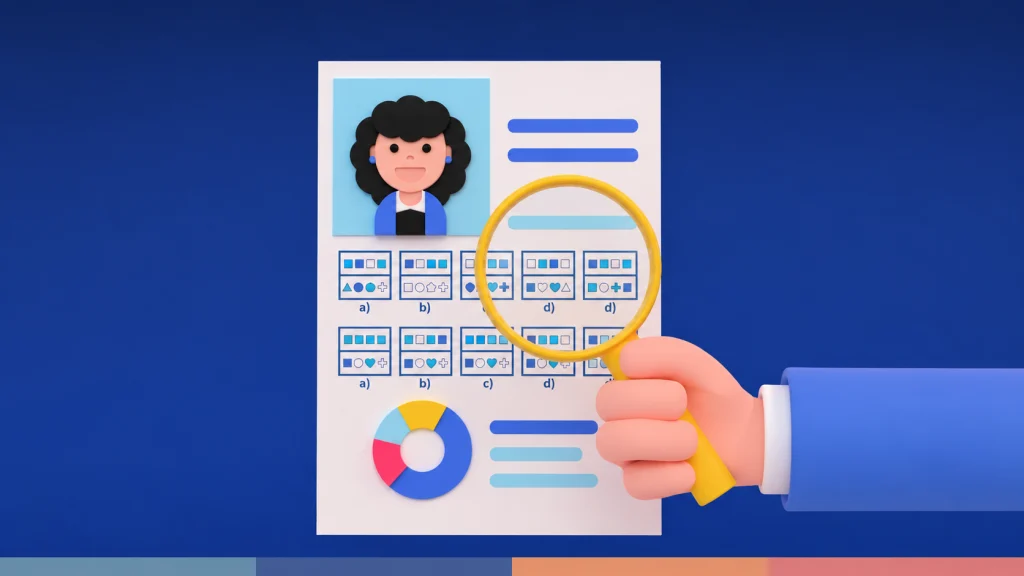
Home Services Our Works Gamification 101 Gamification Case Studies Turnkey Product Game Based Assessment Potentia Level Up RCD Contact English Bahasa Indonesia English Home Services Our Works Gamification 101 Gamification Case Studies Turnkey Product Game Based Assessment Potentia Level Up RCD Contact English Bahasa Indonesia English Home Services Our Works Gamification 101 Gamification Case Studies Turnkey Product Game Based Assessment Potentia Level Up RCD Contact English Bahasa Indonesia English Home Services Our Works Gamification 101 Gamification Case Studies Turnkey Product Game Based Assessment Potentia Level Up RCD Contact English Bahasa Indonesia English Edit Template Most Distorted Psychometric Tests in Indonesia 2026 About 50 percent of candidates distort answers on self-report psychometric tests, even before AI is involved, based on research published between 2020 and 2025. The five most vulnerable tests reported by HR practitioners are Big Five questionnaires, DISC, MBTI variants, Situational Judgment Tests, and self-rated cognitive ability tests. AI tools such as Final Round AI, AceRound, and LockedIn change the problem from distortion to answer engineering, which raises the risk on any text-based test. Common red flags include answers that are too consistent, abnormal response time, profile patterns that look statistically perfect, and large gaps between test results and interview behavior. Game-Based Assessment captures in-task behavior instead of self-reported claims, which reduces exposure to both classical distortion and AI-assisted answers. Most Indonesian HR teams have an instinct about which psychometric tests they trust less than others. The instinct is usually correct. The hard part is putting numbers and names on it. This article is an honest field-level look at which psychometric tests get distorted most in Indonesian hiring, what the red flags actually look like in practice, and why the situation in 2026 is different from previous years. How Big Is the Distortion Problem in Practice? Across academic research published between 2020 and 2025, the headline figure is consistent. Roughly 50 percent of candidates distort their answers on self-report personality and situational tests under high-stakes hiring conditions. Reviews from the Society for Industrial and Organizational Psychology (SIOP) and meta-analyses in the Journal of Applied Psychology describe applicant faking as a stable and well-documented effect, not an outlier issue. In 2026, AI interview co-pilots add a new layer to this problem. Tools such as Final Round AI, AceRound, and LockedIn produce optimized text answers in real time, which makes any text-based self-report test more exposed than it was two years ago. The Five Most Distorted Test Types in Indonesian HR Practice Based on the most common categories cited by HR practitioners, the following five test types are the most exposed to distortion in Indonesian hiring funnels today. 1. Big Five Personality Questionnaire (Likert items) Big Five tests rely on Likert-scale agreement with self-descriptive statements. Candidates can read the trait being measured between the lines, especially after a few questions. The wider the candidate’s exposure to personality testing content online, the easier the test becomes to optimize. AI co-pilots make this almost trivial because the optimal answer pattern for the Big Five is publicly known. 2. DISC DISC profiles are widely used in Indonesian recruitment and management training. The trait categories are simple and well documented online, which makes it easy for candidates to choose answers that produce a ‘desired’ DISC profile for a given role. Distortion here usually shows up as profiles that line up almost perfectly with the job description language. 3. MBTI Variants MBTI and its derivatives are popular for cultural-fit screening. Because the test categories are widely discussed on social media and the trait pairs are intuitive, candidates frequently ‘self-select’ a type they believe will fit the role. The distortion is rarely malicious. It is often the candidate showing the version of themselves they believe the company wants. 4. Situational Judgment Tests (SJT) SJTs ask candidates to pick the best response to a hypothetical scenario. The challenge is that the textbook ‘best’ answer is often clear from context, especially when the scenario uses familiar workplace language. AI co-pilots can produce the textbook best answer reliably, which makes the test much weaker as a differentiator in 2026 than it was in 2020. 5. Self-Rated Cognitive Ability Tests Self-rating instruments for cognitive ability or problem solving are particularly exposed, because they ask candidates to assess themselves rather than perform a task. The validity drops further when AI assistance is available, since the candidate can simply ask a model to produce a high-confidence self-rating that aligns with the role. Side-by-Side: How Exposed Is Each Test Type? Test Type Exposure to Manual Distortion Exposure to AI-Assisted Answering Big Five (Likert) High Very high DISC High Very high MBTI variants Medium to high Very high Situational Judgment Test Medium Very high Self-rated cognitive ability Self-rated cognitive ability Game-Based Assessment Very high Low Low Red Flags Indonesian HR Practitioners Keep Catching Distortion rarely shows up as one single signal. It is usually a pattern. The following are the red flags most consistently reported by senior HR practitioners in the Indonesian market. Answers that are too consistent across reverse-coded items, which suggests the candidate is tracking the trait rather than answering honestly. Abnormally fast or unusually slow response time, especially on Likert items, which can indicate either copy-paste behavior or AI-assisted answering. A ‘perfect’ profile that lines up too neatly with the job description language. Large gaps between test results and behavior observed in the interview, especially in stress or improvisation moments. Identical phrasing across written case study responses from different candidates, which suggests shared AI-generated content. Why This Matters More in 2026 Until recently, distortion was a quiet, well-known limitation of self-report testing. Most HR teams worked around it with structured interviews, reference checks, and probation periods. AI assistance breaks that workaround at the screening stage because it amplifies the distortion effect across the entire candidate pool, not only the most strategic individuals. The practical implication is that the screening stage is where the measurement integrity gap is now largest. Final-round interviews and reference checks are still useful, but they only catch problems after the screening has already let too many false positives through. What to Do This Quarter There are three practical moves an Indonesian HR team can make this quarter without rebuilding the entire assessment stack. Audit which tests in your current funnel
AI Hiring Fraud in Indonesia 2026: Why Self-Report Tests Are Failing and How Game-Based Assessment Can Help
Home Services Our Works Gamification 101 Gamification Case Studies Turnkey Product Game Based Assessment Potentia Level Up RCD Contact English Bahasa Indonesia English Home Services Our Works Gamification 101 Gamification Case Studies Turnkey Product Game Based Assessment Potentia Level Up RCD Contact English Bahasa Indonesia English Home Services Our Works Gamification 101 Gamification Case Studies Turnkey Product Game Based Assessment Potentia Level Up RCD Contact English Bahasa Indonesia English Home Services Our Works Gamification 101 Gamification Case Studies Turnkey Product Game Based Assessment Potentia Level Up RCD Contact English Bahasa Indonesia English Edit Template AI Hiring Fraud in Indonesia 2026: Why Self-Report Tests Are Failing and How Game-Based Assessment Can Help This year, your interview has a new participant, and it is not the candidate. It is the AI quietly answering for them. Final Round AI, AceRound, and LockedIn are not concept apps from a future keynote. They are free, they are viral on HR TikTok, and they are already in active use across Indonesian hiring funnels in Q1 2026. They describe themselves as interview co-pilots, but the function is simple. They generate live, natural-sounding answers for candidates during video interviews and online assessments, and human interviewers rarely catch it. If your assessment stack was built before this shift, there is a real chance you are no longer measuring the candidate. You are measuring how good they are at prompting their AI. The Real Scale of the Problem: From Distortion to Answer Engineering HR leaders have known for years that self-report assessments have weaknesses. Academic research published between 2020 and 2025 shows that roughly 50 percent of candidates already distort their answers on personality tests and situational judgment questionnaires, even without any AI involvement. The reason is simple. Candidates want the job, so they answer the way they think the company wants. AI changes the nature of the problem. We are no longer talking about a candidate slightly inflating their teamwork score. We are talking about a language model crafting the statistically best answer for every Likert item, every hypothetical scenario, and every behavioral question, in real time, in fluent Bahasa Indonesia or English, with the tone adjusted to the role. Why Traditional Assessments Are Especially Vulnerable Likert-scale personality tests such as DISC and Big Five questionnaires are pure text input, which is easy for AI to optimize. Hypothetical situational judgment tests reward the textbook correct response, which AI can produce on demand. Structured behavioral interviews over video call can be supported by co-pilot tools that transcribe the question and surface a scripted answer within seconds. Take-home case studies are difficult to distinguish from AI-authored work without proctoring. Why Game-Based Assessment (GBA) Helps Game-Based Assessment does not ask the candidate what they would do. It watches what they actually do during a task. Inside a GBA session, a candidate makes hundreds of small decisions. How they take risks under uncertainty, where they place their attention, how fast they respond, how they recover from a mistake, whether they keep trying after failure, and whether they cooperate or compete in scenarios that involve other players. These are behavioral signals, recorded during the task itself. An AI co-pilot can write a strong paragraph about being a team player, but it cannot make the player cooperate inside a fast-moving game loop. What GBA Measures That Self-Report Cannot Decision-making under cognitive load, observed rather than described. Risk tolerance through actual choices in the game, not survey answers. Learning speed across repeated trials. Consistency between what a candidate says they value and what they actually choose in play. Cultural fit through gameplay style, instead of keyword-matched self-descriptions. Proof Point: More Than 10,000 Indonesian Candidates Already Screened via GBA This is not theoretical. A major Indonesian telecommunications enterprise has already screened more than 10,000 candidates using a custom culture-fit Game-Based Assessment built on the Next Chapter platform by Agate Level Up. The full case study was published in April 2026 and shows measurable improvements in early-tenure retention compared to the previous self-report screening setup. For Indonesian HR teams asking whether GBA is ready for enterprise scale, the answer is that it is already running at enterprise scale today. The Question Every HR Director Should Ask in 2026 The assessment you are running right now was designed for a world before generative AI. So the more useful question is not how to detect AI in interviews, because detection is a losing chase. The better question is whether your current process is still measuring the human, or whether it is partly measuring their tools. It is worth auditing your assessment stack this quarter, before the gap between scored answers and actual hires becomes harder to ignore. Frequently Asked Questions (FAQ) What is AI hiring fraud and how common is it in 2026? AI hiring fraud is the use of generative AI tools, including Final Round AI, AceRound, and LockedIn, to produce interview answers, assessment responses, or case study outputs for a candidate. By Q1 2026 these tools are free, public, and widely shared on HR TikTok, which means any candidate with a laptop and a second screen can use them during a remote interview in Indonesia. Can interviewers detect AI-assisted candidates? Detection rates are low in practice. Modern interview co-pilots produce natural-sounding answers in real time and adapt to the role. Human interviewers usually catch the obvious cases, such as visible eye-darting or audio lag, but miss the more rehearsed ones. Detection alone is not a sustainable defense. Redesigning what you measure is more useful. What is Game-Based Assessment (GBA)? Game-Based Assessment is a behavioral measurement method that places candidates inside a purpose-built game scenario and records their actual decisions, response patterns, and behavioral signatures. Instead of asking how someone handles pressure, GBA creates pressure inside the game and observes their response. The output is a behavioral profile, not a self-report score. Is GBA suitable for large enterprise hiring volumes in Indonesia? Yes. A major Indonesian telecommunications enterprise has already screened more than 10,000 candidates through a culture-fit GBA built by Agate Level Up. The platform is designed for high-volume hiring funnels and works alongside standard ATS systems. Does GBA replace interviews entirely? No. GBA