

Slaying Engagement: What Demon Slayer Teaches Us About Gamification
Demon Slayer: Kimetsu no Yaiba has become a global phenomenon, praised not only for its breathtaking visuals but also for its compelling storytelling that keeps millions of fans hooked. But what if the same mechanics that make Demon Slayer so captivating are also the key principles businesses can use to engage customers, employees, or learners?
That’s where Yu-kai Chou’s Octalysis Framework comes in. This gamification model breaks down motivation into 8 Core Drives and Demon Slayer provides a perfect, real-world cultural mirror for each of them. By learning from the anime, businesses can design experiences that feel just as rewarding, emotional, and addictive.
The Octalysis Framework Explained.
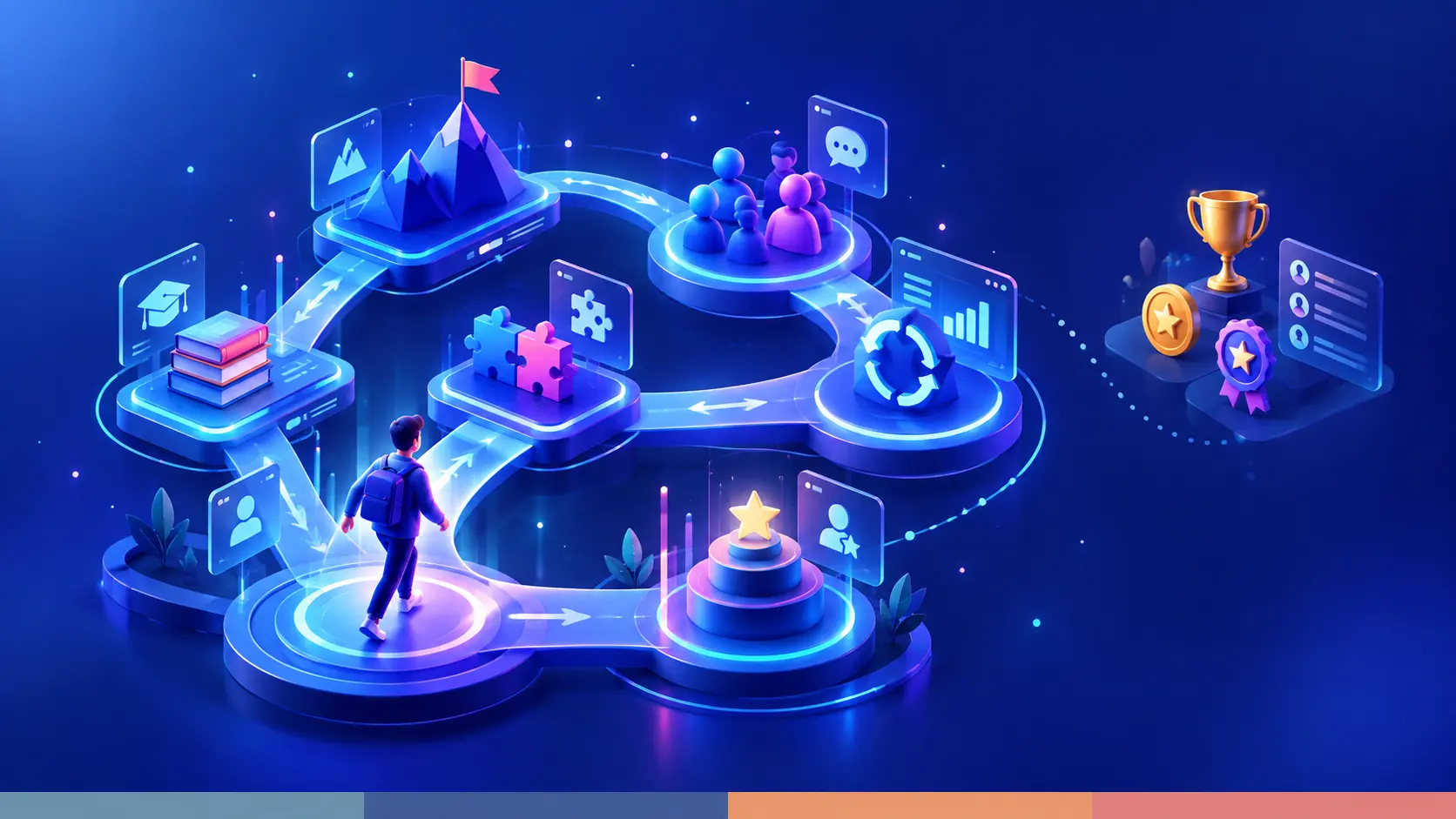
The Octalysis Framework is a globally recognized model for understanding why people take action. Instead of focusing on mechanics like points or badges, it looks deeper into human psychology. The eight core drives include purpose, achievement, creativity, ownership, social influence, scarcity, unpredictability, and avoidance.
When you look at Demon Slayer, it’s clear that these very same drives are what make the series resonate with audiences. Tanjiro’s journey isn’t just about killing demons, it’s about meaning, growth, connection, and survival.
How Demon Slayer Reflects the 8 Core Drives of Gamification
1. Epic Meaning & Calling
Tanjiro’s journey is fueled by an epic calling: saving Nezuko and avenging his family. His fight is not selfish but tied to a greater purpose, protecting humanity from demons. This higher calling gives the story its emotional weight, making every battle feel meaningful.
Gamification application: Businesses can harness this by tying actions to something bigger than the task itself. For example, a sustainability app doesn’t just tell users to recycle; it frames it as saving the planet. This transforms mundane actions into acts of purpose.
2. Development & Accomplishment
One of the most memorable scenes is Tanjiro training under harsh conditions, culminating in his ability to slice the massive boulder. This moment signifies accomplishment, proving he’s worthy of entering the Demon Slayer Corps. Fans cheer for him because they see his growth step by step.
Gamification application: Similarly, users feel motivated when they see visible progress. Points, progress bars, and achievement badges are not meaningless, they reflect development. A corporate training program could allow employees to unlock new “levels” of mastery as they progress, mirroring Tanjiro’s journey from novice to master.
3. Empowerment of Creativity & Feedback
Every Demon Slayer sword is unique, with colors changing to match the wielder’s spirit. This personalization makes each character’s journey distinct, and fans love discovering what color a sword will take. In battles, the creative use of breathing techniques also demonstrates empowerment through experimentation.
Gamification application: Empowerment comes from giving users freedom and feedback. Just like a swordsmith shaping a weapon, businesses can let employees or learners personalize their paths. Learning platforms could allow branching modules, while marketing campaigns could let customers co-create experiences.
4. Ownership & Possession
Ownership is central to the story. Tanjiro fiercely protects Nezuko, who is both his family and his responsibility. Likewise, every Demon Slayer treasures their Nichirin sword as part of their identity. Losing it feels like losing part of themselves.
Gamification application: When people own something, they value it more. Gamification taps into this by giving users badges, collectibles, or digital avatars that grow with them. A workplace platform could issue symbolic tokens for achievements, just as a Nichirin sword reflects one’s growth.
5. Social Influence & Relatedness
Tanjiro doesn’t fight alone. His friendship with Zenitsu and Inosuke provides strength, while the mentorship of the Hashira offers inspiration. Social bonds keep them motivated, even when challenges seem impossible.
Gamification application: Humans are social by nature. Leaderboards, team quests, and peer recognition drive motivation. A sales team might compete for “Hashira-level” performance, with each top performer inspiring the rest.
6. Scarcity & Impatience
In Demon Slayer, time is always running out. Whether it’s sunrise that can destroy demons or urgent deadlines before a mission, scarcity fuels tension and urgency. Fans feel the pressure alongside the characters.
Gamification application: Businesses can design time-limited rewards, exclusive events, or seasonal campaigns to spark action. Just like Tanjiro had limited time to master new techniques, users are more likely to act when they know opportunities won’t last forever.
7. Unpredictability & Curiosity
One reason Demon Slayer keeps fans hooked is unpredictability. Each battle brings unexpected twists: hidden demon powers, sudden character deaths, or Muzan’s evolving forms. Fans stay glued because they never know what’s next.
Gamification application: Similarly, curiosity drives engagement in business. Mystery boxes, surprise challenges, and random bonus rewards keep users coming back. For instance, a fitness app might give “mystery rewards” after completing random streaks.
8. Loss & Avoidance
The fear of loss is a constant driver. Characters are motivated not just by victory but by avoiding devastating outcomes: losing comrades, failing missions, or Tanjiro losing Nezuko to Muzan. These moments hit hardest because the stakes are so high.
Gamification application: This drive can be applied by designing streaks, penalties, or “don’t lose progress” mechanics. Apps like Duolingo thrive on this, reminding users not to break their streaks. Businesses could replicate this by creating ongoing challenges where missing participation risks losing hard-earned rewards.
Applying Demon Slayer’s Lessons to Real-World Gamification
From Demon Slayer, we learn that motivation comes from a mix of meaning, progress, creativity, ownership, social influence, scarcity, curiosity, and avoidance. Businesses can apply these drives directly:
- Education: Progression systems like Tanjiro’s training arcs, combined with “boss battles” as exams or projects.
- Corporate Training: Employees choose specialization paths like Breathing Styles, creating personalized skill trees.
- Marketing: Campaigns framed as epic missions (sustainability, community impact) with time-limited challenges.
- Sales: Recognition systems that elevate top performers to “Hashira status,” inspiring others to rise.
When applied well, gamification turns routine tasks into meaningful, motivating journeys, just like Tanjiro’s path from boy to hero.
Frequently Asked Questions (FAQ)
What is gamification in simple terms?
Gamification is using game-like mechanics (points, levels, challenges) in non-game contexts to motivate people.
Why use Demon Slayer as an example?
Because its story naturally demonstrates all 8 motivational drives from the Octalysis Framework — making it a relatable case study for engagement design.
What is the Octalysis Framework?
A gamification model by Yu-kai Chou that explains 8 psychological core drives behind human motivation.
Ready to design engagement as powerful as Demon Slayer’s storytelling?
Let’s explore how gamification can transform your business strategy.
Contact us today for a consultation
If you are interested in learning more about gamification and how it can benefit you or your organization
Check out our gamification services page and contact us today. We are ready to help you create a gamification experience that aligns with your needs and preferences.
The Authors
Junialdi Dwijaputra
Dias Setyanto
Related Articles
Result: Faster creation, broader access, and more efficient workflows.
Source: Canva Newsroom
- All Posts
- All-EN
- Education-EN
- News-EN
- Service Highlight-EN

It leverages your brain’s reward system, giving you quick wins and visual progress that boost your motivation to keep going.