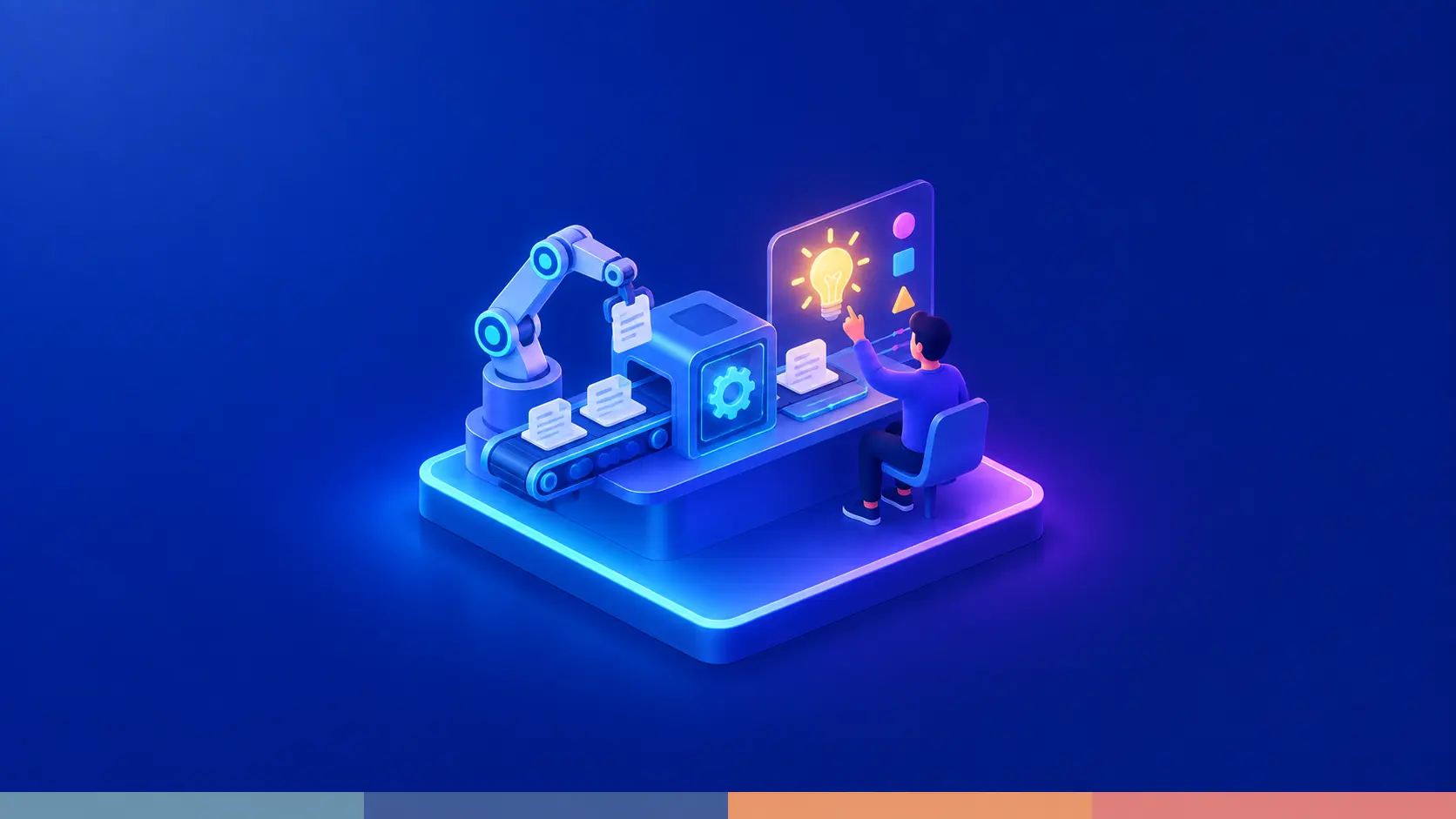
Candidates log into a platform, play several games, complete various challenges, and then the system analyzes how they make decisions, solve problems, and respond to specific situations.
No lengthy initial interviews. No stacks of CVs to read through one by one.
Then the question arises:
If technology can already evaluate candidates, is HR still needed?
The answer: even more needed than before.
Game-Based Assessment was not created to replace HR. Instead, this approach exists to help HR obtain richer, more relevant, and structured data to serve as consideration material in decision-making processes.
When Recruitment Requires More Than Just Looking at a CV
A CV can provide an overview of a candidate’s experience, education, and achievements. However, a CV cannot always show how someone copes with problems when placed in specific situations.
The same goes for interviews.
Interviews can provide valuable insights, but the results still depend on the questions asked, the context of the conversation, and how candidates present themselves.
Yet skills such as problem solving, decision making, attention, and cognitive flexibility are often only truly visible when someone is faced with a challenge.
This is where Game-Based Assessment offers a different approach.
Conventional interview process focusing on face-to-face discussion.
Game-Based Assessment Is Not Just "Playing Games"
Hearing the term game-based assessment, people might imagine candidates simply being asked to play a game and get a score.
In reality, a properly designed game-based assessment involves a much more complex process.
Games can be used as a medium to present specific situations and challenges. From these interactions, data regarding candidate responses and performance can be collected and analyzed to provide insights related to the measured abilities.
Thus, the game itself is not the end goal.
The game is a medium to obtain data.
So, Is HR Replaced by Game-Based Assessment?
No.
This is precisely why understanding technology’s role in the recruitment process is crucial.
Game-Based Assessment helps collect and process data, but data is not a decision.
HR still plays a essential role in understanding organizational needs, determining relevant competencies, reading candidate context, considering company culture, and ultimately making the final decision.
Think of Game-Based Assessment as an additional “data layer” in the recruitment process.
Where HR previously relied on CVs and interview results, Game-Based Assessment provides an added perspective on how candidates demonstrate specific abilities when facing structured challenges.
HR can then review this information more holistically.
It’s not HR vs. Game-Based Assessment.
It’s HR equipped with richer data.
From "Gut Feeling" to "Data-Informed Decision"
HR experience and intuition remain important.
However, as recruitment processes become more complex, the need for data that reinforces those considerations grows as well.
Game-Based Assessment helps provide additional data that might previously have been difficult to obtain solely through CVs or interviews.
For instance, when two candidates have relatively similar backgrounds, HR might need an extra perspective to understand how both demonstrate specific capabilities in action.
With this extra data, HR has more information to consider before making a decision.
This does not mean decision-making becomes fully automated.
On the contrary, HR receives more material to make better-informed decisions.
How Game-Based Assessment Makes HR Work Easier
One of the biggest benefits of technology in recruitment isn’t just automating manual tasks, but reducing administrative burden so HR can focus more on work requiring human judgment.
With structured assessments, candidate data collection can be carried out more consistently.
HR can then use assessment results as input for further evaluation processes.
This enables HR to allocate more time to uniquely human activities, such as discussing with hiring managers, understanding team needs, conducting in-depth interviews, and building candidate experience.
Technology handles part of the structured workload.
HR maintains control over context and decisions.
Next Chapter: Making Assessment More Engaging
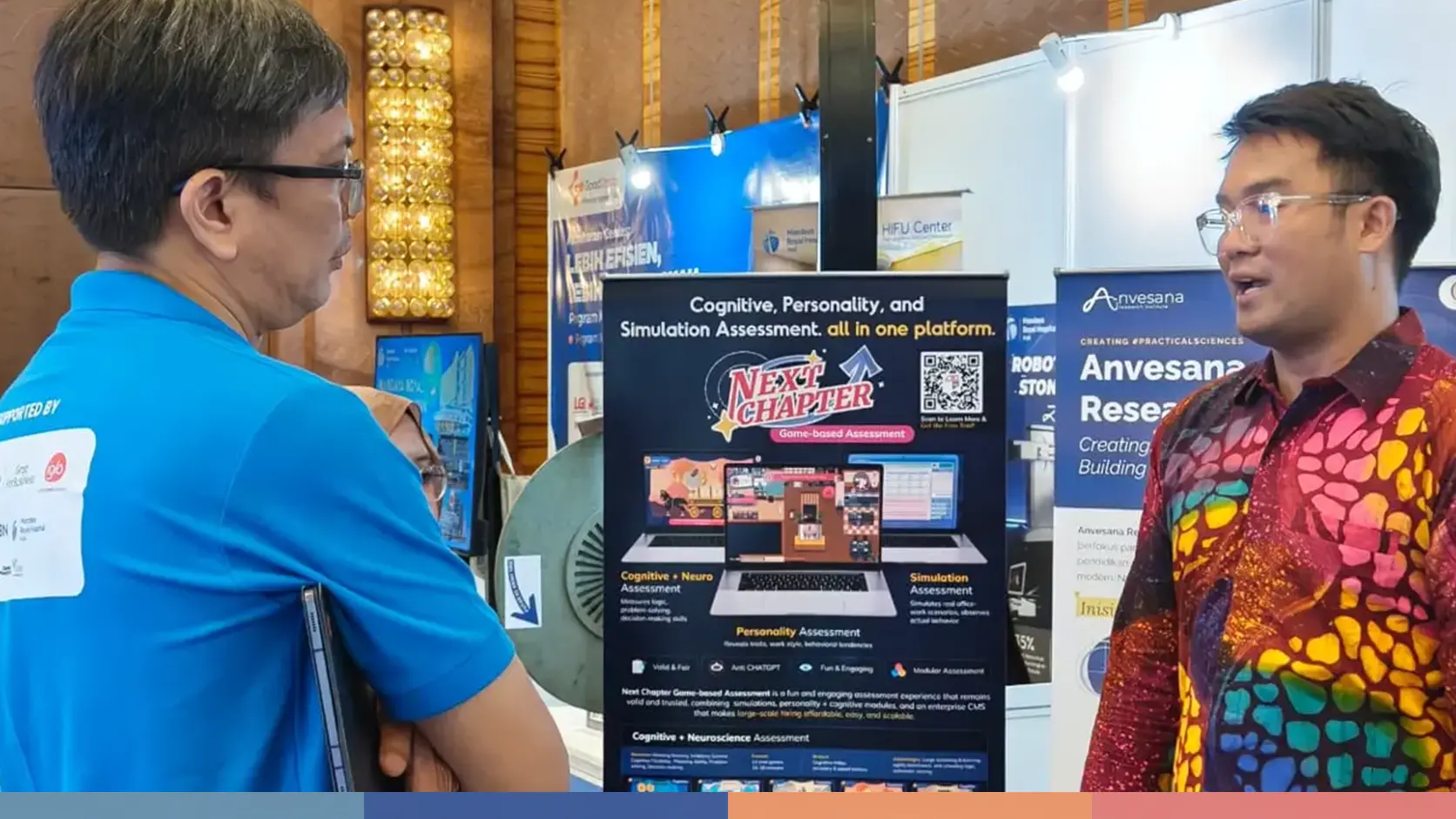
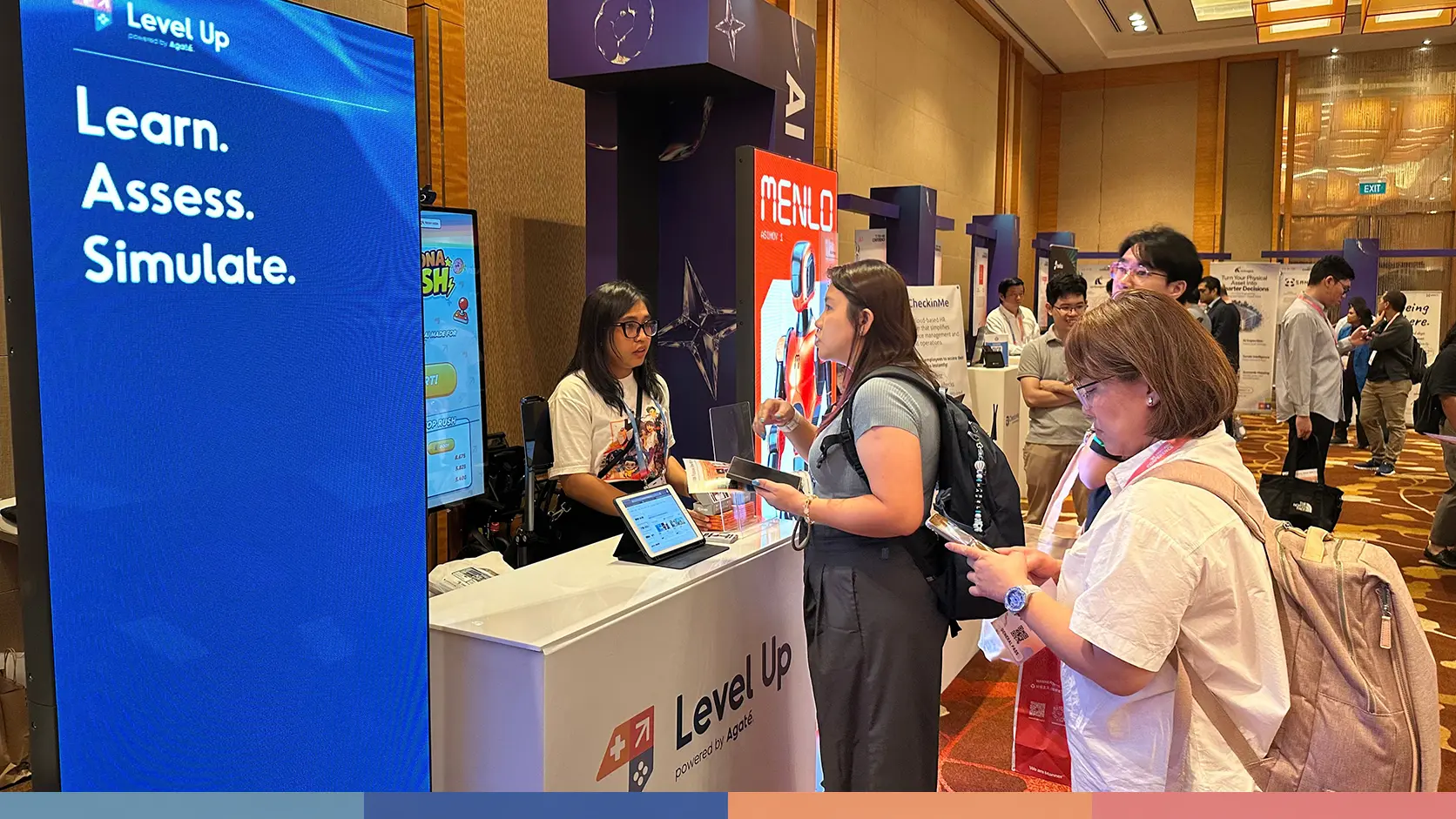
This is one of the approaches brought by Next Chapter, a Game-Based Assessment solution from Level Up powered by Agate.
Next Chapter is designed by combining game mechanics with assessment to create a more engaging experience for candidates while generating insights to assist HR during evaluation.
Behind that experience lies a process that goes far beyond simply building a game.
Each instrument is developed across four phases: Theory, Items, Validation, and Norming, involving psychometricians and the Anvesana Research Institute to ensure the assessment is grounded in relevant scientific measurement.
Through this approach, games do not merely make the assessment process feel more fun.
Games become a medium to deliver more engaging assessments, while assessment data provides added perspective for HR.
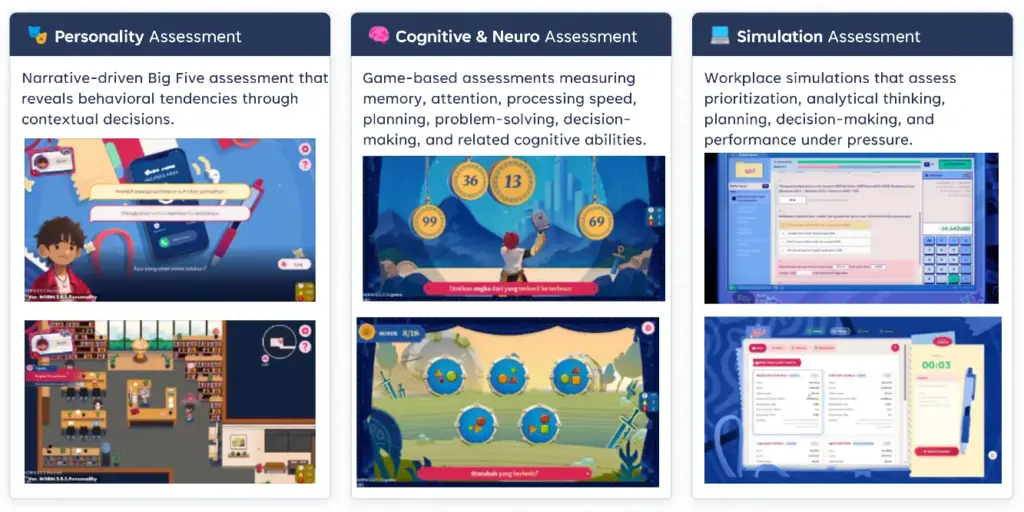
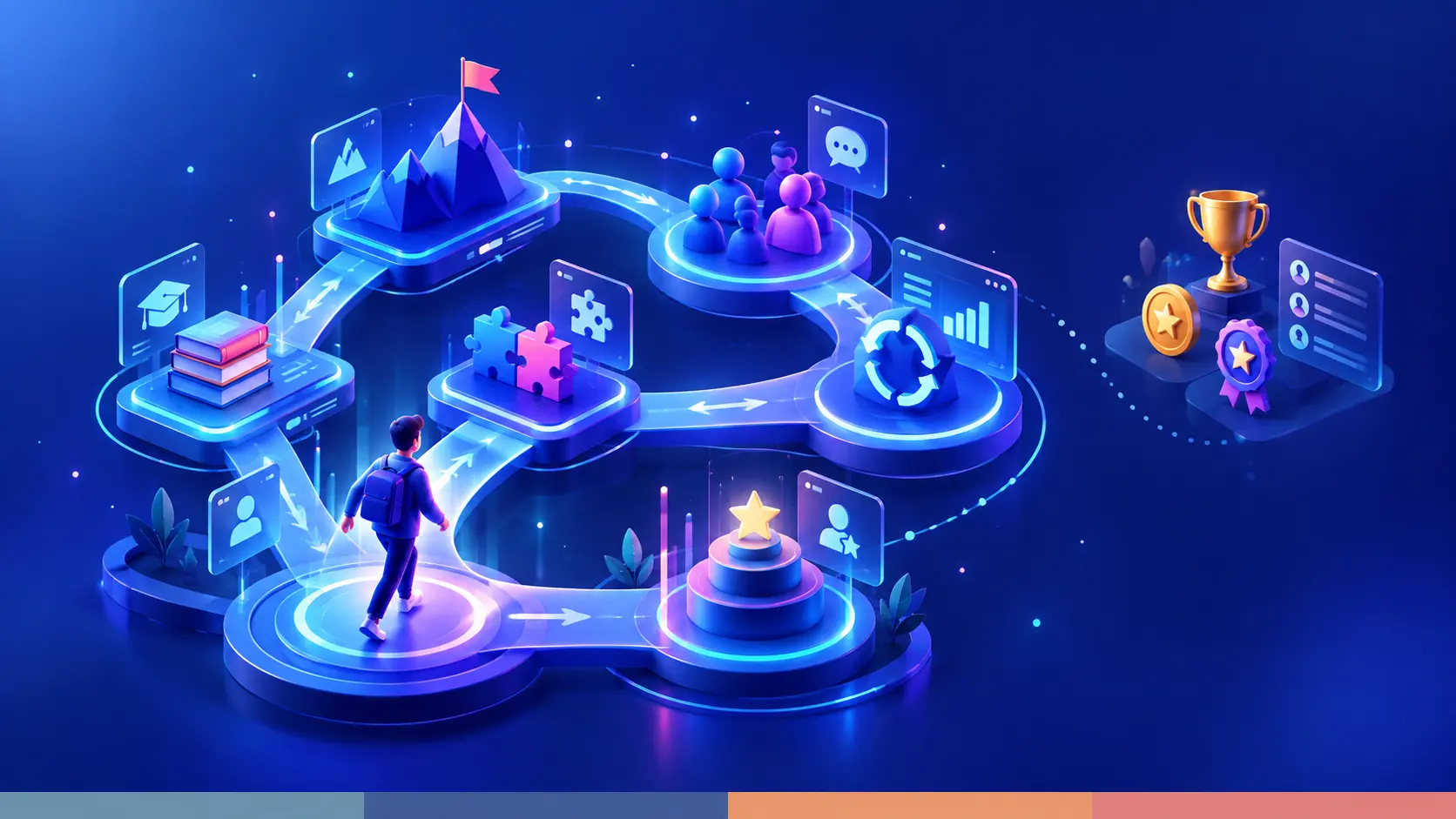
Examples of various types of Game-Based Assessments in Next Chapter GBA to measure candidate competencies.
More Engaging Assessment, Richer Data
For candidates, the assessment process feels more interactive compared to conventional approaches.
For HR, the results offer additional information to view candidates from a broader perspective.
And for companies, this approach opens opportunities to build recruitment processes that focus not just on who the candidates are, but also on how they demonstrate capabilities when facing various challenges.
Ultimately, technology isn’t about removing human involvement.
Good technology empowers humans with better information to make better decisions.
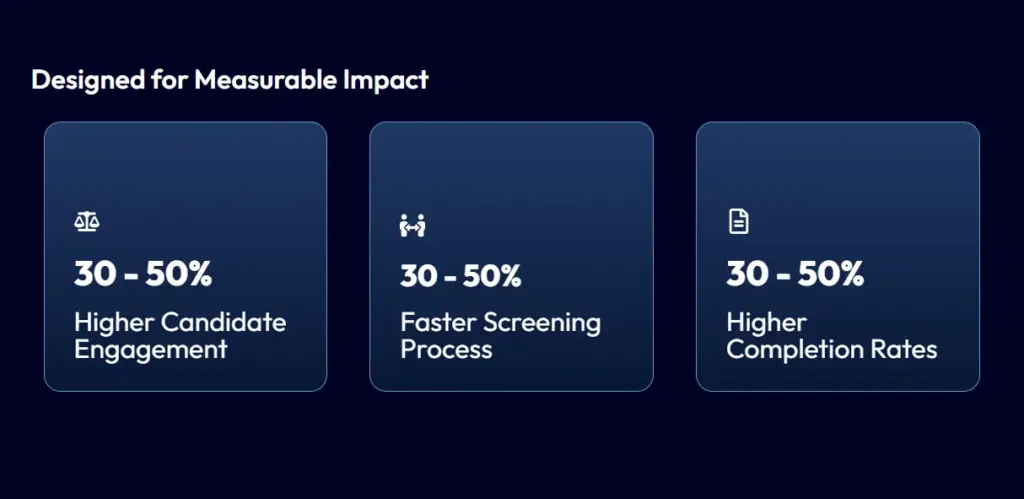
Benefits of Game-Based Assessment in enhancing recruitment process effectiveness.
So, Does Game-Based Assessment Make HR Obsolete?
No.
When used properly, Game-Based Assessment achieves quite the opposite.
Game-Based Assessment helps HR reduce tasks that can be structured, provides supplementary candidate data, and enriches perspectives prior to decision-making.
Because effective recruitment shouldn’t just ask:
“Which candidate seems like the best fit?”
But also:
“What data do we need to truly understand this candidate?”
Game-Based Assessment is not the end of HR’s role.
It is a tool that helps HR step into the next chapter.
Frequently Asked Questions
Does Game-Based Assessment replace HR?
No. Game-Based Assessment functions as a support tool helping HR gather additional data and insights about candidates. Final decisions still require human judgment and an understanding of organizational context.
What sets Game-Based Assessment apart from regular games?
Game-Based Assessment uses games as an evaluation medium. Games are designed around specific competencies or constructs to be measured, allowing candidate interactions to generate relevant assessment data.
Why do companies need Game-Based Assessment in recruitment?
Game-Based Assessment helps deliver added perspectives on candidates that may not be apparent from CVs or interviews alone, while making the assessment experience more engaging.
Can Game-Based Assessment results serve as the sole basis for recruitment decisions?
Ideally not. Game-Based Assessment results should be used alongside CVs, interviews, background experience, and other relevant factors. This approach helps HR make holistic decisions.
How does Next Chapter help HR in the assessment process?
Next Chapter from Level Up powered by Agate provides Game-Based Assessments combining game-driven experiences with structured evaluation methodologies, providing HR with supplemental data while delivering a more engaging assessment experience for candidates.
Ready to take your assessment process to the next chapter?
Game-Based Assessment is not about replacing HR with technology. It is about providing HR with richer data to make better-informed decisions.
Discover how Next Chapter from Level Up powered by Agate can help your company create more engaging assessment experiences while delivering valuable insights for talent evaluation.
It’s time not to replace HR with technology, but to empower HR with technology.
All company names, brand names, trademarks, logos, illustrations, videos and any other intellectual property (Intellectual Property) published on this website are the property of their respective owners. Any non-authorized usage of Intellectual Property is strictly prohibited and any violation will be prosecuted under the law.