

AI Hiring Fraud in Indonesia 2026: Why Self-Report Tests Are Failing and How Game-Based Assessment Can Help

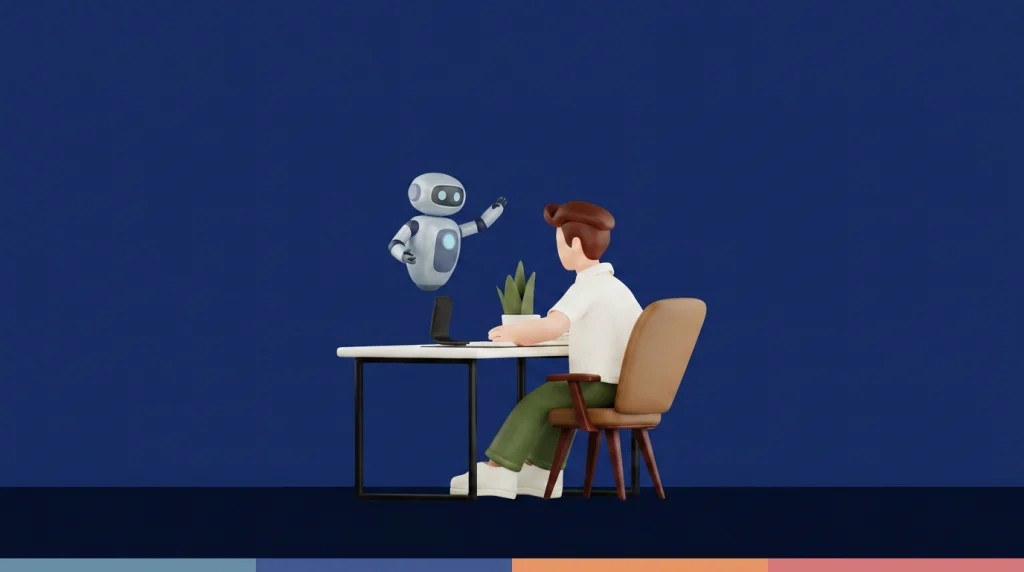
This year, your interview has a new participant, and it is not the candidate. It is the AI quietly answering for them.
Final Round AI, AceRound, and LockedIn are not concept apps from a future keynote. They are free, they are viral on HR TikTok, and they are already in active use across Indonesian hiring funnels in Q1 2026. They describe themselves as interview co-pilots, but the function is simple. They generate live, natural-sounding answers for candidates during video interviews and online assessments, and human interviewers rarely catch it.
If your assessment stack was built before this shift, there is a real chance you are no longer measuring the candidate. You are measuring how good they are at prompting their AI.
The Real Scale of the Problem: From Distortion to Answer Engineering
HR leaders have known for years that self-report assessments have weaknesses. Academic research published between 2020 and 2025 shows that roughly 50 percent of candidates already distort their answers on personality tests and situational judgment questionnaires, even without any AI involvement. The reason is simple. Candidates want the job, so they answer the way they think the company wants.
AI changes the nature of the problem. We are no longer talking about a candidate slightly inflating their teamwork score. We are talking about a language model crafting the statistically best answer for every Likert item, every hypothetical scenario, and every behavioral question, in real time, in fluent Bahasa Indonesia or English, with the tone adjusted to the role.
Why Traditional Assessments Are Especially Vulnerable
- Likert-scale personality tests such as DISC and Big Five questionnaires are pure text input, which is easy for AI to optimize.
- Hypothetical situational judgment tests reward the textbook correct response, which AI can produce on demand.
- Structured behavioral interviews over video call can be supported by co-pilot tools that transcribe the question and surface a scripted answer within seconds.
- Take-home case studies are difficult to distinguish from AI-authored work without proctoring.
Why Game-Based Assessment (GBA) Helps
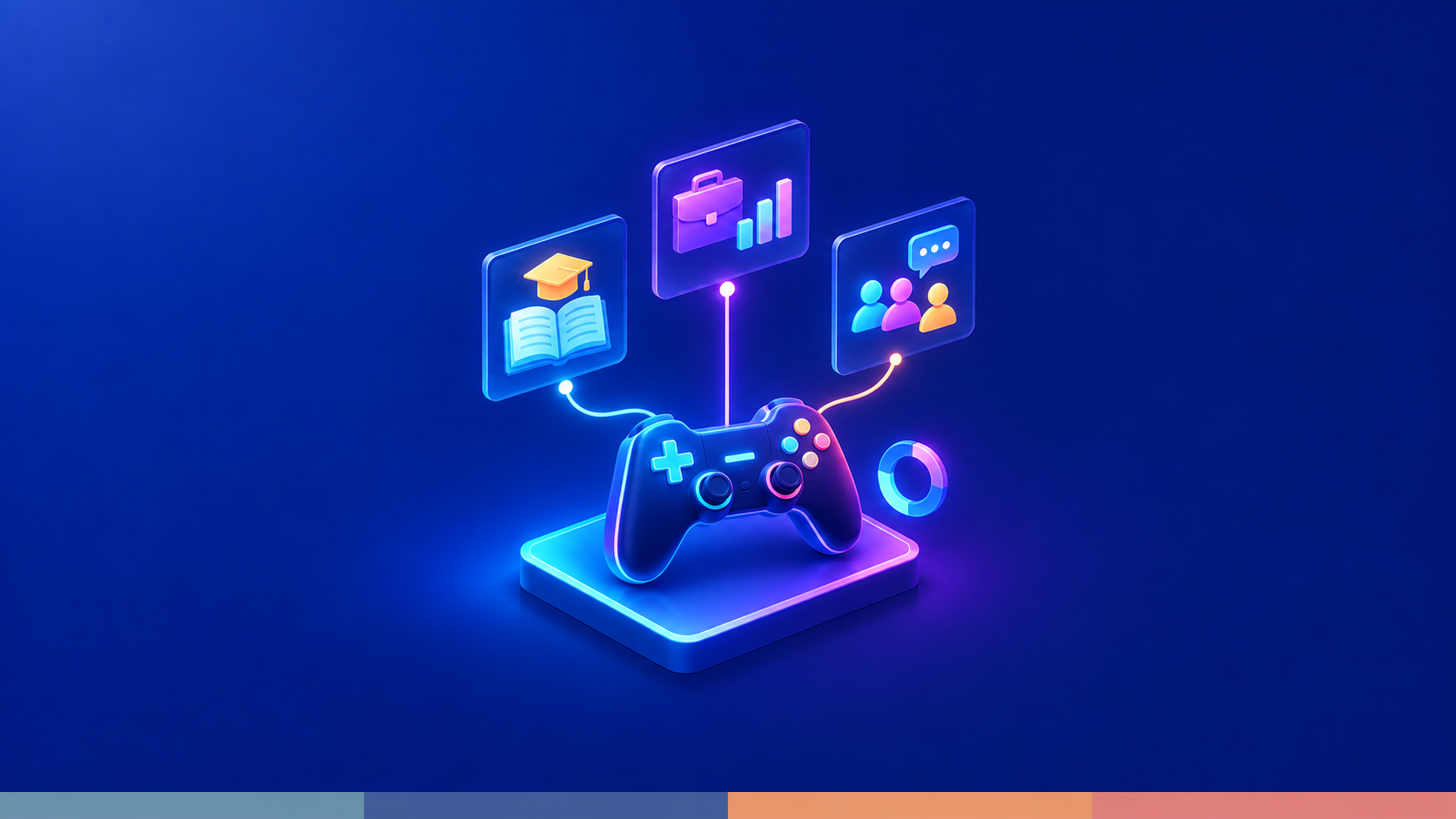
Game-Based Assessment does not ask the candidate what they would do. It watches what they actually do during a task.
Inside a GBA session, a candidate makes hundreds of small decisions. How they take risks under uncertainty, where they place their attention, how fast they respond, how they recover from a mistake, whether they keep trying after failure, and whether they cooperate or compete in scenarios that involve other players. These are behavioral signals, recorded during the task itself. An AI co-pilot can write a strong paragraph about being a team player, but it cannot make the player cooperate inside a fast-moving game loop.
What GBA Measures That Self-Report Cannot
- Decision-making under cognitive load, observed rather than described.
- Risk tolerance through actual choices in the game, not survey answers.
- Learning speed across repeated trials.
- Consistency between what a candidate says they value and what they actually choose in play.
- Cultural fit through gameplay style, instead of keyword-matched self-descriptions.
Proof Point: More Than 10,000 Indonesian Candidates Already Screened via GBA
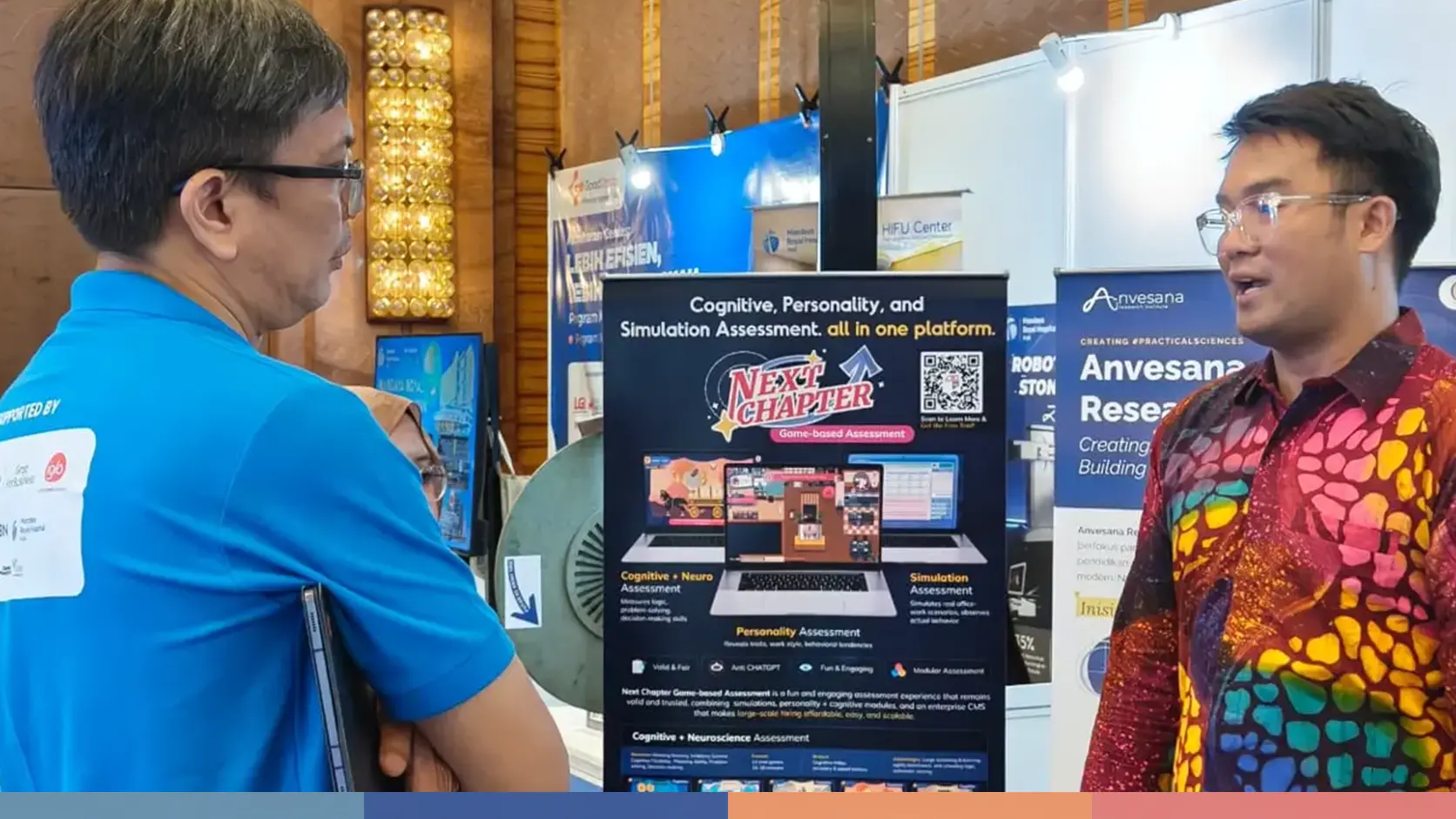
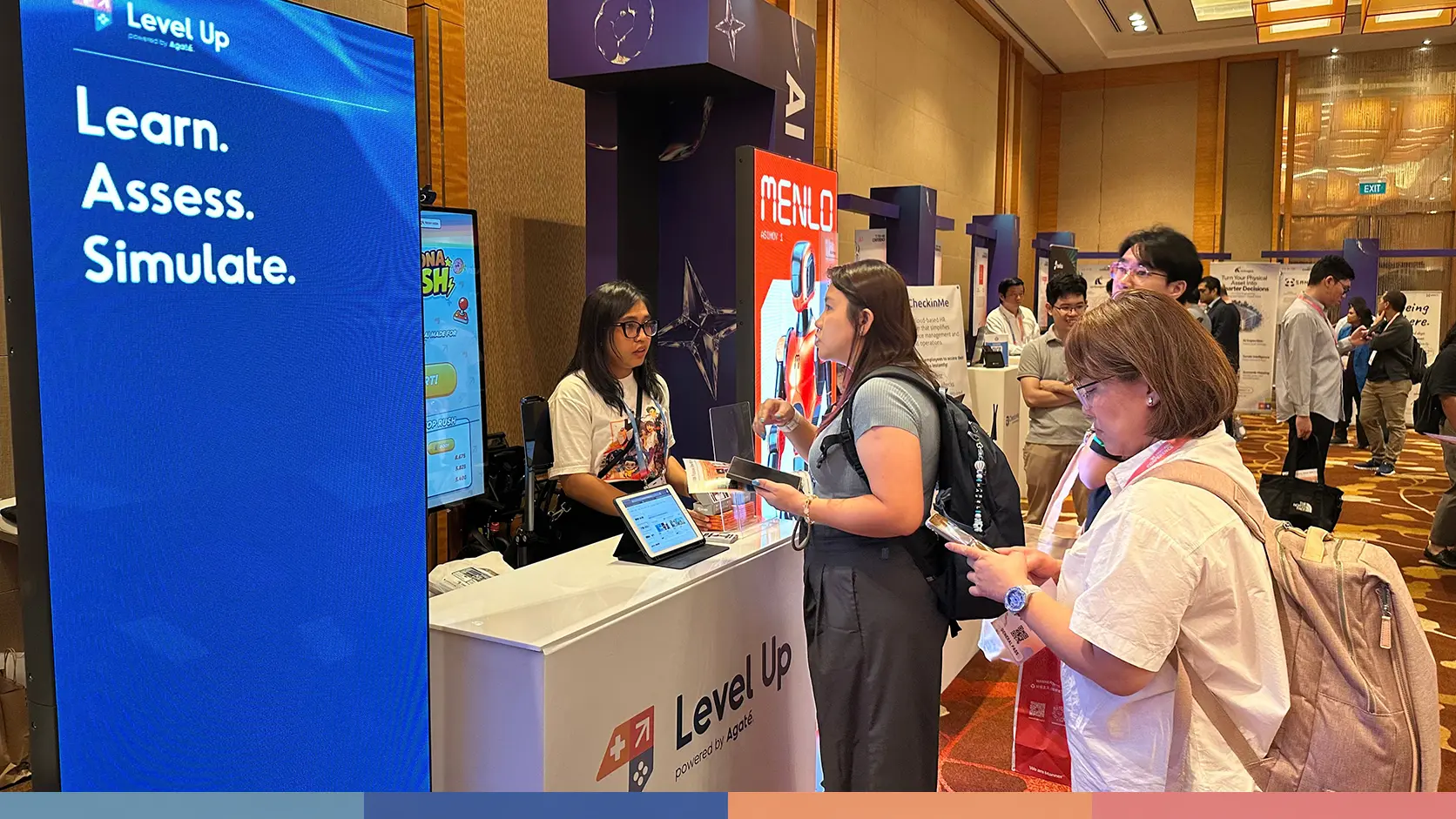
This is not theoretical. A major Indonesian telecommunications enterprise has already screened more than 10,000 candidates using a custom culture-fit Game-Based Assessment built on the Next Chapter platform by Agate Level Up. The full case study was published in April 2026 and shows measurable improvements in early-tenure retention compared to the previous self-report screening setup.
For Indonesian HR teams asking whether GBA is ready for enterprise scale, the answer is that it is already running at enterprise scale today.
The Question Every HR Director Should Ask in 2026
The assessment you are running right now was designed for a world before generative AI. So the more useful question is not how to detect AI in interviews, because detection is a losing chase. The better question is whether your current process is still measuring the human, or whether it is partly measuring their tools.
It is worth auditing your assessment stack this quarter, before the gap between scored answers and actual hires becomes harder to ignore.
Frequently Asked Questions (FAQ)
What is AI hiring fraud and how common is it in 2026?
AI hiring fraud is the use of generative AI tools, including Final Round AI, AceRound, and LockedIn, to produce interview answers, assessment responses, or case study outputs for a candidate. By Q1 2026 these tools are free, public, and widely shared on HR TikTok, which means any candidate with a laptop and a second screen can use them during a remote interview in Indonesia.
Can interviewers detect AI-assisted candidates?
Detection rates are low in practice. Modern interview co-pilots produce natural-sounding answers in real time and adapt to the role. Human interviewers usually catch the obvious cases, such as visible eye-darting or audio lag, but miss the more rehearsed ones. Detection alone is not a sustainable defense. Redesigning what you measure is more useful.
What is Game-Based Assessment (GBA)?
Game-Based Assessment is a behavioral measurement method that places candidates inside a purpose-built game scenario and records their actual decisions, response patterns, and behavioral signatures. Instead of asking how someone handles pressure, GBA creates pressure inside the game and observes their response. The output is a behavioral profile, not a self-report score.
Is GBA suitable for large enterprise hiring volumes in Indonesia?
Yes. A major Indonesian telecommunications enterprise has already screened more than 10,000 candidates through a culture-fit GBA built by Agate Level Up. The platform is designed for high-volume hiring funnels and works alongside standard ATS systems.
Does GBA replace interviews entirely?
No. GBA replaces the early screening and assessment layer, which is the stage most exposed to AI coaching. Final-round interviews still matter for role-specific discussions, but they work better when they are informed by behavioral data instead of by self-report scores that AI can engineer.
How quickly can a company deploy GBA?
Off-the-shelf GBA modules can be deployed in a few weeks. Custom culture-fit games, calibrated to a specific company’s values and roles, typically take 8 to 12 weeks including validation. The Agate Level Up team handles design, behavioral science calibration, and integration.
The Authors

Junialdi Dwijaputra

Dias Setyanto
Related Articles
Result: Faster creation, broader access, and more efficient workflows.
Source: Canva Newsroom
- All Posts
- All-EN
- Education-EN
- News-EN
- Service Highlight-EN
It leverages your brain’s reward system, giving you quick wins and visual progress that boost your motivation to keep going.