
How Astra International Uses Game-Based Assessment to Improve Employee Behavior Analysis
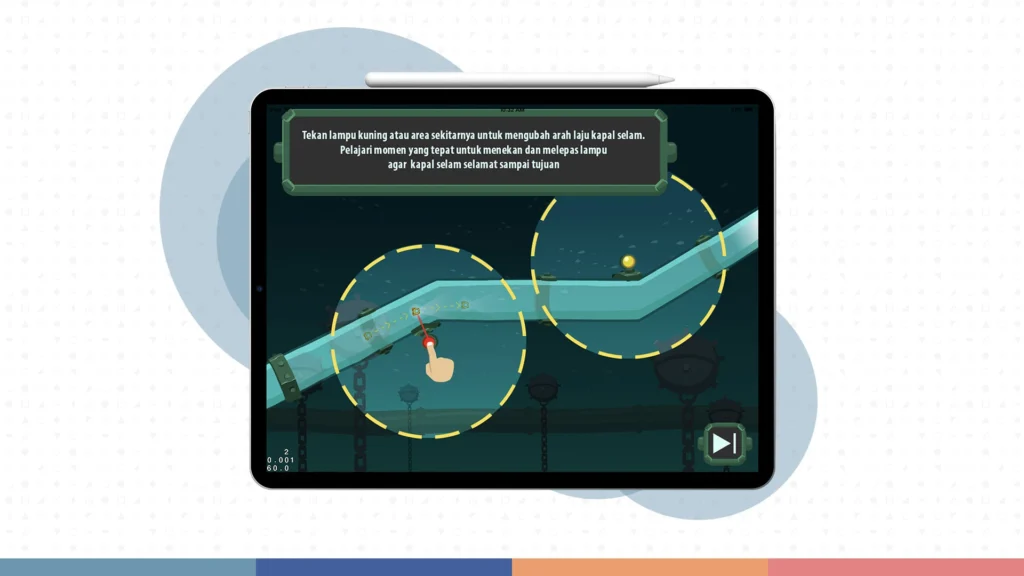
Home Services Our Works Gamification 101 Case Studies Turnkey Event Contact Languages Home Services Our Works Gamification 101 Case Studies Turnkey Event Contact Languages Home Services Our Works Gamification 101 Case Studies Turnkey Event Contact Languages Home Services Our Works Gamification 101 Case Studies Turnkey Event Contact Languages Edit Template How Astra International Uses Game-Based Assessment to Improve Employee Behavior Analysis Employee recruitment is a crucial process for organizations as it determines the quality and suitability of the workforce. However, traditional candidate assessment methods, such as written tests or interviews, have several limitations. Conventional assessment methods are often inaccurate and may not be relevant to job requirements and situations. Moreover, they may fail to capture the complex and dynamic behaviors needed by the organization. To address these challenges, Astra International collaborated with Level Up to create a game-based assessment tool that can evaluate the behavioral traits of potential employees in an engaging and accurate manner. The game, called Astra Underwater Maze, was designed to measure one crucial behavior for Astra International: perseverance. Perseverance, or the ability to keep trying, is key to achieving goals and overcoming challenges. It is also linked to other behaviors expected by an organization, such as problem-solving, decision-making, adaptability, and resilience. Therefore, an organization can gain valuable insights for various positions and job tasks by assessing perseverance. The objective of the Underwater Maze Game The main goal of creating Astra Underwater Maze is to enhance the assessment of employee candidates by moving away from traditional written tests. The game aims to provide an accurate way to evaluate specific behaviors, especially perseverance, through an interactive and enjoyable experience. Game-based assessment is an innovative method to measure learning outcomes and behaviors using digital games as assessment tools. Game-based assessment offers several advantages over conventional assessment methods, such as: Providing authentic and realistic contexts relevant to job requirements Offering quick feedback tailored to situations that enhance learning and motivation, collecting rich Diverse data reflecting candidate actions, choices, strategies, and processes Conducting hidden assessments seamlessly integrated into the game without disrupting fun and engagement Enhancing interest and satisfaction, reducing stress and boredom during tests. Through these advantages, Astra International hopes to achieve a more effective and efficient way to assess perseverance and related behaviors in candidates. Level Up Solution The Astra Underwater Maze game involves navigating a ship from one point to another without hitting maze walls. The ship moves automatically, requiring players to determine the next point for the ship’s movement accurately. This gameplay is designed to test players’ ability to control the ship without errors, indicating perseverance. The game consists of three levels with varying difficulty levels. Each level has a different maze shape, time limit, number of checkpoints, and lives. The game also provides feedback on player performance after each level, such as the number of mistakes made, time taken, and the score obtained. The results of the Astra Underwater Maze game can be used as an assessment of an individual’s level of perseverance. Perseverance is defined as “how much someone keeps trying to achieve goals despite facing difficulties or failures.” Perseverance is further divided into four sub-behaviors: Willingness to try again Ability to overcome disappointment Seeking help or feedback Enthusiasm to complete tasks Implementing the assessment for Astra Underwater Maze involves collecting and analyzing data from gameplay. This data includes: Number of mistakes made by players in each level Time taken by players to complete each level Score obtained by players in each level Number of players repeating or exiting the game This data is used to calculate a perseverance score for each player, as well as four norm scores indicating sub-behaviors of perseverance. The perseverance score ranges from 0 to 100, with a higher score indicating higher perseverance. The norm scores range from 1 to 5, with a higher score indicating higher sub-behavior. Results After collecting and analyzing data for over three years, the Astra Recruitment Center obtained significant results. The game results not only provided a standard perseverance score but also four other norm scores. These insights offer a comprehensive understanding of candidate behavioral traits, enabling better recruitment decisions. The effectiveness of the game was demonstrated through a one-year performance analysis of accepted candidates. Some key findings from the game include: Player perseverance scores positively correlate with academic performance and candidates’ critical thinking abilities, indicating that perseverance is a sign of general intelligence and capability. Player perseverance scores also positively correlate with job performance and satisfaction, suggesting that perseverance can make employees successful and happy in their roles. The four norm scores for players show different behavioral patterns among candidates, such as willingness to take risks, seeking solutions, self-regulation, and confidence. These patterns help identify candidates’ strengths and weaknesses, as well as their suitability for various positions and job tasks. These results demonstrate how the Astra Underwater Maze game provides a source of data on candidate behaviors. By using game-based assessment, Astra International was able to gain deep insights into candidate perseverance traits, surpassing what standard tests could provide. Furthermore, by comparing game results with actual employee performance, the Astra Underwater Maze game-based assessment proved accurate in indicating employee perseverance, making it a precise assessment tool. If you are interested in learning more about gamification and how it can benefit you or your organization Check out our gamification services page and contact us today. We are ready to help you create a gamification experience that aligns with your needs and preferences. Author Artikel Terkait All Posts All Education Service Highlight News Literasi Keuangan Lebih Baik dengan Gamifikasi: Kolaborasi dengan Bank Jago October 30, 2024/ Level Up powered by Agate Berpartisipasi sebagai Pembicara di Studium Generale BINUS University October 24, 2024/ Aplikasi Gamifikasi Terbaik untuk Pendidikan October 4, 2024/ Menciptakan Game yang Menyenangkan untuk Upaya Pemasaran October 3, 2024/ Bagaimana Membangun Game Dapat Memberdayakan Bisnis Anda October 2, 2024/ Contoh Gamifikasi Terbaik yang Perlu Kamu Ketahui October 1, 2024/ Memilih Partner Gamification dengan Perusahaan Pengembang Game September 30, 2024/ Memanfaatkan
How Secure is Indonesia’s Cybersecurity? A Reality Check

Home Services Our Works Gamification 101 Case Studies Turnkey Event Contact Languages Home Services Our Works Gamification 101 Case Studies Turnkey Event Contact Languages Home Services Our Works Gamification 101 Case Studies Turnkey Event Contact Languages Home Services Our Works Gamification 101 Case Studies Turnkey Event Contact Languages Edit Template How Secure is Indonesia’s Cybersecurity? A Reality Check Despite Indonesia ranking 5th in ASEAN and 49th globally in cybersecurity, the reality on the ground reveals a far more concerning situation. This ranking doesn’t necessarily reflect the robustness of Indonesia’s cybersecurity measures. Recent incidents and expert analyses paint a stark picture of a country struggling to cope with a barrage of cyber threats. Cybersecurity Incidents and Challenges High Frequency of Cyberattacks Indonesia is at the forefront of cyberattacks in Southeast Asia, facing an alarming average of 3,300 attacks per week over the past six months. This rate far exceeds those of its regional counterparts like Malaysia and Singapore, which see fewer than half the number of attacks. This disparity is largely attributed to Indonesia’s growing digital economy coupled with low cybersecurity spending. Analysts argue that Indonesia’s status as a prime target for hackers is a direct result of its underinvestment in cybersecurity infrastructure and expertise. Ransomware and Data Breaches The ransomware attack that demanded $8 million for Indonesia’s data highlighted glaring vulnerabilities in the country’s cybersecurity defenses. This incident, which disrupted multiple government services, including immigration and airport operations, exposed significant flaws in data management practices. Officials revealed that 98% of the government data stored in one of the compromised data centers had no backup, pointing to severe governance issues. Moreover, Indonesia has experienced numerous high-profile data breaches, including attacks on major e-commerce platforms, government databases, and financial institutions. For instance, the 2020 breach of Tokopedia, Indonesia’s largest online marketplace, compromised the data of 91 million users, including personal information and hashed passwords. Similarly, the breach of the National Health Care and Social Security Agency (BPJS Kesehatan) in 2021 exposed the personal data of 279 million people, highlighting the scale and severity of cyber threats faced by the country. Structural and Policy Shortcomings Underinvestment and Lack of Expertise Indonesia’s cybersecurity spending, at just 0.02% of GDP, is the lowest in Southeast Asia. This underinvestment has left the country ill-prepared to deal with sophisticated cyber threats. The absence of a unifying cybersecurity framework exacerbates this issue, leading to an underestimation of the value at risk and significant underinvestment in cybersecurity measures. Fragmented Regulations The regulatory landscape in Indonesia is fragmented and lacks comprehensive coverage. Various regulations address different aspects of cybersecurity without a cohesive strategy, resulting in gaps in protection. For example, Government Regulation No. 71/2019 focuses on cybercrimes related to electronic transactions but neglects critical infrastructure attacks. Similarly, Ministry of Defence Regulation No. 82/2014 addresses military cyber defense but not public cybersecurity. The Strategic Plans 2020–2024 of the Ministry of Communications and Informatics (MoCI) divide responsibilities between MoCI and the National Cyber and Encryption Agency (BSSN) for cyber defense and private data protection. While these plans include frameworks for emerging technologies like AI and blockchain, they lack specific action steps for e-government implementation, further highlighting the need for a cohesive national strategy. The National Cyber Security Index (NCSI) and Its Implications The National Cyber Security Index (NCSI) is a global, dynamic index designed to measure the preparedness of countries to prevent cyber threats and manage cyber incidents. It serves as a database with publicly available evidence materials and a tool for building national cybersecurity capacity. The NCSI aims to provide accurate and up-to-date public information about national cybersecurity by developing comprehensive measurement tools. In the coming years, the NCSI team plans to create various applications for national cybersecurity analysis and development. Understanding the NCSI Methodology The NCSI evaluates countries based on several key indicators, which are divided into different categories: Legal Measures: The presence of laws and regulations specifically addressing cybersecurity and cybercrime. Technical Measures: Availability of cybersecurity technologies and infrastructure. Organizational Measures: Establishment and effectiveness of national cybersecurity agencies and institutions. Capacity Building: Efforts to enhance the skills and knowledge of cybersecurity professionals and the general public. Cooperation: International and national cooperation in cybersecurity efforts. Basic Cyber Hygiene: Practices and policies that ensure fundamental cybersecurity practices are followed. These categories are assessed based on publicly available evidence, which includes official documents, policies, and reports. The index emphasizes what is documented and available on paper, such as regulations and institutional frameworks, rather than the practical implementation and effectiveness of these measures. The Reality of Indonesia’s Cybersecurity Ranking Although various news sources have reported that Indonesia ranks 49th globally in cybersecurity according to the NCSI, which on paper sounds good enough, we need to consider that this information does not effectively reflect the current situation. Recent high-profile security breaches within the country suggest a different reality. This discrepancy highlights a significant issue with relying solely on indices like the NCSI for understanding a country’s cybersecurity posture. The NCSI provides a snapshot based on formal documentation and frameworks but does not necessarily reflect the on-the-ground reality of how well a country can defend against and respond to cyber threats. Practical Implications The practical effectiveness of a country’s cybersecurity measures depends not just on the presence of regulations and institutions but on their real-world application and the country’s ability to respond to dynamic cyber threats. Indonesia’s high frequency of cyberattacks, the severity of recent ransomware incidents, and ongoing data breaches demonstrate significant gaps between documented policies and actual cybersecurity resilience. Key Takeaways: Regulations vs. Reality: Indonesia might have various regulations and institutions in place, but their practical implementation is where the true test of cybersecurity lies. Governance and Infrastructure: Improving governance, enhancing infrastructure, and ensuring regular updates and maintenance are crucial for translating policies into effective defense mechanisms. Continuous Improvement: As cyber threats evolve, continuous improvement and adaptation of cybersecurity measures are necessary. This includes not only updating regulations but also ensuring that they are effectively implemented and enforced. The NCSI serves as
How Can Gamification Make Your Customers Love Your Brand More?
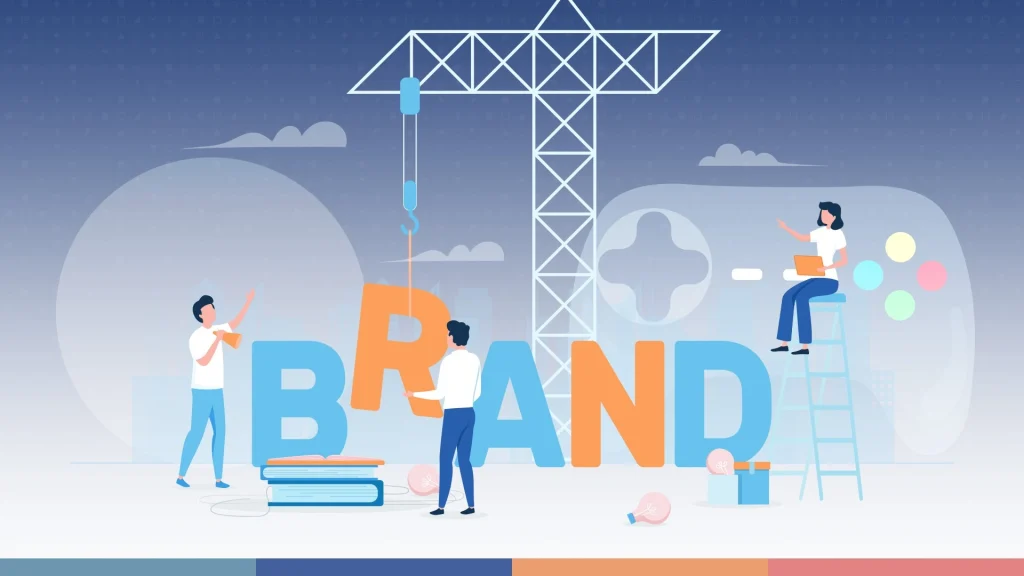
Home Services Our Works Gamification 101 Case Studies Turnkey Event Contact Languages Home Services Our Works Gamification 101 Case Studies Turnkey Event Contact Languages Home Services Our Works Gamification 101 Case Studies Turnkey Event Contact Languages Home Services Our Works Gamification 101 Case Studies Turnkey Event Contact Languages Edit Template How Can Gamification Make Your Customers Love Your Brand More? That’s what researchers Nannan Xi and Juho Hamari set out to explore. They surveyed 824 users from two brand communities with gamified online activities in them: Xiaomi and Huawei. According to their research titled, “Does gamification affect brand engagement and equity? A study in online brand communities“, found that different parts of the game, such as badges, challenges, missions, and goals, can make people and communities more interested in your brand in different ways (emotionally, cognitively, and socially). They also found that if users like your brand more and get to know your brand better, their propensity to buy will increase. This signifies that games are a great way to increase your brand engagement and equity. That said, not all games are the same. You need to design a game that suits your brand’s goals and your customers’ needs. What are the types of games that you can use to increase your brand engagement and equity? Based on Xi and Hamari’s research, there are three different types of game features: Achievement features: These reward users for their efforts or achievements in performing brand-related activities. Examples are badges, points, levels, rankings, etc. This feature can increase users’ emotional engagement (positive feelings towards the brand), cognitive engagement (thinking about the brand), and social engagement (interacting with others about the brand). Social interaction features: These features facilitate users to communicate and collaborate with other users in the brand community. Examples are discussion forums, chats, groups, etc. This feature can increase users’ social engagement. Immersion features: This feature provides users with an engaging and fun experience in doing brand-related activities. Examples are stories, characters, graphics, sounds, etc. This feature can increase user social engagement. How to measure the impact of games on brand engagement and equity? According to Xi and Hamari, there are several indicators you can use: Emotional engagement: How often do you feel happy, proud, or satisfied when using the brand’s products or services? Cognitive engagement: How often do you think about or seek information about the brand’s products or services? Social engagement: How often do you talk or listen to others about the brand’s products or services? Brand awareness: How easily do you recognise or remember the brand’s products or services? Brand association: What are the positive things you associate with the brand’s products or services? Brand loyalty: How likely are you to buy the brand’s products or services again in the future? Using these indicators, we can find out how much influence gaming has on your brand engagement and equity. What are the benefits of gaming for your business? Based on Xi and Hamari’s research, there are several benefits that we can derive: Increase customer engagement with your brand: Customers who are emotionally, cognitively and socially engaged with your brand are more satisfied, loyal and become advocates for your brand. Increase your brand equity: Customers with high brand awareness, positive brand associations, and strong brand loyalty will bring more value to your business. Increase sales of your product or service: Customers who are engaged and have high brand equity will be more likely to purchase your products or services, either directly or indirectly. In other words, games are not just entertainment but also an effective marketing strategy. By using games, we can make our customers love our brand more and boost our business. However, you also need to pay attention to the design and implementation of the game that suits your goals and targets. If you are interested in learning more about gamification and how it can benefit you or your organization Check out our gamification services page and contact us today. We are ready to help you create a gamification experience that aligns with your needs and preferences. Author Related Articles All Posts All-EN Level Up Agate’s Journey | Celebrating the Present, and Shaping the Future December 27, 2024/ How Do We Know If Our Training Works? December 26, 2024/ Do You Agree That TV Shows Aren’t What They Used to Be? December 19, 2024/ Debunking the Learning Pyramid December 19, 2024/ Understanding the Dynamics of Sales Promotions December 12, 2024/ Balancing Between Work, Study, and Leisure December 11, 2024/ How Video Games and Pop Culture Push Educational Success December 6, 2024/ The Shocking Truth About Screen Time and Your Child’s Brain December 5, 2024/ Level Up powered by Agate at Money Fest 2024 x UMN Career Day 2024: Raise You Up! December 3, 2024/ Load More End of Content. All company names, brand names, trademarks, logos, illustrations, videos and any other intellectual property (Intellectual Property) published on this website are the property of their respective owners. Any non-authorized usage of Intellectual Property is strictly prohibited and any violation will be prosecuted under the law. © 2023 Agate. All rights reserved. Home Services Our Works Contact Gamification 101 Case Studies Gamification for Marketing Gamification for Learning Instagram Linkedin Twitter Facebook Youtube Edit Template
Why You Should Gamify Your Stores
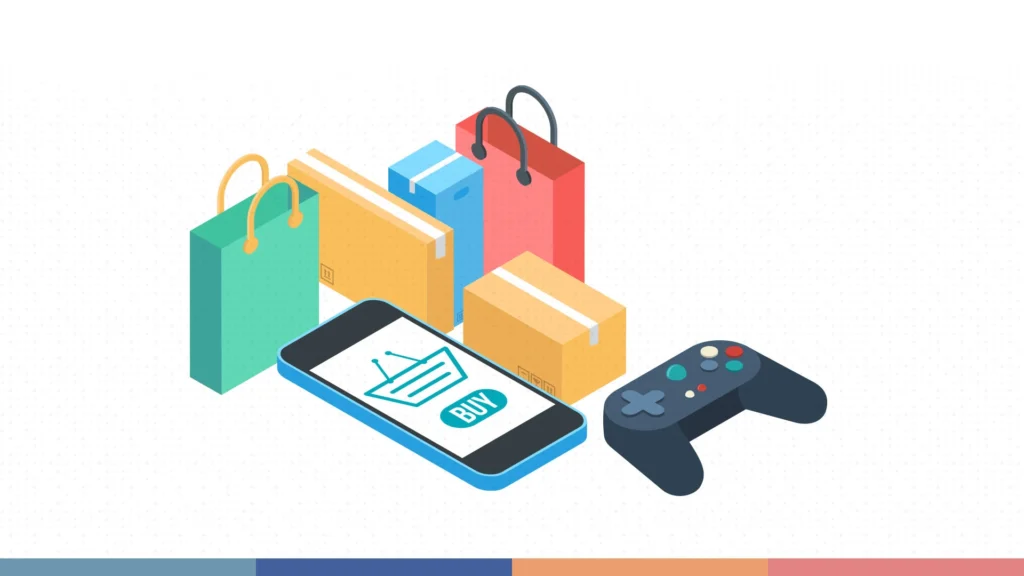
Home Services Our Works Gamification 101 Case Studies Turnkey Event Contact Languages Home Services Our Works Gamification 101 Case Studies Turnkey Event Contact Languages Home Services Our Works Gamification 101 Case Studies Turnkey Event Contact Languages Home Services Our Works Gamification 101 Case Studies Turnkey Event Contact Languages Edit Template Why You Should Gamify Your Stores In a rapidly evolving digital landscape, the fusion of gaming and online retail has given birth to an exciting trend – gamified virtual stores. This innovative approach not only engages customers in an immersive shopping experience but also holds the potential to skyrocket your online sales. Imagine combining the allure of gaming with the practicality of virtual shopping, all powered by the expertise of Level Up, a leading gamification service company powered by Agate. The Rise of Gamified Virtual Stores: A Retail Revolution The online retail industry is undergoing rapid changes and challenges, especially in the wake of the Covid-19 pandemic. Consumers are shifting their shopping habits and preferences, and retailers need to adapt and innovate to stay ahead of the competition. One of the emerging trends that is reshaping the online shopping landscape is gamified virtual stores. Gamified virtual stores are digital environments that mimic physical stores, but with added elements of fun, challenge, and reward. They allow customers to explore products, learn about brands, and even socialize with other shoppers in a playful way. Gamified virtual stores can increase customer satisfaction, loyalty, and retention, as well as boost sales and conversions. Gamified virtual stores are especially appealing to Gen Z, the generation born between 1997 and 2012, who are expected to account for 40% of global consumers by 2020. Gen Z are digital natives who grew up with video games, social media, and smartphones. They are looking for experiential retail that offers them more than just products, but also stories, emotions, and connections. However, creating a gamified virtual store is not a simple task. It requires a combination of technical skills, creative vision, and business acumen. That’s why collaborating with the right experts is essential. One of the platforms that can help retailers create gamified virtual stores is Obsess, which offers immersive, 3D-rendered, and interactive experiences that engage customers and increase brand loyalty. Obsess has partnered with the world’s leading brands and retailers to create more than 300 virtual stores and experiences, such as Bloomingdale’s virtual ski slope, J.Crew’s chocolate wonderland, and L’Occitane’s trip to the French Alps. Another platform that can help retailers create gamified virtual stores is Emperia, which enables brands to design and launch their own virtual stores in minutes. Emperia allows brands to create realistic 360 photographed e-commerce storefronts that bring their brand’s real-world aesthetic to a highly engaged online audience. Emperia also provides gamified features, such as quizzes, games, and customizers, that incentivize product discovery, purchase intent, and first-party data collection. Gamified virtual stores are not only entertaining, but also useful in driving sales and loyalty. According to Obsess, gamified virtual stores can increase conversion rates by up to 400%, average order value by up to 60%, and repeat visits by up to 300%. Gamified virtual stores can also help brands collect valuable data on customer behavior, preferences, and feedback, which can be used to improve their products, services, and marketing strategies. Gamified virtual stores are the future of online retail. They offer a unique way to showcase products, tell brand stories, and connect with customers. Retailers who want to attract more customers and boost their online sales this holiday season should consider creating a gamified virtual store for their brand. They can use platforms like Obsess, Emperia, or Elizabeth Arden to design and launch their own virtual store in minutes and get inspired by the virtual stores of other brands like Lacoste, Ralph Lauren, and Elizabeth Arden, who have updated their virtual stores for the holiday season. Gamified virtual stores are the ultimate way to stand out from the crowd and delight shoppers with gamified virtual stores. Crafting Engaging Games for Physical and Virtual Products Imagine customers not only browse through your product catalog but also embark on interactive adventures that seamlessly blend physical and virtual purchases. With the help of the right gamification service provider, there are countless gamification activities that you can use for your product, creating a higher value for your product as well as increasing customer loyalty. Gamification can create immersive and enjoyable experiences that motivate customers to interact with products, brands, and other users. Furthermore, gamification can bridge the gap between physical and virtual products, offering customers a phygital experience that combines the best of both worlds. Gamification can also create phygital products, which are physical products with a digital counterpart or extension. Phygital products can offer customers a holistic and seamless experience that combines the tangible and intangible aspects of a product. For example, a retailer can create a game that links a physical product, such as a toy, a book, or a jewelry, to an NFT that represents a digital product, such as a character, a story, or a design. The game can then allow customers to interact with both the physical and the digital product and enjoy the benefits of both. For example, a game can feature a physical toy that comes with an NFT that unlocks a digital character in a virtual world and then allows customers to play with both the toy and the character and even trade or exchange them with other users. This empowers brands to create games that go beyond the ordinary, offering users virtual try-ons, interactive product exploration, and exclusive in-game purchases. Experiential Retail for the Digital Natives During the holiday season, the focus is on attracting Gen Z shoppers, who make up a significant portion of global consumers. Born between 1997 and 2012, Gen Z seeks more than just products; they crave experiences, stories, and connections. Gamified virtual stores, especially those powered by Level Up and Agate, cater perfectly to these digital natives by providing personalized, interactive, and social shopping experiences. Picture customers skiing down a virtual mountain
How Karyamas Improves Field Employees’ Knowledge and Work Quality with an Innovative Learning Solution Game
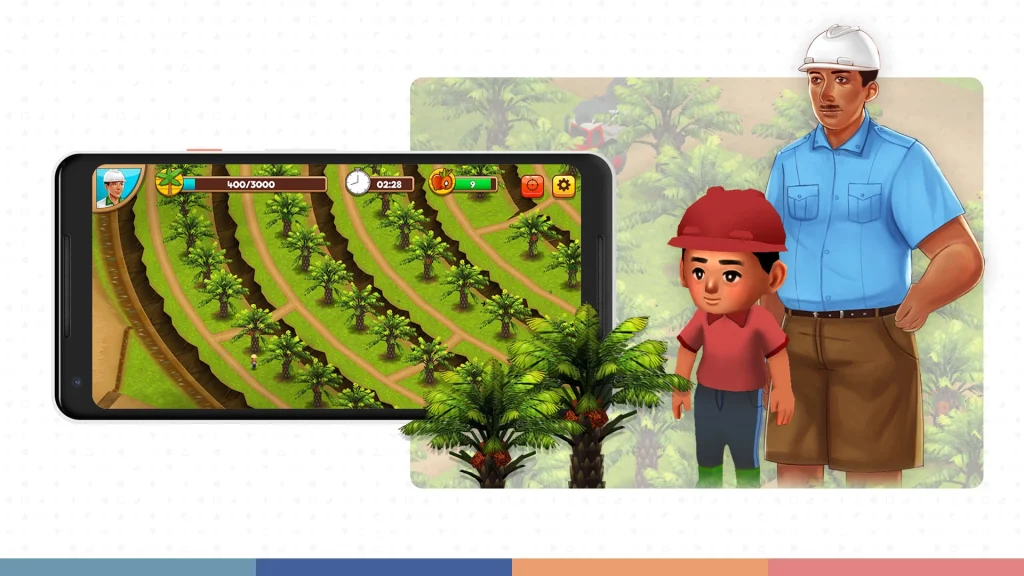
Home Services Our Works Gamification 101 Case Studies Turnkey Event Contact Languages Home Services Our Works Gamification 101 Case Studies Turnkey Event Contact Languages Home Services Our Works Gamification 101 Case Studies Turnkey Event Contact Languages Home Services Our Works Gamification 101 Case Studies Turnkey Event Contact Languages Edit Template How Karyamas Improves Field Employees’ Knowledge and Work Quality with an Innovative Learning Solution Game Field employees are a valuable asset for oil palm plantation companies, as they are responsible for maintaining productivity and crop health. However, the challenge faced by field employees is the lack of knowledge and skills in accordance with standard operating procedures (SOPs) in the plantation. This can have a negative impact on work quality and crop yields. In addition, conventional learning methods are often ineffective in improving employees’ understanding and practical application. Karyamas, which is one of the oil palm plantation companies in Indonesia has a challenge to improve the knowledge and work quality of their field employees, who are responsible for maintaining the health and productivity of oil palm trees. To address this challenge, Karyamas worked with Level Up to develop an innovative learning solution in the form of a mobile simulation game that simulates SOPs in oil palm plantations. The game is designed to be fun, interactive, and realistic. The game allows employees to learn and practice SOPs in a safe and engaging environment while getting immediate feedback and guidance. The game also tracks and measures employee performance and progress, providing valuable insights for improvement. The game is designed to be a fun and interactive simulation, allowing employees to learn and practice SOPs in a safe and engaging environment while getting immediate feedback and guidance. The game also tracks and measures employee performance and progress, providing valuable insights for improvement. The implementation of this innovative learning solution has resulted in a significant impact in line with the initial objective of improving knowledge and work quality among Karyamas’ field employees. The adoption of this engaging and interactive approach has proven highly effective in improving employees’ skills, productivity, and overall performance. Here are some of the results and impacts achieved by Karyamas through this game-based learning solution: Improved Knowledge Acquisition: The mobile simulation game has successfully facilitated the acquisition of critical knowledge related to plantation procedures and productivity factors. Through interactive scenarios and real-time decision-making, employees have gained a deeper understanding of key aspects that affect their work. Increased Engagement and Participation: The engaging nature of the game has increased employee engagement and active participation. By assuming the role of an estate manager, employees are motivated to explore different strategies and scenarios, fostering a proactive learning experience. Practical Application of Learning: The game structure, which involves interacting with objects in the field and answering procedure-related questions, has enabled employees to apply theoretical knowledge to practical situations. This bridge between theory and application has resulted in improved performance in the workplace. Real-time Feedback and Assessment: The question-and-answer format of the game provides real-time feedback and assessment, allowing employees to assess their understanding of plantation procedures. The immediate feedback helps in identifying areas of improvement and addressing misconceptions quickly. Offline Accessibility and Data Synchronization: The offline play capability of the game ensures continuous learning even in remote locations without network connectivity. The auto-sync feature enhances the user experience by enabling data collection and content updates while connected to the network, ensuring the delivery of up-to-date and relevant content. Quantifiable Progress Tracking: The data capture mechanism of the game enables tracking of each employee’s progress and performance. Karyamas can measure improvement through metrics such as completion rate, correct response, and time taken to complete a scenario. Scalable and Customizable Solution: The customizable design of the mobile game made it possible to incorporate new content, ensuring relevance and continuous learning. This scalability provides Karyamas with the flexibility to handle evolving training needs. Positive Impact on Quality of Work: The holistic learning experience provided by the game has translated into a marked improvement in work quality among Karyamas’ field employees. The knowledge gained and practical skills honed through the game have had a positive effect on daily tasks and overall productivity. The implementation of this innovative learning solution in the form of a mobile simulation game has proven to be an effective strategy for Karyamas. By enhancing knowledge acquisition, engagement, practical application, and real-time assessment, the solution has improved work quality and productivity among Karyamas’ field employees, in line with the initial objectives. If you are interested in learning more about gamification and how it can benefit you or your organization Check out our gamification services page and contact us today. We are ready to help you create a gamification experience that aligns with your needs and preferences. Authors Related Articles All Posts All Literasi Keuangan Lebih Baik dengan Gamifikasi: Kolaborasi dengan Bank Jago October 30, 2024/ Level Up powered by Agate Berpartisipasi sebagai Pembicara di Studium Generale BINUS University October 24, 2024/ Aplikasi Gamifikasi Terbaik untuk Pendidikan October 4, 2024/ Menciptakan Game yang Menyenangkan untuk Upaya Pemasaran October 3, 2024/ Bagaimana Membangun Game Dapat Memberdayakan Bisnis Anda October 2, 2024/ Contoh Gamifikasi Terbaik yang Perlu Kamu Ketahui October 1, 2024/ Memilih Partner Gamification dengan Perusahaan Pengembang Game September 30, 2024/ Memanfaatkan Mini Game dalam Aplikasi Loyalitas untuk Meningkatkan Keterikatan Pelanggan September 27, 2024/ Apakah VR dalam Pendidikan Menjanjikan? September 26, 2024/ Load More End of Content. All company names, brand names, trademarks, logos, illustrations, videos and any other intellectual property (Intellectual Property) published on this website are the property of their respective owners. Any non-authorized usage of Intellectual Property is strictly prohibited and any violation will be prosecuted under the law. © 2023 Agate. All rights reserved. Home Services Our Works Contact Gamification 101 Case Studies Gamification for Marketing Gamification for Learning Instagram Linkedin Twitter Facebook Youtube Edit Template
Insights on Many Gamification Applications
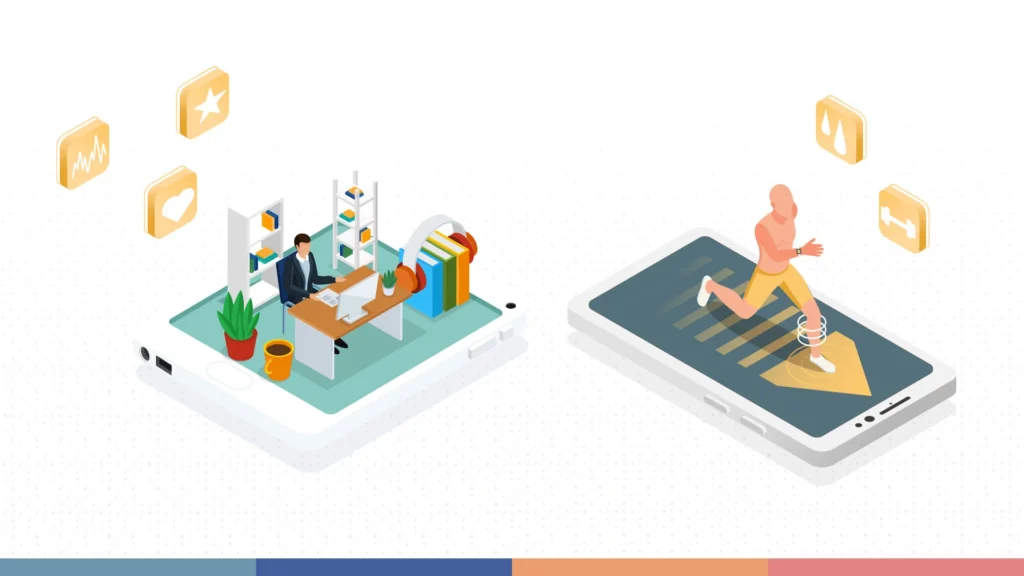
Home Services Our Works Gamification 101 Case Studies Turnkey Event Contact Languages Home Services Our Works Gamification 101 Case Studies Turnkey Event Contact Languages Home Services Our Works Gamification 101 Case Studies Turnkey Event Contact Languages Home Services Our Works Gamification 101 Case Studies Turnkey Event Contact Languages Edit Template Insights on Many Gamification Applications Today, where user engagement is preeminent, the concept of gamification has emerged as a powerful tool to captivate audiences across various domains. At the forefront of this movement is Yu-kai Chou, a gamification expert who has revolutionized the way we understand and apply game-like elements in non-game contexts. Chou’s Octalysis framework, a comprehensive model outlining eight core human drives, serves as a compass for businesses and designers seeking to unlock the secrets of engagement. Understanding Octalysis Yu-kai Chou’s Octalysis framework delves into the intricacies of human motivation, breaking it down into eight fundamental drives. These drives, arranged in an octagon, provide a holistic perspective on what compels individuals to act, participate, and remain engaged. From the quest for epic meaning to the avoidance of loss, Octalysis encompasses a spectrum of motivations that can be harnessed to create compelling and immersive experiences. Gamification in Various Applications The main goal of gamification is to enhance user engagement, motivation, and behavior change by making the experience more fun, rewarding, and meaningful. The users of the gamification technique must decide what or in which area they want to apply the gamification techniques. There are several areas where gamification can be applied successfully with good game design techniques integrating playfulness and fun in the respective areas. Gamification can be used in various applications and domains, depending on the desired outcomes and target audience. One of the most influential and comprehensive frameworks for understanding and implementing gamification is the Octalysis framework, developed by Yu-kai Chou. The Octalysis framework is based on the idea that there are eight core drives that motivate human behavior, and each drive can be mapped to a different aspect of the octagon-shaped framework. The eight core drives are: Epic Meaning & Calling: The drive to be part of something bigger than oneself, to pursue a higher purpose or cause. Development & Accomplishment: The drive to improve oneself, to overcome challenges, and to achieve goals. Empowerment of Creativity & Feedback: The drive to express oneself, to experiment with different options, and to receive feedback on one’s actions. Ownership & Possession: The drive to own, control, or collect something valuable or scarce. Social Influence & Relatedness: The drive to connect with others, to belong to a group, and to be influenced by social norms and expectations. Scarcity & Impatience: The drive to obtain something that is limited, exclusive, or unavailable. Unpredictability & Curiosity: The drive to explore the unknown, to seek novelty, and to be surprised. Loss & Avoidance: The drive to avoid negative consequences, such as pain, fear, or regret. The Octalysis framework can be used to analyze, design, and optimize any gamified system or experience, by identifying which core drives are present, how they are balanced, and how they can be enhanced or modified. The framework can also help to distinguish between different types of gamification, such as white hat vs black hat (ethical vs manipulative), and intrinsic vs extrinsic (internal vs external) motivation. The versatility of the Octalysis framework makes it applicable to a wide range of domains and contexts, as we will see in the following sections. Gamification in Product Design One of the most common and popular applications of gamification is in product design, where gamification elements can be incorporated into the user interface, functionality, and features of a product, to enhance the user experience and satisfaction. Some of the common gamification elements used in product design are: Loyalty programs: These are programs that reward users for their repeated or continuous use of a product, such as points, discounts, coupons, or freebies. For example, Starbucks Rewards is a loyalty program that allows customers to earn stars for every purchase, which can be redeemed for free drinks, food, or merchandise. Loyalty programs tap into the core drives of ownership & possession, development & accomplishment, and scarcity & impatience. Achievement badges: These are visual symbols that represent the user’s progress, achievements, or skills in using a product, such as levels, ranks, medals, or trophies. For example, Duolingo is a language learning app that awards badges for completing lessons, reaching milestones, or maintaining streaks. Achievement badges tap into the core drives of development & accomplishment, social influence & relatedness, and epic meaning & calling. Progress tracking: These are features that show the user’s current status, goals, or performance in using a product, such as bars, meters, charts, or graphs. For example, Fitbit is a fitness tracker that shows the user’s steps, calories, heart rate, sleep, and other health metrics. Progress tracking taps into the core drives of development & accomplishment, empowerment of creativity & feedback, and loss & avoidance. Gamification in the Workplace Another important application of gamification is in the workplace, where gamification principles can be applied to boost employee motivation, productivity, and performance. Gamification can be used to enhance various aspects of the workplace culture, such as: Training and learning: Gamification can make training and learning more engaging and effective, by incorporating game elements such as challenges, quizzes, feedback, rewards, and leaderboards. For example, Deloitte is a consulting firm that uses gamification to train its employees on topics such as leadership, ethics, and compliance. Gamification can also help to foster a culture of continuous learning and improvement, by encouraging employees to acquire new skills and knowledge. Collaboration and teamwork: Gamification can foster collaboration and teamwork, by creating a sense of community, competition, and cooperation among employees. For example, Google is a tech company that uses gamification to promote collaboration and innovation among its employees, by allowing them to vote, comment, and rank each other’s ideas. Gamification can also help to create a sense of belonging and relatedness, by enabling employees to share their achievements,
Batique: Indonesia’s First Game-Based Cognitive Ability Test
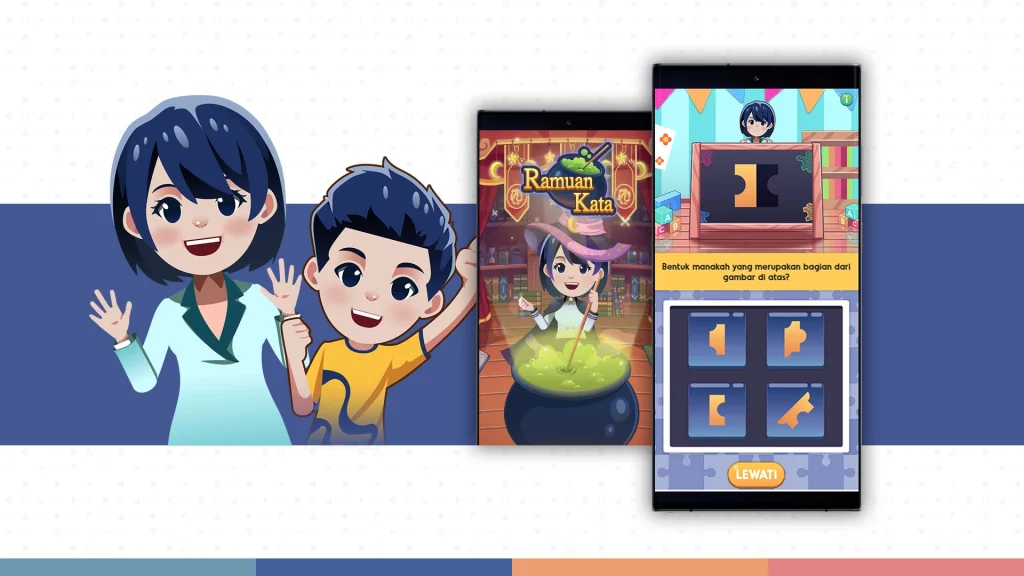
Home Services Our Works Gamification 101 Case Studies Turnkey Event Contact Languages Home Services Our Works Gamification 101 Case Studies Turnkey Event Contact Languages Home Services Our Works Gamification 101 Case Studies Turnkey Event Contact Languages Home Services Our Works Gamification 101 Case Studies Turnkey Event Contact Languages Edit Template Batique: Indonesia’s First Game-Based Cognitive Ability Test In an era where cognitive challenges are becoming increasingly complex, it is important to understand and optimise cognitive abilities. For many people, especially parents who want to see their child’s development, measuring and improving intelligence becomes a priority. That’s why the arrival of Batique, Indonesia’s first game-based intelligence test, is a revolutionary step in bridging the fun of play with the importance of cognitive development. In this article, we will explore the importance of this innovative approach and how Batique is not just a test, but a step towards exploring the world of your child’s intelligence in a fun and challenging way. What is Batique? Batique is a collaboration between Level Up powered by Agate, PT Melintas Cakrawala Indonesia (MCI), a company engaged in human resource development, and Universitas Gadjah Mada (UGM). Batique is the AJT Cognitive Test (AJT CogTest), which is a test designed to measure the cognitive abilities of children aged 5 to 12 years. Cognitive ability is the ability to plan, solve problems, argue, think abstractly, understand complex ideas, learn quickly, and learn from experience. Cognitive ability is essential to support individual success in various areas of life. Batique measures cognitive abilities by using interesting and interactive games. Thus, children will not feel bored or pressurised while taking the test. They will feel like they are playing while learning. Batique also provides positive and constructive feedback to children after they complete the test. How was Batique Developed? Batique was developed by following the stages of developing a measuring instrument in accordance with scientific principles. These stages include: Determining the purpose of measurement The purpose of Batique is to provide parents or teachers with a more specific as well as more generalized picture of cognitive abilities. Determining the measurement procedure Measurement is done individually with the help of a companion who ensures the test runs according to standards. Determine the test specifications. This test measures multidimensional cognitive abilities, namely the eight broad abilities in the Catell-Horn-Carroll (CHC) cognitive theory. The eight broad abilities are: Fluid reasoning (reasoning/intelligence) (Gf): The ability to think logically and abstractly in new situations. Crystallized intelligence (Gc): The ability to comprehend and communicate knowledge using previously learned experiences or procedures. Short-term memory (Gsm): The ability to store and process information in a short period of time. Visual-spatial processing (Gv): The ability to understand and manipulate visual patterns and stimuli to solve problems. Auditory processing (Ga): The ability to understand and manipulate auditive or verbal information. Cognitive processing speed (Gs): The ability to perform cognitive tasks quickly and accurately. Long-term storage and retrieval (Glr): The ability to store information in and fluently retrieve new or previously acquired information (e.g., concepts, ideas, items, names) from long-term memory. Reading/Writing (Grw): The ability to read, write and calculate. Test development procedure. Batique was developed using a combination of the classical test approach and the Rasch Model. theory approach. The classical test approach was used to identify psychometric properties early in development, while the modern theoretical approach was used for test assembly and scaling. Performing norms and norming A norm is an average or standardized value used to compare individual test results with group test results. Norming is the process of determining norms by collecting data from a representative sample of the population. Batique’s normative population is children aged 5 to 12 years. Norming is age group specific so that score interpretation refers to the age group of the child taking the test. How does Batique Work? Batique works by inquiring a number of questions or tasks related to the cognitive ability being measured. The questions or tasks are presented in the form of an engaging and interactive game. Children must answer or complete the questions or tasks correctly and quickly. Each question or task has a different level of difficulty. The more questions or tasks that are answered or completed correctly, the higher the score. Batique can be accessed through electronic devices such as computers, laptops, tablets or smartphones. Batique can be used by parents or teachers to measure children’s cognitive abilities at home or at school. Batique can also be used by children themselves to practice and improve their cognitive abilities. After completing the test, children will get feedback in the form of a score and test result report. The score shows children’s overall cognitive ability level and specifically for each broad ability. The test report contains an explanation of the meaning and implications of the scores, as well as suggestions for improving children’s cognitive abilities. What are the Advantages of Batique? Batique has several advantages over other intelligence tests, namely: Batique is the first game-based intelligence test in Indonesia. Batique uses interesting and interactive game media to measure children’s cognitive abilities. Thus, Batique can increase children’s motivation and engagement in taking the test. Batique is an intelligence test that measures cognitive abilities in a multidimensional manner. Batique measures the eight broad abilities in the CHC cognitive theory, which is one of the most widely used cognitive theories recognised by experts. Thus, Batique can provide parents or teachers with a more specific as well as more generalised picture of cognitive abilities. Batique is an intelligence test developed following scientific principles. Batique was developed using a combination of classical test approaches and modern theoretical approaches (Rasch Model). Batique is also normed and normalised by collecting data from a representative sample of the population. Thus, Batique has high validity and reliability as a measurement tool. What are the Outcomes and Impacts of Batique? Batique has been trialed and validated with over 1750 children from various backgrounds. The results and impact of using Batique can be seen in
The Importance of Gamification in Learning

Home Services Our Works Gamification 101 Case Studies Turnkey Event Contact Languages Home Services Our Works Gamification 101 Case Studies Turnkey Event Contact Languages Home Services Our Works Gamification 101 Case Studies Turnkey Event Contact Languages Home Services Our Works Gamification 101 Case Studies Turnkey Event Contact Languages Edit Template The Importance of Gamification in Learning Learning is one of the most important activities for every individual and organization. However, we often face challenges in the learning process. Such as lack of motivation, time constraints, or difficulty understanding the material. How to overcome these challenges? One of the solutions is gamification. Gamification in learning can help us learn in a fun and efficient way. How can gamification help us? Gamification in the context of learning is referred to as gamified learning. In recent years, the concept of gamification, defined as “the use of game design elements in non-game contexts,” has gained a lot of attention and interest in academia and practitioners, with education being one of the main areas of research into gamification. This high motivation and attention has made gamification a very promising method for instructional contexts. Several scholars have tried to explain the relationship between gamification and learning by providing frameworks such as gamification learning theory. The Theory Defines Four Components: Instructional content The material or content to be delivered to learners. Instructional content should match the learning objectives and be relevant to learners’ needs. Gamification cannot replace instructional content but can only support it. Therefore, quality instructional content is a key requirement for effective gamification. Behaviour and attitude Actions or reactions shown by learners while participating in gamification. These behaviours and attitudes can be motivation, engagement, cooperation, competition, fun, etc. Gamification aims to influence these behaviours and attitudes to match the learning objectives. Game characteristics The game design elements used in gamification. These game characteristics should be selected and tailored to the instructional content, behaviours and attitudes, and desired learning outcomes. Learning outcomes The expected impact of gamification. These learning outcomes can be knowledge, skills, attitudes or values gained by learners after gamification. These learning outcomes must be measured and evaluated to determine the effectiveness of gamification. These learning outcomes are influenced by instructional content and learner behaviour and attitudes. Gamification can help you and your learners in many ways, such as: Keeping learners interested Fun and interactive learning makes learners more motivated and actively participate in assessments. This is because, gamification can increase students’ intrinsic motivation. Intrinsic motivation can affect the quality and quantity of students’ learning, as well as their psychological well-being. Gamification can increase students’ intrinsic motivation Able to absorb and remember knowledge better Gamified learning will use techniques such as quizzes, challenges and simulations to make learning active and memorable. The interactive activities of gamification help students remember and apply the concepts learnt better, so learners can remember and apply what they learn more effectively. Save training time Gamification is efficient. This is because the entire learning process can be personalised to make conventional learning faster and more effective. Learners can complete the learning at their own pace, and gamification feedback is instant or quick by using gamification. Motivate for improvement Gamified learning always shows progress, achievements, or rewards. This encourages learners to challenge themselves to continuously improve their results. Providing a safe learning environment Gamified learning, particularly the learning that Level Up offers uses game simulations. This provides a safe, risk-free environment for learners to practice skills and decision-making. Learners can learn from their mistakes without any real-world repercussions, such as training and learning to use large or heavy machinery. Collect better data Assessments that collect data on learner outcomes and behaviour give trainers and administrators insight into progress, knowledge gaps, and overall training effectiveness. Improve pass rates Engaging assessments make learners want to complete the training. Learners will not drop out of the programme due to boredom or lack of interest. Easy and practical access Learning that can be accessed online or through mobile devices makes it easy for learners to take assessments anytime and anywhere, provided they have an internet connection. For gamification in learning assessment, it can benefit both the organisation and the learners. Gamification can make assessment more fun, effective, and in line with learners’ needs. Level Up powered by Agate Learning Solutions If you want to use gamification in your learning, gamification company such as Level Up powered by Agate offers a range of gamified learning solutions that can help your organization achieve your learning goals and objectives with its gamification service. Here are some of the gamified learning solutions offered by Level Up: Gamified Learning Applications Gamified learning applications are applications that use game elements, such as challenges, rewards, points and leaderboards, to increase learning engagement and effectiveness. These applications can be used for various learning objectives, such as foreign languages, soft skills, technical skills, and general knowledge. Gamified Training Applications Gamification-based training apps are apps that use game simulations to train learners in real or fictitious situations related to their work. These applications can help improve learners’ performance, productivity, and safety by providing immediate feedback, personalised learning paths, and a safe learning environment. Game – Based Assessment Game-based assessment is an assessment that uses game technology to measure learners’ or candidates’ knowledge, skills, values, personality, motivation, and competencies. It can provide a more accurate and holistic picture of a learner or candidate’s potential than traditional assessments, such as personality or ability tests. Immersive VR Training Simulations Immersive VR training simulations are simulations that use virtual reality (VR) technology to place learners in 3D environments that mimic real or fictitious situations related to their work. These simulations can provide a more immersive and realistic learning experience than conventional training methods, such as videos or slides. If you are interested in learning more about gamification and how it can benefit you or your organization Check out our gamification services page and contact us today. We are ready to help you create a gamification experience that
Why You Need Storytelling for Your Gamified Activity

Home Services Our Works Gamification 101 Case Studies Turnkey Event Contact Languages Home Services Our Works Gamification 101 Case Studies Turnkey Event Contact Languages Home Services Our Works Gamification 101 Case Studies Turnkey Event Contact Languages Home Services Our Works Gamification 101 Case Studies Turnkey Event Contact Languages Edit Template Why You Need Storytelling for Your Gamified Activity You’re here probably thinking, “Why would I need a story for my gamified activity? Isn’t changing my activity into a game enough? I mean, won’t it actually take a long time instead of improving it?” Well, the answer is no. Changing your activity into a game is not enough to make it engaging, fun, and effective. You also need to add a story to your gamified activity. Why? Because stories are powerful tools that can actually enhance the player experience and overall improve the fun factor of the gamified features. In a Harvard Business Review article by Paul J. Zak, a professor of economics, psychology, and management and the CEO of Immersion Neuroscience, stories can change the activity of people’s brains, making them more engaged, empathetic, and generous. Dr. Zak and his neuro-technology company’s breakthrough (which is actually called Immersion) is that immersive storytelling is what triggers the release of the empathy-related chemical, oxytocin, in our brain. How does this happen? Zak explains that stories can trigger the said release, which is associated with social bonding, trust, and empathy. Oxytocin can also motivate people to cooperate and help others. Zak says; “By enhancing empathy, oxytocin helps us connect with others. We are more likely to help those who are close to us or those who seem to care about us.” Over the past two decades, researchers such as Dr. Paul Zak have been investigating the activities that can trigger a state of complete immersion in an experience. In general, scientists have observed that when more of our brains are active in particular ways, we pay attention and encode more into memory. And good stories tend to check all the boxes. This means that if you want your gamified activity to be more effective, you need to create a story that makes your players feel something. You need to make tbhem care about the characters, the situation, and the outcome. You need to make them feel like they are part of the story and that their actions matter. Hence, it’s important to focus on the game mechanic itself and convert it into a game format, as much as it is equally important to consider how your gamification would play out. But we’re guessing that you might still wonder how you can you tell a good story that can hold your audience’s attention. Here are some tips based on science: Grab The Audience AttentionYou can do this by creating tension in the story, breaking expectations, or surprising the audience. For example, you can start with a provocative question or a personal anecdote Start with Something New yet Familiar Aim for a balance of novelty and familiarity. Begin with an element that captivates attention by being fresh, perhaps breaking expectations or presenting something unexpected. This could be a surprising twist, a unique perspective, or an unusual setting. At the same time, anchor your audience by incorporating familiar elements that they can relate to. This could involve introducing characters with relatable qualities, familiar settings, or situations that resonate with the audience. Striking this balance creates intrigue while providing a sense of connection. Sustain the Attention Next, you need to sustain the attention by creating a narrative arc, having a clear beginning, middle, and end, and a resolution that is satisfying and meaningful. You can do this by using the structure of exposition, rising action, climax, falling action, and denouement. Make the Audience Care Finally, you need to make the audience (or in this case, players) care by creating relatable characters, showing their emotions and motivations, and making them face challenges and overcome obstacles. Using dialogue, description, and action to show the character’s personality, goals, and struggles to name a few. https://www.youtube.com/watch?v=KxDwieKpawg This is why streaming platforms such as Netflix can get us to binge-watch an entire season of a show in one sitting or why we can get lost in a good book for hours. It’s also why storytelling can be a powerful tool for business communication, whether you’re marketing a product, pitching an idea, or inspiring a team. Let’s see how storytelling can benefit your gamified activity in more detail. Emotional connections Our thoughts shape the world we live in, but it’s our emotions that give it color. From an early age, we are taught to regulate our emotions. But they are a crucial aspect of our humanity. Without them, we wouldn’t be able to comprehend what it means to feel anything. Stories can arouse emotions in players’ curiosity, excitement, empathy, or suspense. Emotions are an important element to trigger motivation, learning, and memory. They can also increase the sense of immersion and presence in the gamified activity, making it more realistic and meaningful. For example, a gamified activity that tells a story about a historical event can make the players feel like they are part of that event, and thus increase their interest and understanding of the topic. Player experience Stories can enhance the player experience by providing a context, a background, and a role for the players, making them more invested and involved in the gamified activity. For example, a gamified activity that tells a story about a fictional character can make the players feel like they are that character and thus increase their engagement and enjoyment of the activity. Longevity and fun factor If you add variety, complexity, and unpredictability, stories can improve the longevity and fun factor of the gamified activity. It can create different scenarios, outcomes, and pathways for the players, making the gamified activity more dynamic and interactive. Stories can also create surprises, twists, and conflicts, making the gamified activity more challenging and exciting. As you can see, storytelling
Microlearning with Gamification
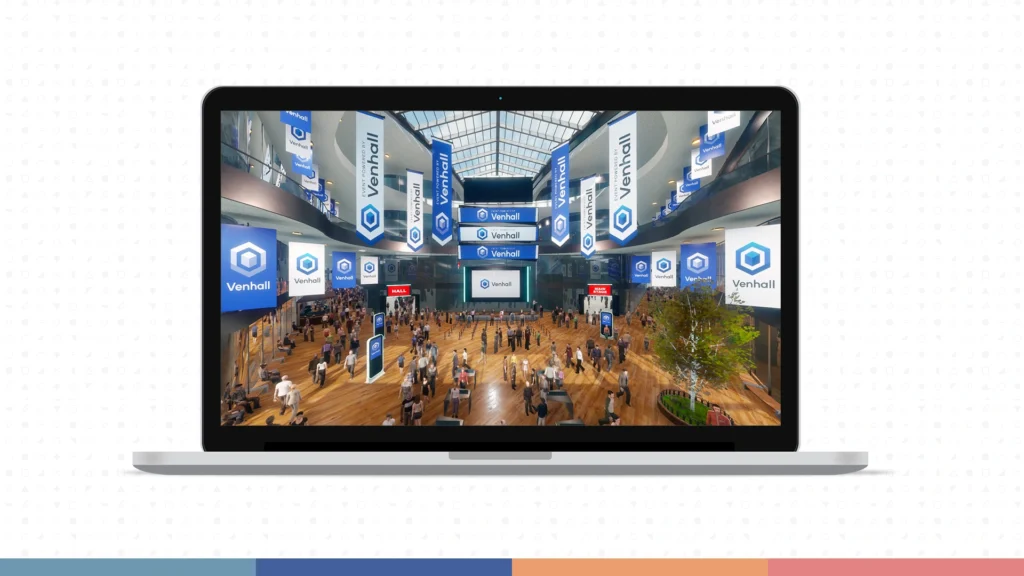
Home Services Our Works Gamification 101 Case Studies Turnkey Event Contact Languages Home Services Our Works Gamification 101 Case Studies Turnkey Event Contact Languages Home Services Our Works Gamification 101 Case Studies Turnkey Event Contact Languages Home Services Our Works Gamification 101 Case Studies Turnkey Event Contact Languages Edit Template Microlearning with Gamification The field of education and training is constantly evolving. Anyone with access to the internet can now learn anything they please. Traditional learning methods are beginning to be replaced or supplemented by more flexible and accessible formats, such as e-learning, with methods and theories formed in a learning system commonly known as LMS (Learning Management System). However, while these systems offer many benefits, they also come with their own set of challenges, especially for educators. In our agenda to educate learners with abundant information, sometimes it is difficult to find the ideal strategy when time is of the essence. Because of this, we tend to prioritize certain topics over others, even if the neglected topics are equally important in the long run. To tackle this predicament, microlearning has emerged as a powerful tool. It’s the more engaging, less time-consuming, and cheaper-to-produce sibling of regular e-Learning. It is a more engaging, time-efficient, and cost-effective alternative to traditional eLearning. While it may not be suitable for every training need, it has proven to be quite effective for corporate and commercial training. Microlearning involves delivering content to learners in small, specific bursts, which puts them in control of their own learning. Have you ever come across educational posts on social media that feature infographics and short videos? If you do, then you have unknowingly encountered micro-learning content. In fact, we encounter a lot of micro-learning content in our daily lives, especially on social media. However, we may not realize it immediately due to a lack of familiarity. As the name suggests, micro-learning is a small-scale learning method where the learning content is designed in the form of small segments, making the information delivered concise and to the point. Micro-learning emphasizes effective, flexible, and focused learning. It is considered to be a cool and practical way of learning. In the concept of micro-learning, we will not find a lot of writing on one page as is usually found in books. You might have come across micro-learning yourself without even knowing it. Mediums such as those that use infographics, short texts, and illustrations in delivering information are indeed micro-learning. Micro-learning also utilizes digital media such as mobile apps, videos, websites, and eBooks as learning tools. Therefore, flexibility is one of the strengths of micro-learning as an effective way to learn anywhere and anytime. The beauty of microlearning lies in its ability to deliver complex information in digestible chunks. This approach ensures that learners are not overwhelmed with information and can absorb knowledge at their own pace. But how can we make this process even more engaging and effective? The answer is through gamification. Gamification can make the learning process more fun and engaging, thereby increasing the learner’s motivation and participation. Many organizations have adopted microlearning and gamification as their learning methods respectively. However, not many of them have integrated both, which is a huge missed opportunity. Gamification companies such as Level Up powered by Agate have recognized the positive impact of combining the two, which has proven to be an effective learning activity. When you combine microlearning with gamification, you create a powerful learning tool that not only delivers information efficiently but also keeps the learners engaged and motivated. This combination can lead to enhanced retention rates and a better understanding of the material. Microlearning with gamification offers numerous benefits. Gamification’s help can increase the learner’s engagement, improve retention rates, and even create a more enjoyable learning experience. When microlearning is combined with gamification, it creates a powerful tool for learning that not only delivers information effectively but also keeps learners engaged and motivated. Benefits of gamified microlearning include: Quicker Information Processing Microlearning combined with gamification will help learner’s to obtain information in a swift and steady phase if gamification designers choose to have a fast-paced game design in its gamified learning activity that enables faster information processing. Increased Engagement Combining game-based learning with microlearning and gamification is an effective way to engage learners. Better Learning Retention Combining gamification and microlearning can create improved learning retention. This is because a gamified microlearning training approach can build enthusiasm and anticipation among learners, leading to d knowledge retention and fueling overall performance and business growth. If you want to create a gamified microlearning experience, consider consulting with Level Up powered by Agate. They have a wealth of experience in creating engaging, effective, and fun learning experiences. Don’t miss out on the opportunity to take your learning strategy to the next level. Contact Level Up today and start your journey towards effective and engaging learning. If you are interested in learning more about gamification and how it can benefit you or your organization Check out our gamification services page and contact us today. We are ready to help you create a gamification experience that aligns with your needs and preferences. Article Authors Related Articles All Posts All All-EN Level Up Agate’s Journey | Celebrating the Present, and Shaping the Future December 27, 2024/ How Do We Know If Our Training Works? December 26, 2024/ Do You Agree That TV Shows Aren’t What They Used to Be? December 19, 2024/ Debunking the Learning Pyramid December 19, 2024/ Understanding the Dynamics of Sales Promotions December 12, 2024/ Balancing Between Work, Study, and Leisure December 11, 2024/ How Video Games and Pop Culture Push Educational Success December 6, 2024/ The Shocking Truth About Screen Time and Your Child’s Brain December 5, 2024/ Level Up powered by Agate at Money Fest 2024 x UMN Career Day 2024: Raise You Up! December 3, 2024/ Load More End of Content. All company names, brand names, trademarks, logos, illustrations, videos and any other intellectual property (Intellectual