From Digital Entertainment to Interactive Experiences
Video games have evolved into much more than just a source of entertainment. Today, games shape communities, influence popular culture, and introduce new ways for people to interact with technology. One of the reasons games are so compelling is their ability to keep players engaged through challenges, progression systems, achievements, and rewards.
Interestingly, these mechanics are no longer confined to gaming. Various sectors have begun adopting the elements that make games engaging to create more interactive experiences. This approach is known as gamification.
What is Gamification and How is it Related to Games?
Gamification is the application of game design elements and mechanics in non-game contexts to drive participation, engagement, or specific behaviors. Examples include the use of points, levels, missions, challenges, leaderboards, and achievement systems.
Although inspired by video games, gamification does not mean turning every activity into a full game. The goal is to leverage aspects of game design that make an activity feel more engaging, provide clear objectives, and encourage users to keep participating.
For example, a language learning app might use streaks to build consistent learning habits. A fitness app can offer daily challenges to encourage physical activity. Meanwhile, customer loyalty programs can use missions and rewards to make brand interactions more engaging.
Why Do Games Keep People Engaged?
One of the key strengths of games lies in their ability to provide clear goals and immediate feedback. Players know what needs to be done, understand their progress, and receive information about the outcomes of their actions.
Some key mechanics commonly found in games include:
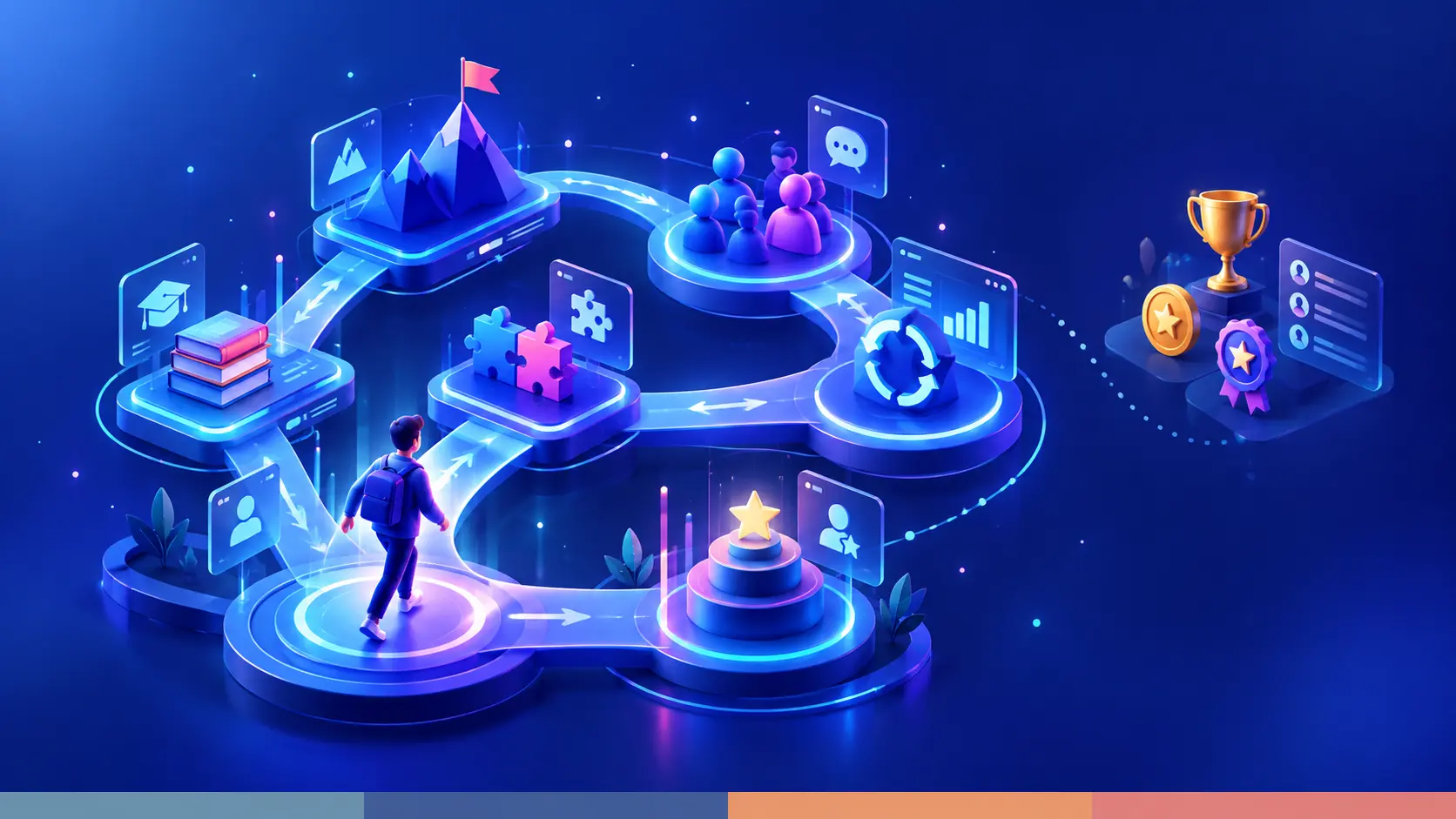
Progression: Levels and progress indicators help players visualize their advancement.
Challenges: Challenges provide goals that can be achieved step-by-step.
Feedback: Immediate feedback helps players understand the results of their decisions.
Rewards: Rewards offer recognition for specific accomplishments.
Autonomy: Choices and strategies give players space to determine how they reach their goals.
When applied effectively, these mechanics can make non-game activities feel more structured and engaging. However, their effectiveness ultimate depends on context, experience design, and user needs.
Applications of Gamification in Daily Life
Gamification can be found in various activities that might not immediately be associated with gaming.
1. Education and Learning
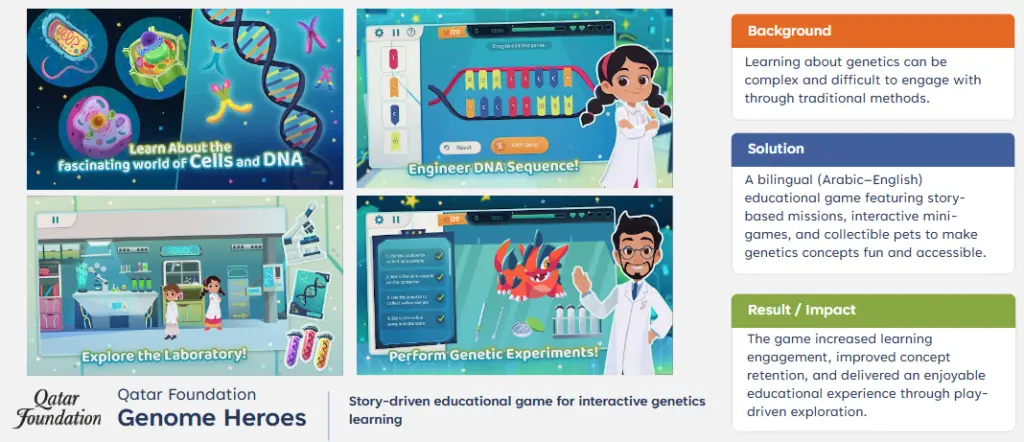
Learning platforms can utilize missions, levels, and feedback to help students understand material step-by-step. This approach makes the learning process more interactive, especially when game elements are designed to directly support learning objectives.
Application of gamification in education through the interactive educational game Genome Heroes by Qatar Foundation.
2. Workplace and Employee Development
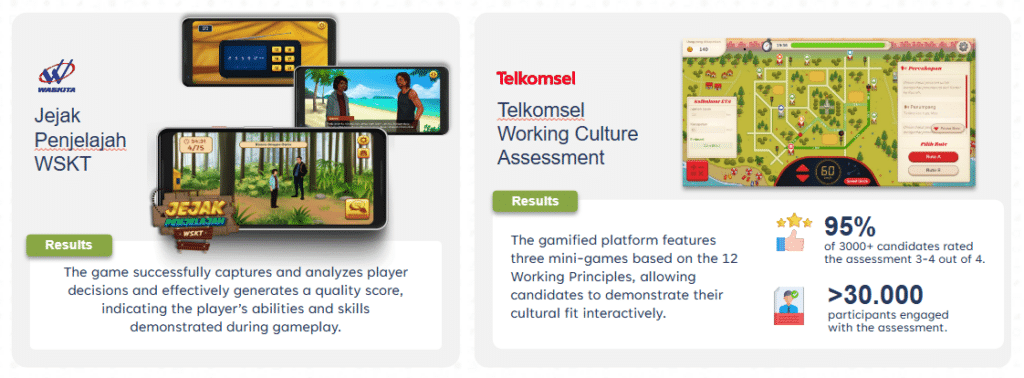
Companies can implement simulations, challenges, and progression systems in training programs to provide a more active learning experience. Rather than passively receiving information, participants face scenarios, make decisions, and experience the consequences of their choices.
The use of game-based simulations and assessments in the workplace and employee training (case studies from Waskita and Telkomsel).
3. Marketing and Customer Experience
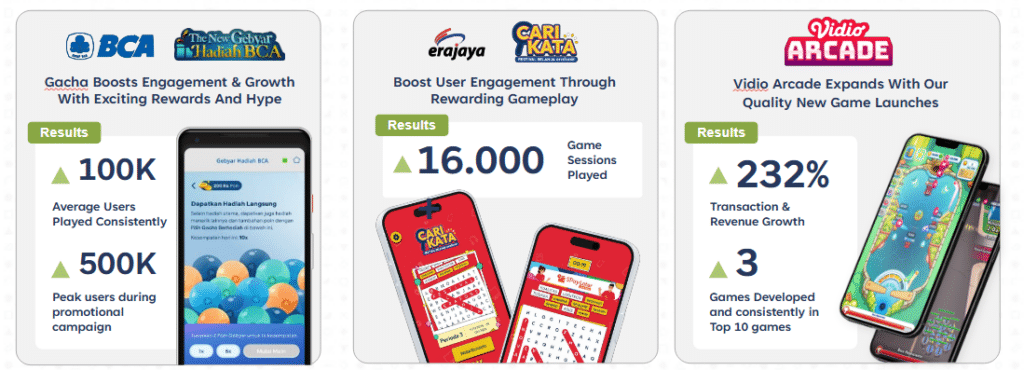
Brands can use quests, points, and rewards to drive consumer participation. For instance, users can complete in-app challenges to earn specific perks. When designed well, this approach creates far more meaningful interaction than traditional one-way communication.
Applying gamification to boost user engagement in marketing and customer experience (case studies from BCA, Erajaya, and Vidio Arcade).
Gamification is More Than Just Points and Badges
A common misconception in implementing gamification is assuming that simply adding points, badges, or leaderboards is enough to make an experience engaging.
In reality, effective gamification design must start with a clear understanding of user goals and behavior. Challenges must be relevant, progress needs to feel meaningful, and rewards should support the overall experience being built.
Gamification that focuses solely on rewards while ignoring user needs risks creating only short-lived engagement. Conversely, a well-designed experience helps users understand their objectives, see their growth, and find compelling reasons to remain involved.
The Future of Games and Gamification
As digital technology evolves, the boundary between games and everyday activities becomes increasingly fluid. Previously passive interactions can be transformed into highly participatory experiences through simulations, interactive challenges, and game mechanics.
Ultimately, the value of gaming extends beyond entertainment; it lies in design principles that can help people learn, interact, and achieve their goals. Gamification serves as a key bridge to applying these principles across various real-world contexts.
For organizations and brands, the opportunity is not just about making activities look like games, but creating experiences that make people genuinely want to engage because the goals and process feel relevant.
Want to explore how gamification can be applied to your business? Level Up powered by Agate helps brands and organizations design interactive, game-based experiences tailored to their goals and needs.
Frequently Asked Questions
What is the difference between games and gamification?
A game is an activity designed specifically as play with defined rules, objectives, and mechanics. Gamification, on the other hand, applies game design elements—such as challenges, points, and progression systems—to non-game activities to boost engagement and participation.
What are some examples of gamification in daily life?
Examples can be found in language learning apps that utilize streaks, fitness apps offering daily challenges, and customer loyalty programs that grant points and rewards based on user activity.
Is gamification only suitable for the gaming industry?
No. Gamification can be applied across many sectors, including education, marketing, employee development, healthcare, and digital services. Implementation should be customized to match specific goals and user characteristics.
Does gamification always require digital technology?
No. Gamification can also be implemented through offline activities, such as group challenges, achievement systems in training, or structured competitions with clear rules. Digital technology helps enhance interactivity and tracking, but it is not a strict requirement.
How can gamification help businesses?
Gamification helps businesses design interactive experiences, drive customer engagement, support loyalty programs, and make employee training more dynamic. Outcomes depend on design quality, alignment of mechanics with objectives, and how success is measured.
Ready to Bring Gaming Experiences into Your Business?
Games are no longer just entertainment. Their core design principles offer a powerful approach to creating interactive experiences, building engagement, and driving active participation across business functions.
Level Up powered by Agate helps brands and organizations explore the potential of gamification for business needs, ranging from customer engagement to customized interactive experiences.
Contact the Level Up powered by Agate team to explore how gamification can be applied to your business strategy.
All company names, brand names, trademarks, logos, illustrations, videos and any other intellectual property (Intellectual Property) published on this website are the property of their respective owners. Any non-authorized usage of Intellectual Property is strictly prohibited and any violation will be prosecuted under the law.