Video games are no longer seen purely as a form of entertainment. In various industries, games have evolved into a means of learning, assessment, and a strategy to increase user engagement. This topic was one of the discussions at Clogs, Tulips and Video Games, a series of events held by Erasmus Huis to introduce innovations in the Dutch gaming industry while connecting Indonesian and Dutch gaming industry players.
Representing Agate, Junialdi Dwijaputra, Head of Level Up powered by Agate, attended as a speaker in a discussion session to share how the game design approach can be applied outside the game industry, particularly in human resource development, learning, and corporate assessment processes.
Through the session titled Trend & Case Study of Game-Based Learning & Assessment, Junialdi explained how game design principles can help organizations create more engaging learning experiences while yielding more accurate competency measurements.
Changing the Way Companies View Games
In his presentation, Junialdi explained that there is a fundamental difference between gamification, game-based learning, and game-based assessment, even though all three utilize game elements.
Gamification focuses on adding game elements such as points, badges, and leaderboards to increase motivation in activities that are not actual games. Meanwhile, game-based learning uses games as the primary medium to build competence, whereas game-based assessment utilizes gameplay to measure a person’s behavior and abilities more naturally, making it more difficult to manipulate compared to conventional assessment methods.
According to Junialdi, these three approaches share the same DNA. The game mechanism is not the main goal, but a tool to achieve business or learning objectives.
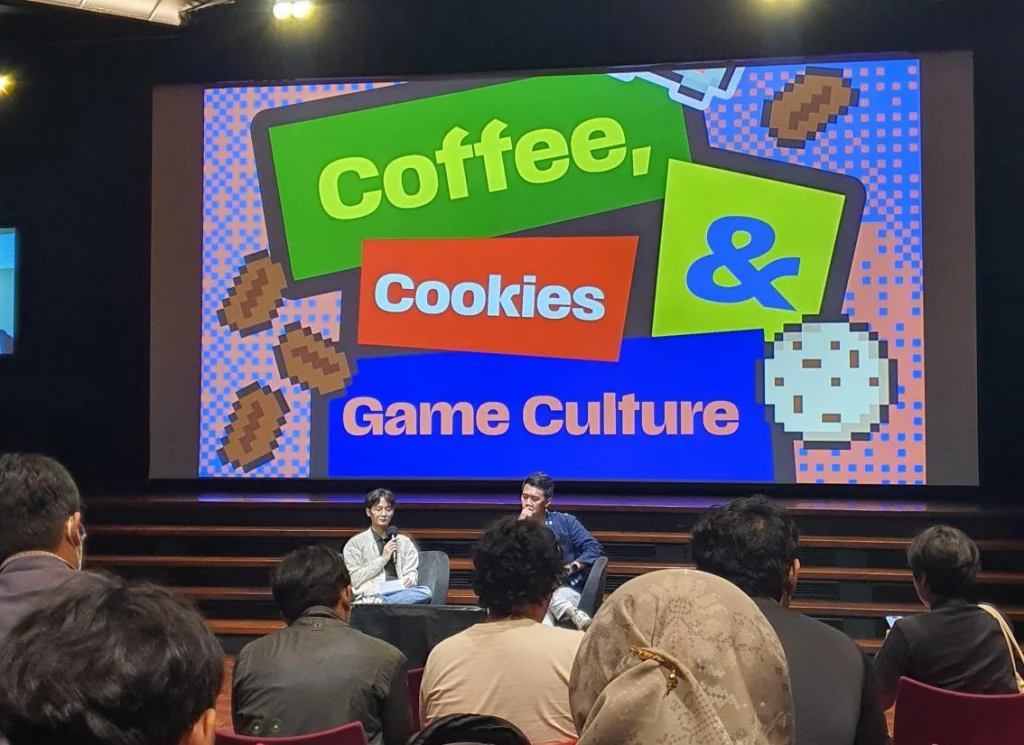
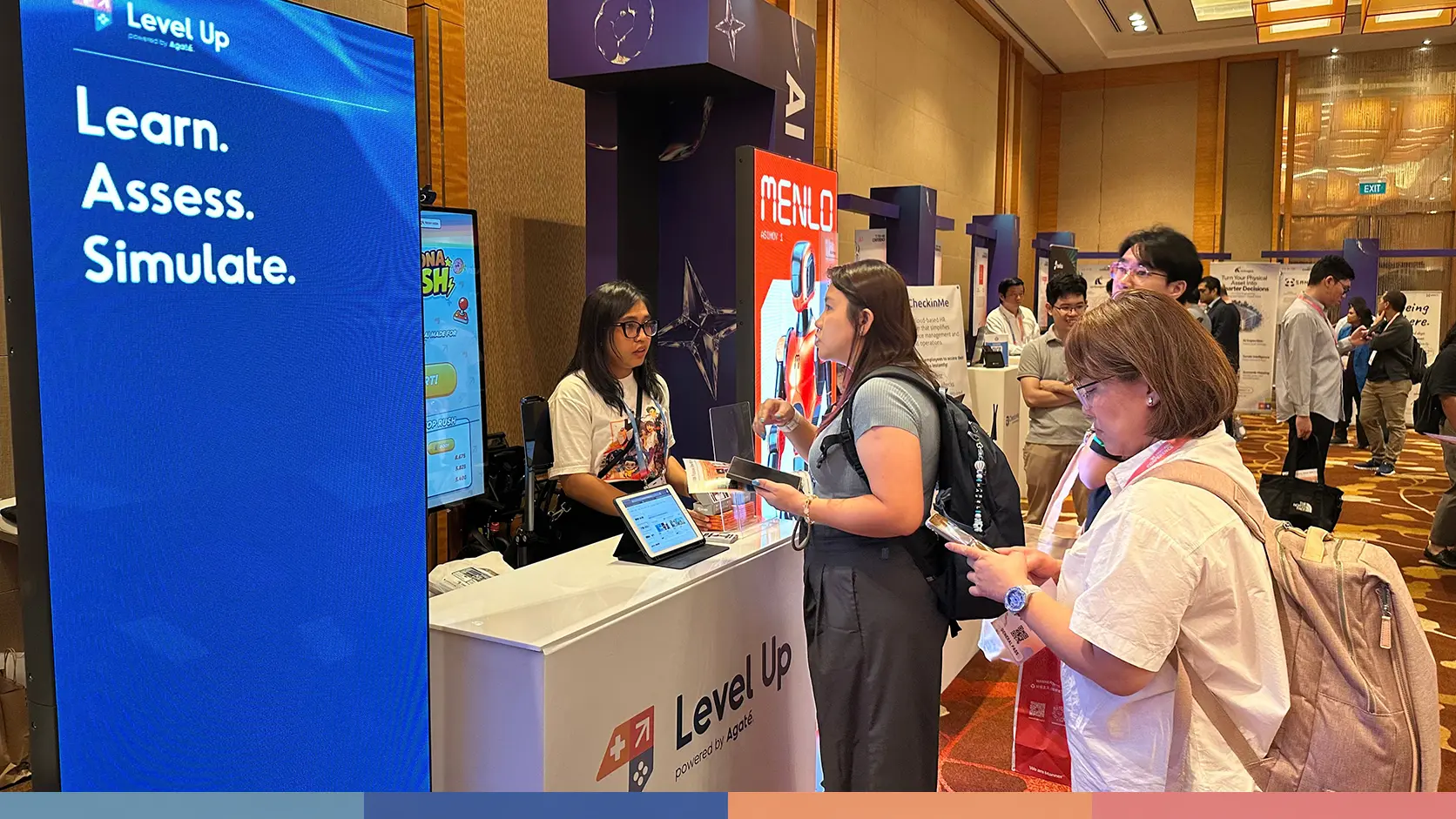
Junialdi Dwijaputra, Head of Level Up powered by Agate, presented trends and case studies on game-based learning and assessment at the ‘Clogs, Tulips and Video Games’ event held at Erasmus Huis Jakarta.
Why Are Games Increasingly Relevant for the Working World?
One highlighted point is the change in demographics and societal behavior. Indonesia is currently the largest gaming market in Southeast Asia, with the majority of internet users playing video games and most Gen Z interacting with game content even outside of playing activity. On the other hand, various studies also show that the application of gamification in HR can increase engagement, retention, and training effectiveness, especially for the Millennial and Gen Z generations.
This makes it necessary for companies to start viewing games not just as entertainment media, but also as a medium for communication, learning, and talent development.
Junialdi also added that the experience of candidates and employees during the learning and assessment process now influences a company’s employer branding. A poor experience in the learning or selection process can form a negative perception of the organization.
Game Development Becomes the Bridge Between Business Goals and Play Experience
One of the main topics discussed is how the game development process acts as a bridge between business needs and the playing experience.
According to Junialdi, a good educational game does not start with a gameplay idea, but with the business goal to be achieved. Once the objective is determined, every game mechanism must be designed to directly support that goal. This approach forms the basis of the Level Up Gamification Framework, a framework developed by Agate to translate business objectives into relevant and measurable game mechanisms.
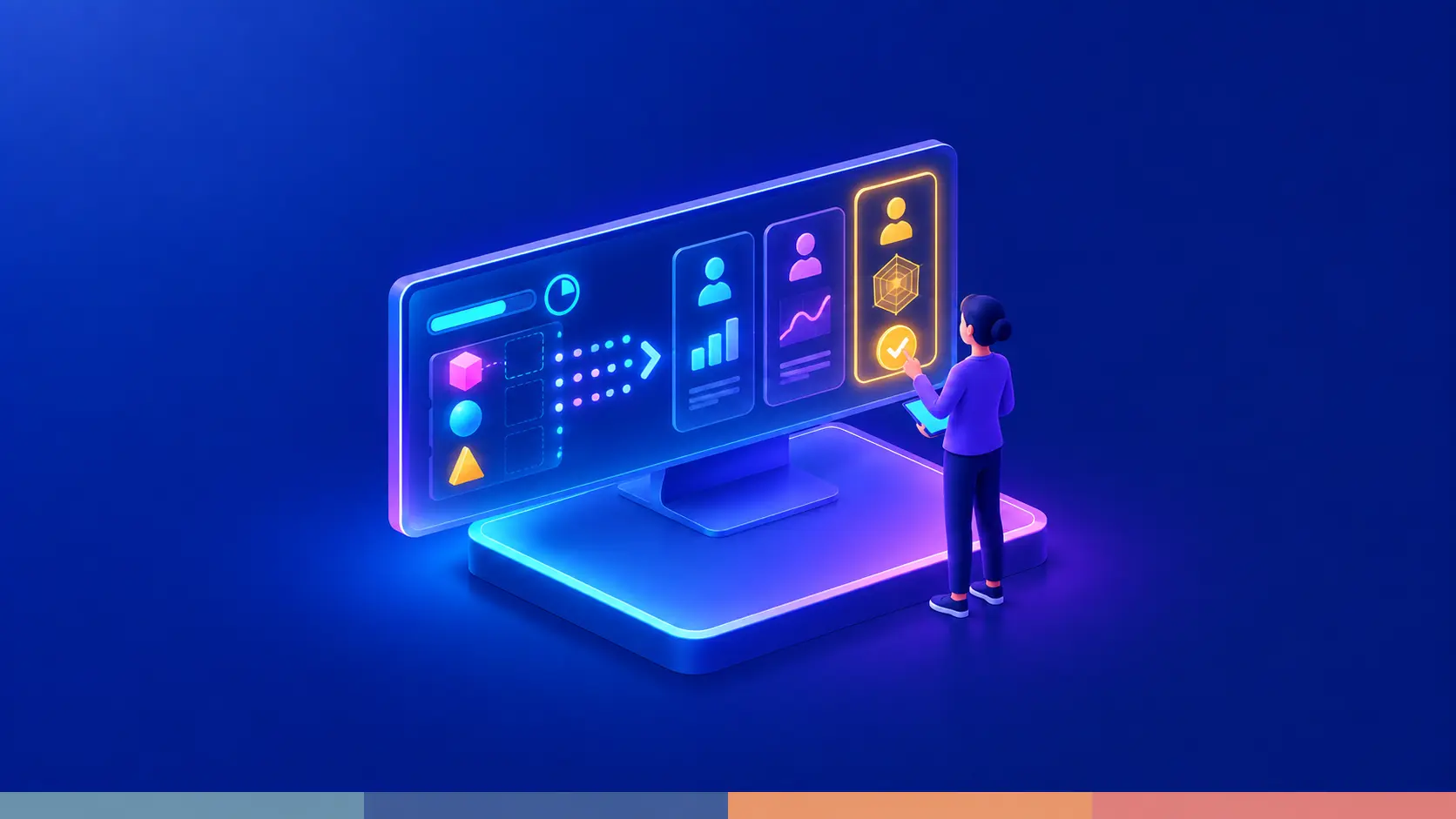
The framework consists of four main stages: defining the business objective, understanding the target user, designing the gameplay, and ensuring technical requirements before development begins.
Bringing Real Experience from Various Industries
Not only did Junialdi discuss theory, but he also showcased various real implementations that have been developed by Level Up powered by Agate.
One example is Jago Money Quest, a financial education game with Bank Jago designed to help students understand financial literacy through interactive money management simulations. Every decision made by the player affects the course of the story and is part of the learning process about financial health.
Junialdi also shared the case study of Telkomsel Working Culture Assessment, a game-based assessment that successfully involved over 32,000 participants and received a high satisfaction rate from candidates. Unlike conventional tests that only rely on participant answers, this approach observes the players’ actual behavior while making decisions in the game, providing a more objective overview of competency.
Another example is Santos Jaya Abadi Managerial Assessment, which uses simulation to map managerial readiness through various decisions made by participants under conditions resembling actual work situations. This approach helps companies reduce bias and obtain a more comprehensive picture of competency.
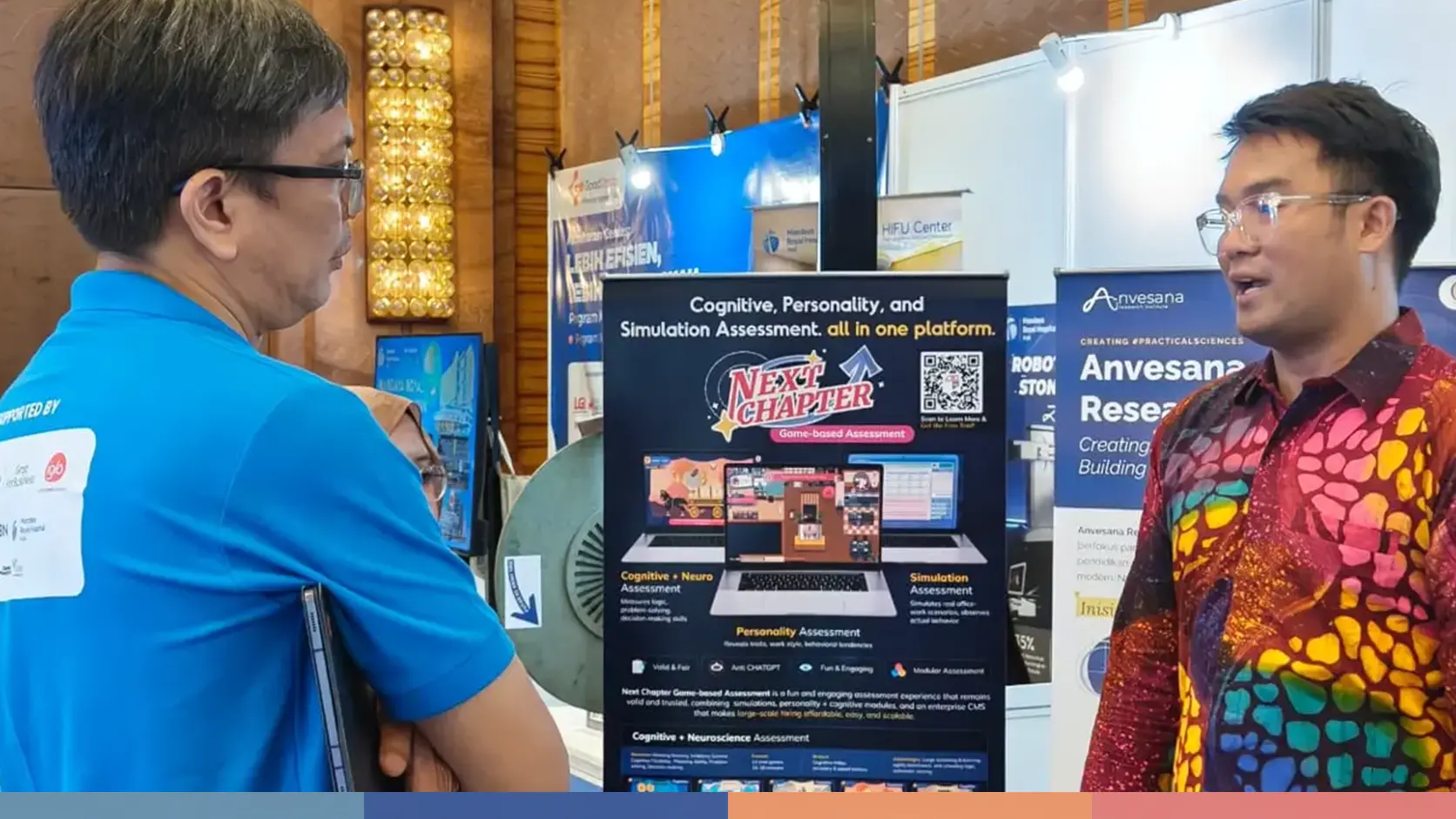
In addition, Junialdi introduced Next Chapter, a game-based assessment solution that integrates business simulation, narrative-based personality assessment, cognitive games, and neuroscience games into one integrated platform for large-scale recruitment needs.
Agate Promotes the Use of Impactful Games
Agate’s participation in Clogs, Tulips and Video Games demonstrates how the Indonesian gaming industry continues to evolve, not only producing entertainment products but also presenting game-based solutions capable of addressing challenges in various sectors.
Through Level Up powered by Agate, the company offers various gamification solutions such as game-based learning, game-based assessment, immersive training, and interactive brand engagement that have been utilized by companies across various industries.
Junialdi Dwijaputra’s participation as a speaker at Erasmus Huis also proves that game innovation from Indonesia can contribute to international discussions about the future of learning, assessment, and game-based digital transformation.
Frequently Asked Questions
What is Clogs, Tulips and Video Games?
Clogs, Tulips and Video Games is a series of events organized by Erasmus Huis to introduce the Dutch gaming industry while serving as a discussion forum between Indonesian and Dutch gaming industry players.
Who represented Agate at the event?
Agate was represented by Junialdi Dwijaputra, Head of Level Up powered by Agate, who presented material on trends and case studies of game-based learning and game-based assessment.
What is Level Up powered by Agate?
Level Up powered by Agate is Agate’s business unit focused on the application of gamification, game-based learning, game-based assessment, interactive experience, and game-based solutions for the needs of companies, educational institutions, and organizations.
How can games help the learning and assessment process?
Games allow participants to learn through interactive experience and measure behavior more naturally compared to conventional methods. This approach can increase engagement, learning effectiveness, and simultaneously yield richer data for the evaluation process.
How can companies start implementing gamification?
Every organization has different challenges, ranging from employee training, recruitment, customer engagement, to activation campaigns. Through Level Up powered by Agate, companies can design gamification solutions customized to business objectives so that every game mechanism truly supports the desired outcome.
Transform passive interaction into active, emotional engagement. Level Up Powered by Agate designs personalized gamification solutions for all your company’s internal and external needs, ensuring your brand‘s message is conveyed in the most engaging way possible. Let’s Discuss Your Creative Ideas With Us.
All company names, brand names, trademarks, logos, illustrations, videos and any other intellectual property (Intellectual Property) published on this website are the property of their respective owners. Any non-authorized usage of Intellectual Property is strictly prohibited and any violation will be prosecuted under the law.