
Most Distorted Psychometric Tests in Indonesia 2026
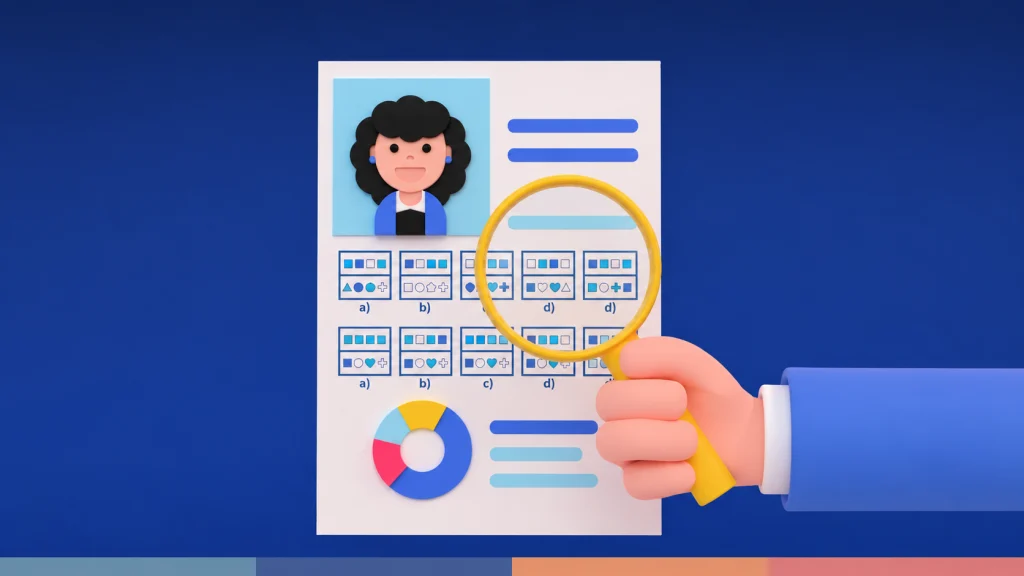
- About 50 percent of candidates distort answers on self-report psychometric tests, even before AI is involved, based on research published between 2020 and 2025.
- The five most vulnerable tests reported by HR practitioners are Big Five questionnaires, DISC, MBTI variants, Situational Judgment Tests, and self-rated cognitive ability tests.
- AI tools such as Final Round AI, AceRound, and LockedIn change the problem from distortion to answer engineering, which raises the risk on any text-based test.
- Common red flags include answers that are too consistent, abnormal response time, profile patterns that look statistically perfect, and large gaps between test results and interview behavior.
- Game-Based Assessment captures in-task behavior instead of self-reported claims, which reduces exposure to both classical distortion and AI-assisted answers.
Most Indonesian HR teams have an instinct about which psychometric tests they trust less than others. The instinct is usually correct. The hard part is putting numbers and names on it.
This article is an honest field-level look at which psychometric tests get distorted most in Indonesian hiring, what the red flags actually look like in practice, and why the situation in 2026 is different from previous years.
How Big Is the Distortion Problem in Practice?
Across academic research published between 2020 and 2025, the headline figure is consistent. Roughly 50 percent of candidates distort their answers on self-report personality and situational tests under high-stakes hiring conditions. Reviews from the Society for Industrial and Organizational Psychology (SIOP) and meta-analyses in the Journal of Applied Psychology describe applicant faking as a stable and well-documented effect, not an outlier issue.
In 2026, AI interview co-pilots add a new layer to this problem. Tools such as Final Round AI, AceRound, and LockedIn produce optimized text answers in real time, which makes any text-based self-report test more exposed than it was two years ago.
The Five Most Distorted Test Types in Indonesian HR Practice
Based on the most common categories cited by HR practitioners, the following five test types are the most exposed to distortion in Indonesian hiring funnels today.
1. Big Five Personality Questionnaire (Likert items)
Big Five tests rely on Likert-scale agreement with self-descriptive statements. Candidates can read the trait being measured between the lines, especially after a few questions. The wider the candidate’s exposure to personality testing content online, the easier the test becomes to optimize. AI co-pilots make this almost trivial because the optimal answer pattern for the Big Five is publicly known.
2. DISC
DISC profiles are widely used in Indonesian recruitment and management training. The trait categories are simple and well documented online, which makes it easy for candidates to choose answers that produce a ‘desired’ DISC profile for a given role. Distortion here usually shows up as profiles that line up almost perfectly with the job description language.
3. MBTI Variants
MBTI and its derivatives are popular for cultural-fit screening. Because the test categories are widely discussed on social media and the trait pairs are intuitive, candidates frequently ‘self-select’ a type they believe will fit the role. The distortion is rarely malicious. It is often the candidate showing the version of themselves they believe the company wants.
4. Situational Judgment Tests (SJT)
SJTs ask candidates to pick the best response to a hypothetical scenario. The challenge is that the textbook ‘best’ answer is often clear from context, especially when the scenario uses familiar workplace language. AI co-pilots can produce the textbook best answer reliably, which makes the test much weaker as a differentiator in 2026 than it was in 2020.
5. Self-Rated Cognitive Ability Tests
Self-rating instruments for cognitive ability or problem solving are particularly exposed, because they ask candidates to assess themselves rather than perform a task. The validity drops further when AI assistance is available, since the candidate can simply ask a model to produce a high-confidence self-rating that aligns with the role.
Side-by-Side: How Exposed Is Each Test Type?
|
Test Type
|
Exposure to Manual Distortion
|
Exposure to AI-Assisted Answering
|
|---|---|---|
|
Big Five (Likert)
|
High
|
|
|
DISC
|
High
|
Very high
|
|
MBTI variants
|
Medium to high
|
Very high
|
|
Situational Judgment Test
|
Medium
|
Very high
|
|
Self-rated cognitive ability
|
Self-rated cognitive ability
|
Game-Based Assessment
|
|
Very high
|
Low
|
Low
|
Red Flags Indonesian HR Practitioners Keep Catching
Distortion rarely shows up as one single signal. It is usually a pattern. The following are the red flags most consistently reported by senior HR practitioners in the Indonesian market.
- Answers that are too consistent across reverse-coded items, which suggests the candidate is tracking the trait rather than answering honestly.
- Abnormally fast or unusually slow response time, especially on Likert items, which can indicate either copy-paste behavior or AI-assisted answering.
- A ‘perfect’ profile that lines up too neatly with the job description language.
- Large gaps between test results and behavior observed in the interview, especially in stress or improvisation moments.
- Identical phrasing across written case study responses from different candidates, which suggests shared AI-generated content.
Why This Matters More in 2026
Until recently, distortion was a quiet, well-known limitation of self-report testing. Most HR teams worked around it with structured interviews, reference checks, and probation periods. AI assistance breaks that workaround at the screening stage because it amplifies the distortion effect across the entire candidate pool, not only the most strategic individuals.
The practical implication is that the screening stage is where the measurement integrity gap is now largest. Final-round interviews and reference checks are still useful, but they only catch problems after the screening has already let too many false positives through.
What to Do This Quarter
There are three practical moves an Indonesian HR team can make this quarter without rebuilding the entire assessment stack.
- Audit which tests in your current funnel are pure self-report and which involve observed behavior. Mark the self-report ones as ‘soft signals’ rather than gating criteria.
- Add a behavioral or task-based component to early screening, where candidates do something rather than describe what they would do. Game-Based Assessment is one option. Live work samples are another.
- Document the red flag patterns your team keeps catching, and share them across the recruiter group. A documented internal pattern library is more useful than any external vendor whitepaper.
Frequently Asked Questions (FAQ)
Is psychometric test distortion really at 50 percent?
Across multiple academic studies published between 2020 and 2025, distortion estimates cluster around the 50 percent mark for high-stakes hiring conditions. The exact number varies by test type, role, and country, but the magnitude is well documented and stable across the literature.
Which test is the worst offender in Indonesian hiring?
There is no single worst offender, but the most commonly reported by Indonesian HR practitioners are Big Five Likert questionnaires and DISC, mainly because they are the most widely used and the most discussed online. Familiarity with the test format raises the distortion ceiling.
Does AI assistance make all psychometric tests useless?
Not all, but most text-based self-report tests are now significantly less reliable than they were in 2020. Tests that require observed behavior, real tasks, or in-game decisions remain much more robust because AI cannot easily operate the assessment on the candidate’s behalf.
How do you detect AI-assisted answering in practice?
Detection is difficult and not very scalable. The more useful approach is to redesign the assessment so that AI assistance becomes irrelevant, by capturing real behavior rather than self-reported claims. Game-Based Assessment, structured live work samples, and short proctored exercises are the most resilient options.
Should we stop using personality tests entirely?
No. Personality tests still provide useful directional signal, especially when interpreted by a trained psychologist alongside behavioral data. The practical change is to demote them from gating criteria to supporting signals, and to pair them with assessment formats that are harder to game.
Where can I learn more about Game-Based Assessment in Indonesia?
Agate Level Up has deployed Game-Based Assessment at enterprise scale in Indonesia, including a culture-fit GBA used by a major Indonesian telecommunications enterprise to screen more than 10,000 candidates. The Agate Level Up team can walk you through how GBA compares to your current screening stack.
The Authors

Junialdi Dwijaputra

Dias Setyanto
Related Articles
Result: Faster creation, broader access, and more efficient workflows.
Source: Canva Newsroom
- All Posts
- All-EN
- Education-EN
- News-EN
- Service Highlight-EN


It leverages your brain’s reward system, giving you quick wins and visual progress that boost your motivation to keep going.