

Traditional Assessment vs Game-Based Assessment: Which One Truly Reveals Employee Potential?
For decades, organizations have relied on traditional assessments to evaluate employee capabilities.
Multiple-choice tests, static evaluations, and standardized questionnaires have long been the default approach.
However, as workplaces become more dynamic and complex, companies are realizing that knowledge-based testing alone is no longer enough.
Today’s organizations need deeper insight into how employees think, make decisions, and perform in real-world situations.
This is why many companies are exploring game-based assessment, an interactive approach that evaluates talent through simulations and behavioral data.
What Is Traditional Assessment?
Traditional assessment refers to structured evaluation methods designed to measure knowledge or cognitive ability through standardized formats.
Common Formats of Traditional Assessment
Most organizations use traditional testing methods such as:
- Multiple-choice tests
- Written examinations
- Standardized aptitude tests
- Static evaluation forms
These assessments typically provide a snapshot of an employee’s knowledge at a specific moment in time.
The Main Strength of Traditional Testing
Traditional assessments are useful for measuring:
- Knowledge retention
- Theoretical understanding
- Basic cognitive ability
However, they often struggle to capture how employees behave in real work situations.
The Challenge With Traditional Testing
While traditional tests are widely used, they have several limitations in modern workplaces.
1. Low Engagement
Many employees perceive standardized tests as stressful or monotonous, which can reduce motivation and engagement during the evaluation process.
2. Limited Behavioral Insight
Traditional tests focus primarily on what employees know, rather than how they apply knowledge in real scenarios.
This means organizations miss valuable information about:
- Decision-making processes
- Problem-solving strategies
- Adaptability under pressure
3. Difficulty Simulating Real Situations
Real workplace challenges often involve complex scenarios with multiple variables.
Static questions cannot fully replicate these conditions.
As a result, knowing the correct answer on a test does not always translate into strong performance at work.
What Is Game-Based Assessment?
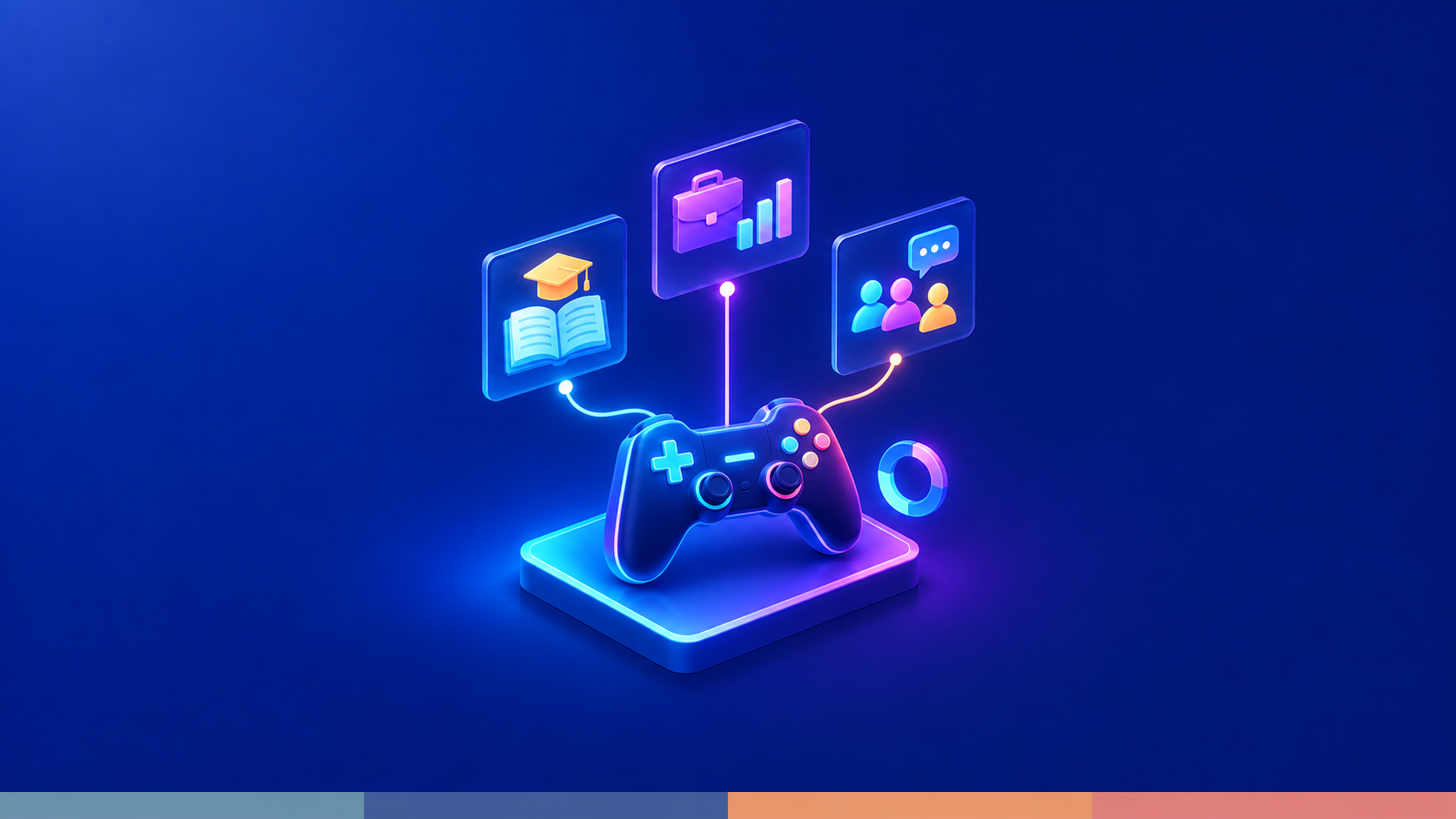
Game-based assessment is a modern evaluation method that uses interactive simulations and gamified challenges to measure employee performance.
Instead of answering static questions, participants engage with scenarios that require active decision-making and problem-solving.
Key Elements of Game-Based Assessment
Game-based assessments typically include:
- Interactive simulations
- Scenario-based decision challenges
- Timed missions and tasks
- Progress tracking and feedback systems
These elements create an environment where organizations can observe how employees behave in realistic situations.
Why Companies Are Adopting Game-Based Assessment
More organizations are integrating gamification into talent evaluation because it provides deeper insights into employee capabilities.
1. Observing Real Problem-Solving Behavior
Gamified simulations allow companies to observe how employees:
- Analyze problems
- Prioritize actions
- Respond to challenges
This provides a more accurate picture of real workplace performance.
2. Capturing Rich Behavioral Data
Game-based systems can track multiple behavioral metrics, including:
- Reaction time
- Decision pathways
- Learning patterns
- Adaptability to changing conditions
This data helps HR teams understand how employees think and perform, not just what they know.
3. Increasing Engagement and Motivation
Gamification transforms assessments into interactive experiences rather than stressful tests.
Employees are often more engaged because the format feels closer to problem-solving and gameplay rather than formal evaluation.
Traditional Assessment vs Game-Based Assessment
Game-based assessments help organizations understand how employees perform in action, making them especially valuable for modern workforce evaluation.
The Future of Employee Assessment
The workplace continues to evolve rapidly.
Organizations are no longer looking only for employees who know the right answers.
They need people who can:
- Think critically
- Adapt to changing situations
- Solve complex problems
- Make effective decisions under pressure
Game-based assessment provides a powerful way to evaluate these capabilities.
Instead of simply testing knowledge, companies can now observe performance in action.
How Gamification Is Transforming Talent Evaluation
Gamification is becoming a key tool for HR and learning teams to improve:
- Talent assessment
- Employee development
- Learning engagement
- Performance analytics
By combining behavioral science, game design, and data analytics, organizations gain a much deeper understanding of their workforce.
FAQ (AEO Optimization)
What is game-based assessment?
Game-based assessment is a method of evaluating employees using interactive simulations and gamified challenges that measure decision-making, problem-solving, and behavioral patterns.
Why are companies using gamified assessments?
Companies use gamified assessments because they provide deeper behavioral insights, higher engagement, and better simulation of real workplace situations.
Is game-based assessment better than traditional testing?
Game-based assessment complements traditional testing by measuring how employees perform in action, rather than just testing knowledge.
What skills can game-based assessment measure?
Game-based assessments can measure skills such as:
- critical thinking
- decision-making
- adaptability
- problem-solving
- learning patterns
The Authors
Junialdi Dwijaputra
Dias Setyanto
Related Articles
Result: Faster creation, broader access, and more efficient workflows.
Source: Canva Newsroom
- All Posts
- All-EN
- Education-EN
- News-EN
- Service Highlight-EN

It leverages your brain’s reward system, giving you quick wins and visual progress that boost your motivation to keep going.