October 12, 2026/

Trail running is synonymous with extreme terrain, long distances, and physical endurance. However, if viewed more closely, the UTMB World Series has an interesting system from a gamification perspective. UTMB does not just organize a single race, but builds a global ecosystem that allows runners to participate in various events, collect Running Stones, improve performance through the UTMB Index, and pursue the opportunity to race on the biggest stage: the UTMB World Series Finals in Chamonix, France.
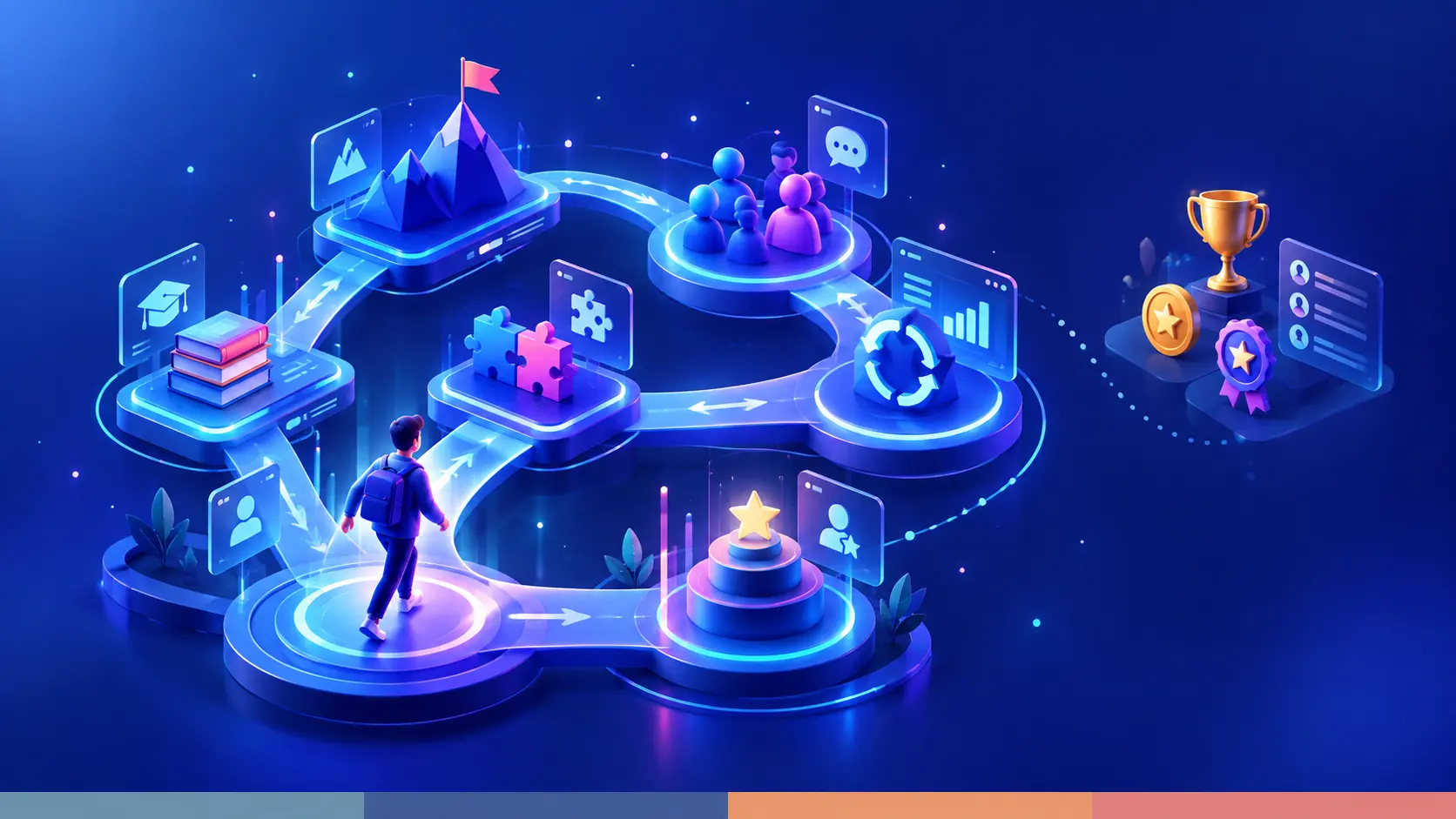
Translated into gamification language, this journey has a structure similar to a game: Explore → Participate → Earn → Progress → Qualify → Compete. Each stage provides new goals and motivation for participants. This is what makes UTMB interesting not just as an sporting event, but also as an example of how gamification can be used to build long-term engagement.
To understand its gamification side, we need to view UTMB as a series, not just one race. The UTMB World Series consists of various trail running events in different regions of the world, with a structure that includes UTMB World Series Events, UTMB World Series Majors, and UTMB World Series Finals.
This structure creates a journey for runners. They can start from events closer to their location, gain experience, collect Running Stones, improve performance, and pursue the opportunity to reach the Finals. Meanwhile, the peak of the journey is at the HOKA UTMB Mont-Blanc in Chamonix, which serves as the location for the UTMB World Series Finals with three flagship races: OCC, CCC, and UTMB.
Using a game analogy, Chamonix can be seen as the final level. Participants do not just enter one match, but undergo a long journey to unlock the opportunity to reach that level.
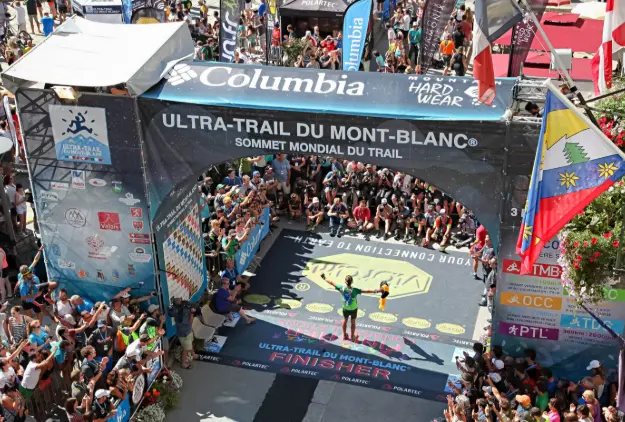
A runner successfully reaches the finish line at the Ultra-Trail du Mont-Blanc in Chamonix
If the UTMB system is translated into a gamification framework, the structure can be seen as follows:
|
Gamification Element
|
UTMB Implementation
|
|---|---|
This framework shows that each element has a function in shaping participant motivation. Thus, UTMB gamification is not just about one mechanism, but about how the entire system works as a single experience journey.
One of the main principles in gamification is progression. In a game, players usually are not immediately given access to the final level. They need to complete various challenges first before they can unlock the next level.
A similar concept can be found in UTMB. Instead of just having one main event, UTMB builds a global series that allows runners to participate in various events and gradually pursue the next level. The structure World Series Event → World Series Major → World Series Finals creates a clear progression path.
For participants, the next race is no longer just a new competition. That race becomes part of a larger journey. The question changes from “What race do I want to join?” to “How far can I go in the UTMB World Series?”
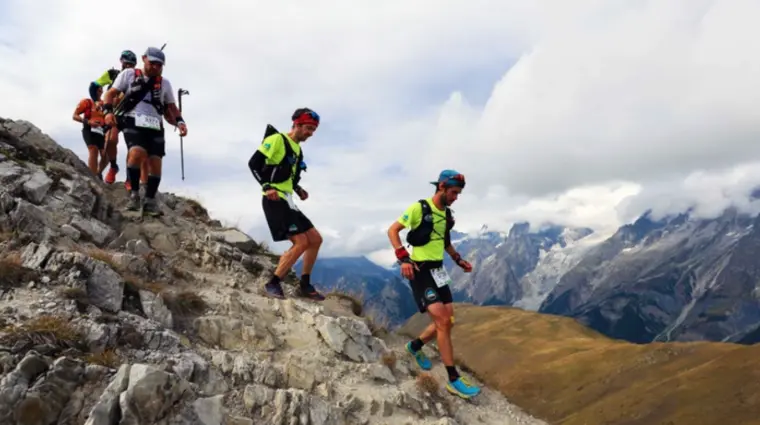
A group of runners traverses a technical rocky path in the mountains
Gamification requires challenges that provide a sense of development. UTMB applies this through four main categories, namely 20K, 50K, 100K, and 100M.
The differences in these categories create a sort of difficulty level. The higher the category, the greater the challenge participants must face. Distance, elevation, terrain, weather, stamina, and cut-off times become part of the challenge to be solved.
Interestingly, participants can determine for themselves the level they want to pursue. For a beginner, finishing a 20K can be a major achievement. For an experienced runner, the challenge might be 100K or even 100M. Thus, the challenge can be adjusted to the abilities and motivation of each participant.
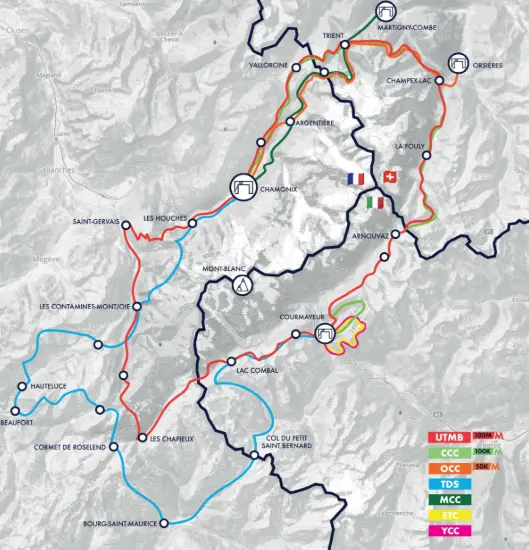
A route map displaying various race categories (UTMB, CCC, OCC, etc.) around the Mont-Blanc region
One of the most interesting elements of the UTMB system is the Running Stones. Running Stones can be analogized as a kind of gamification currency within the UTMB ecosystem.
However, Running Stones are not points that can be exchanged for prizes. Running Stones provide participants the chance to enter the lottery for the UTMB World Series Finals. Each Running Stone provides one additional chance in the lottery, so the more Stones collected, the more chances one has.
The number of Running Stones obtained depends on the race category:
This creates a clear reward loop:
Participate → Finish → Earn Running Stones → Increase Chances → Potentially Reach Finals
From a gamification perspective, this mechanism is interesting because the reward does not end the engagement. Instead, that reward becomes the reason for the next activity.
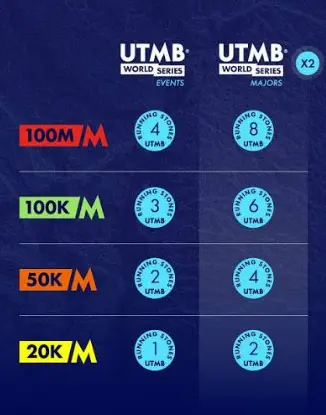
An infographic detailing the “Running Stones” earning system based on race distance categories and event types
Running Stones also create a chance-based reward element. Participants know they have the chance to enter the Finals, but the final result is not completely certain because of the lottery system.
The more Running Stones owned, the more chances obtained. This mechanism creates anticipation and excitement that differs from standard qualification systems.
Interestingly, UTMB also has a performance qualification path. This means participants do not only rely on the lottery. Runners with certain performances can gain access through the qualification path based on their results and performance.
From a gamification perspective, UTMB combines two forms of motivation: chance-based progression through the lottery and skill-based progression through performance.
All this progression ultimately leads to one main goal: the UTMB World Series Finals in Chamonix.
Chamonix functions as more than just a host location. From a gamification perspective, Chamonix can be seen as the ultimate goal or final level in the participant’s journey.
The Finals feature three flagship races: OCC, CCC, and UTMB. With a clear final goal, every race previously performed has a larger context.
The Running Stones collected, the performance built, and the races completed all become part of the journey toward a single peak experience.
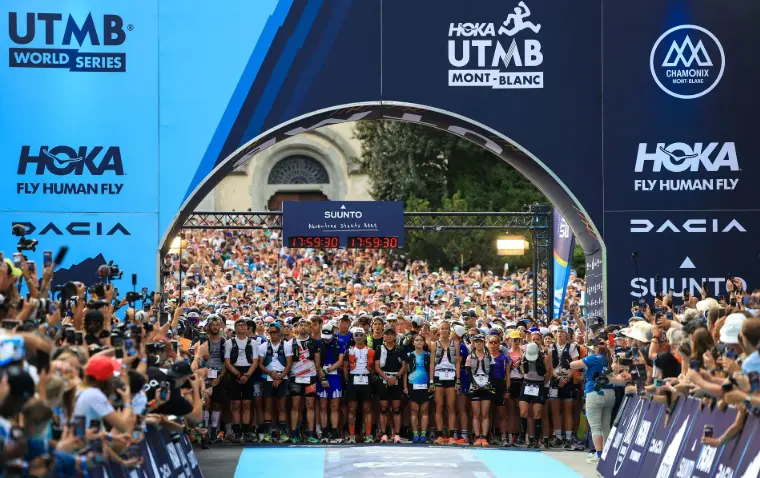
The atmosphere at the Chamonix start line, crowded with participants
If the entire UTMB system is simplified, the journey can be described as:
DISCOVER → PARTICIPATE → ACHIEVE → EARN → PROGRESS → QUALIFY → UNLOCK → FINALS → NEW CHALLENGE
Participants discover the event, join the race, gain achievements, obtain Running Stones, increase experience and performance, and then pursue qualification or the lottery for the chance to head to the Finals.
After reaching the Finals, the journey does not have to stop. On the contrary, that achievement can create a new target.
This is what gives the system its character as a continuous engagement loop. One achievement can become the motivation to pursue the next one.
UTMB shows that effective gamification does not have to make an activity look like a game. Trail running remains trail running, but the system around it is designed to provide clear goals, progression, challenge, reward, performance feedback, competition, community, and recognition.
Running Stones provide progression. The UTMB Index provides feedback. Race distance provides challenge. Qualification creates competition. Community provides a sense of belonging. And Chamonix becomes the ultimate goal.
Ultimately, the power of gamification lies not in how many game elements are added, but in how those elements are designed into an experience that makes people want to start, continue participating, achieve something, and return for the next challenge.
Gamification in sports is the application of principles and mechanisms commonly found in games—such as challenge, progression, achievement, reward, competition, and leaderboards—to increase participant motivation and engagement.
UTMB is not a game, but the UTMB World Series system can be analyzed using gamification principles because it features progression, challenge, reward, performance feedback, qualification, competition, community, and an ultimate goal.
Running Stones are a mechanism that gives participants the opportunity to enter the lottery for the UTMB World Series Finals. Each Running Stone provides one additional chance in the lottery.
Gamification is not just about adding a leaderboard or giving rewards to users.
What is more important is how an experience is able to make the audience want to start, continue participating, achieve something, and return for the next challenge.
As can be seen from the trail running experience, an activity can become far more engaging when it has a clear and meaningful journey.
If your brand wants to explore how gamification, game-based experiences, and behavioral design can be applied to increase engagement, Level Up powered by Agate is ready to help design experiences that suit your business needs.

WhatsApp us