
Gamification On Ground Activation: Delivering Interactive Experiences with Motion Gesture, Touchscreen, and VR
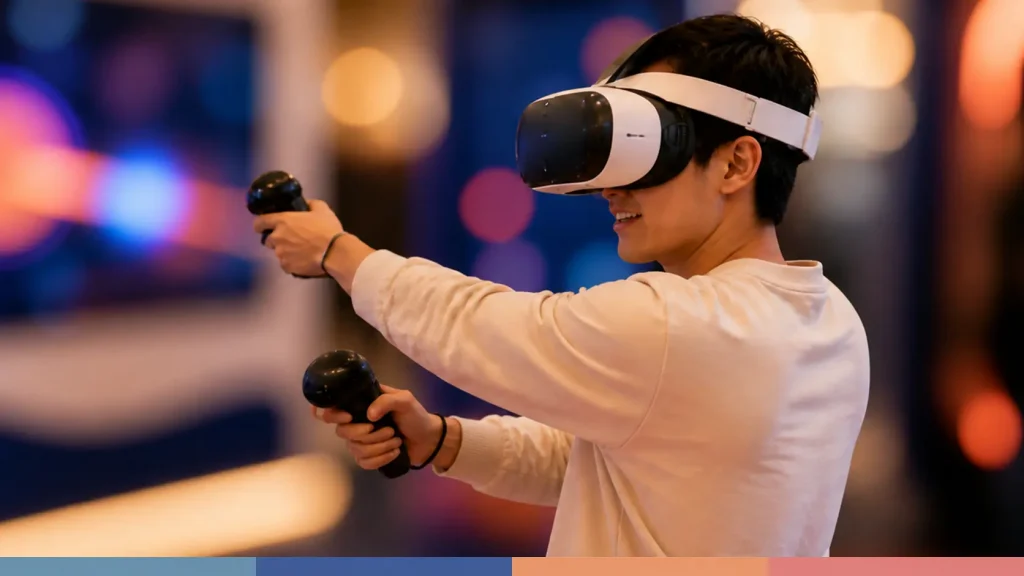
Home Services Our Works Gamification 101 Gamification Case Studies Turnkey Product Game Based Assessment Potentia Level Up RCD Contact English Bahasa Indonesia English Home Services Our Works Gamification 101 Gamification Case Studies Turnkey Product Game Based Assessment Potentia Level Up RCD Contact English Bahasa Indonesia English Home Services Our Works Gamification 101 Gamification Case Studies Turnkey Product Game Based Assessment Potentia Level Up RCD Contact English Bahasa Indonesia English Home Services Our Works Gamification 101 Gamification Case Studies Turnkey Product Game Based Assessment Potentia Level Up RCD Contact English Bahasa Indonesia English Edit Template Gamification On Ground Activation: Delivering Interactive Experiences with Motion Gesture, Touchscreen, and VR Gamification on ground activation has become a way for brands to create more interactive and memorable experiences for their audience. By combining game elements with technology, a brand activation can encourage the audience not just to watch, but to participate directly. Technologies like motion gesture, touchscreen, and Virtual Reality (VR) allow brands to create various forms of interactive experiences, from mini-games to immersive brand experiences. However, every technology has different characteristics and use cases. Understanding these differences is important so brands can choose the form of on ground activation that suits their campaign objectives and target audience. What Is Gamification On Ground Activation? Gamification on ground activation is the application of game mechanics in direct or offline marketing activities. Elements such as challenges, points, rewards, competition, and leaderboards are used to encourage the audience to interact with the brand. Unlike conventional activation that relies more on visual booths or product displays, gamification makes the audience an active part of the experience. Technology can then be used to strengthen that interaction. Three technologies commonly used in interactive activation are motion gesture, touchscreen, and VR. 1. Motion Gesture: Interacting with Movement Motion gesture allows the audience to control a game or digital experience using body or hand movements. This technology can be divided into two main categories: full-body motion gesture and hand-only motion gesture. Full-Body Motion Gesture Full-body motion gesture uses body movement as input. The audience can move, jump, dodge, or perform specific movements to interact with digital content. This format is very suitable for activations that want to create a high-energy experience. For example, a brand can create a game where participants must avoid obstacles, follow character movements, or complete a physical challenge. Because the participants’ movements can be seen by people around the booth, full-body activation also has the potential to be a crowd attraction. Best use cases: Sports activation Physical challenges Dance games Competitive games Brand challenges Hand-Only Motion Gesture Hand-only motion gesture uses hand movements as input without requiring the audience to move their entire body. Participants can use their hands to select objects, catch items, direct visuals, or complete a mini-game within a certain time. Compared to full-body interaction, this format can be a more practical choice for activations with high visitor traffic because participants can understand and complete the experience in a relatively short time. Participants playing an interactive game using full-body motion gesture at an on ground activation Best use cases: Interactive product showcase Quick mini-games Product interaction Digital challenges Content activation 2. Touchscreen Activation: Familiar and Intuitive Interaction Touchscreen activation is a form of interactive experience that is easy to understand because the audience is already familiar with touchscreen technology. In gamification on ground activation, a touchscreen can be used for more than just providing information. Brands can turn it into an interactive game station with various game mechanics. Some examples are quizzes, reaction games, memory games, digital wheels, product matching, and leaderboard challenges. Touchscreens also provide flexibility because one device can be used for various types of gameplay. Besides increasing engagement, touchscreens can be combined with other activities in the customer journey. For example, after finishing a game, participants can be directed to follow the brand’s social media, fill out a form, or get a reward. https://www.youtube.com/watch?v=YD7iwo-W500 Participants playing an interactive game via touchscreen at an on ground activation Best use cases: Quiz and trivia Product discovery Lead generation Interactive storytelling Digital competition Reward-based games 3. VR Activation: Creating an Immersive Brand Experience Virtual Reality or VR activation provides a more immersive experience by bringing the audience into a virtual environment. By using a VR headset, brands can create simulations, virtual tours, games, and digital environments that are difficult to realize through conventional activation. For example, an automotive brand can create a virtual driving experience. A property brand can present a virtual tour, while a consumer brand can create a mini-game that takes participants into a world relevant to the campaign. Participants trying an immersive VR experience at an on ground brand activation The main advantage of VR is its ability to create an immersive experience. The audience does not just see brand content, but can feel like they are part of the experience. However, VR activation also needs to consider the duration of the experience. Gameplay must be easy to understand and not too long so that the activation can still serve many visitors. https://www.youtube.com/watch?v=lgXaKAlZYX0 Participants trying an immersive VR experience at an on ground brand activation Best use cases: Virtual simulation Virtual tour Immersive storytelling Adventure games Product experience Brand world exploration Best Practices for Gamification On Ground Activation Using sophisticated technology does not automatically make an activation engaging. The experience still needs to be designed based on the needs of the audience and the brand’s objectives. 1. Make Gameplay Easy to Understand On ground audiences usually have limited interaction time. Therefore, participants must be able to understand how to play in just a few seconds. Use simple instructions and provide feedback directly when participants perform an action. 2. Connect Gameplay with the Brand Gamification should not stand alone. The game mechanics must have a connection with the brand message, product, or campaign objective. That way, the audience will remember not only the game they played but also the brand behind the experience. 3. Provide Relevant Rewards Rewards can be a motivator
Level Up powered by Agate x Provaliants Studio: Bringing Local IP to Life Through Game Experiences at hIPlay
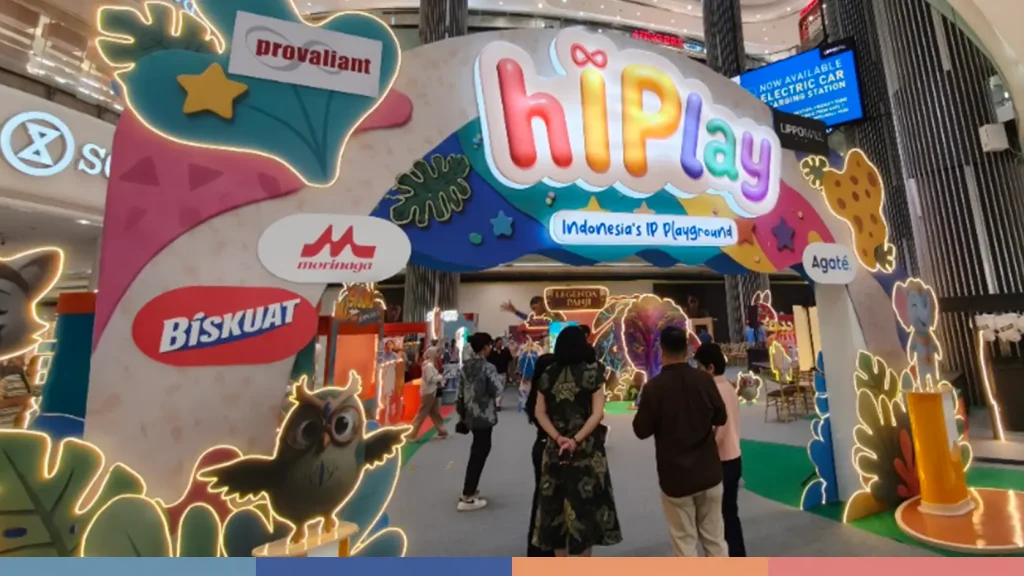
Home Services Our Works Gamification 101 Gamification Case Studies Turnkey Product Game Based Assessment Potentia Level Up RCD Contact English Bahasa Indonesia English Home Services Our Works Gamification 101 Gamification Case Studies Turnkey Product Game Based Assessment Potentia Level Up RCD Contact English Bahasa Indonesia English Home Services Our Works Gamification 101 Gamification Case Studies Turnkey Product Game Based Assessment Potentia Level Up RCD Contact English Bahasa Indonesia English Home Services Our Works Gamification 101 Gamification Case Studies Turnkey Product Game Based Assessment Potentia Level Up RCD Contact English Bahasa Indonesia English Edit Template Level Up powered by Agate x Provaliants Studio: Bringing Local IP to Life Through Game Experiences at hIPlay The entrance to hIPlay at Lippo Mall Puri, featuring various brand partners and local IP characters. How can games and gamification transform local IP into more interactive and memorable experiences? The development of Indonesia’s creative industry is no longer just about creating attractive characters, stories, or intellectual property (IP). The next challenge is how that IP can be developed into an experience that brings characters and audiences closer together. This spirit is present through hIPlay, an IP Experience Platform that brings various Indonesian characters and IPs into real-world experiences. hIPlay is designed not just as a playground, but as a platform that transforms IP into experiences while opening opportunities for engagement and growth. Taking place at the Main Atrium of Lippo Mall Puri 2 from August 21 to 30, 2026, hIPlay presents various IPs through booths, games, meet and greets, and community activities. Amidst this series of events, Level Up powered by Agate collaborated with Legenda Panji to present a game-based experience through the Loreng Run booth. Collaboration Between Level Up powered by Agate and Legenda Panji This collaboration serves as an example of how local IP can be taken out of the medium of stories and characters and then developed into an interactive experience. Through Loreng Run, visitors get the opportunity to interact with the world of Legenda Panji through activities packaged in the form of a game. With this approach, the audience doesn’t just see or know the character, but also becomes part of the experience. https://www.instagram.com/p/DcVdgYPhxpg/ The excitement at the Loreng Run booth by Level Up Powered by Agate during the HiPlay event This is one of the important principles in game-based experiences. When the audience is given the chance to participate directly, interaction with a brand or IP can feel more personal and memorable. For Level Up powered by Agate, this approach also demonstrates how games and gamification can be used as a medium for engagement, not just as entertainment. Loreng Run: Transforming IP into a Play Experience One of the main attractions of this collaboration is Loreng Run. Instead of presenting Legenda Panji only in visual or storytelling form, the experience was developed into an activity that invites visitors to interact directly. Concepts like this allow an IP to have additional touchpoints with the audience. Characters that might have previously only been known through stories or specific media can now be present in the form of a playable experience. Thus, Loreng Run is not just a game booth at an event. This activation shows how games can be a bridge between IP and the audience. Visitors taking photos with the Loreng and Klepon character mascots in the hIPlay activation area. The more forms of interaction that can be built around an IP, the greater the opportunity for the audience to get to know, remember, and build a connection with the character. Why are Games an Attractive Medium for IP? Games have different characteristics compared to other communication media. The audience does not just receive messages passively, but also makes decisions, takes action, and feels the consequences of the interactions they perform. Therefore, when a game approach is used in IP development, the audience can have a more participatory experience. In the context of Legenda Panji, an approach like Loreng Run can be one way to introduce IP to a wider audience through activities that are lighter, more accessible, and engaging. https://youtube.com/shorts/YUbx-HP2uXE The excitement of visitors trying out the Loreng Run booth at the HiPlay event This is also relevant to the hIPlay concept, which brings together various IPs with different audience characters. hIPlay materials emphasize that every IP brings its own audience segment, while the combination of various audience behaviors can create broader and deeper engagement. Fostering the Growth of the Indonesian IP Ecosystem hIPlay itself has a concept as a traveling IP playground, with a journey covering Jakarta, West Java, Central Java, and East Java before returning to Jakarta for the finale. Each city becomes part of a journey that brings together IP, experience, and community. This concept shows that IP development requires an ecosystem. IP doesn’t just need strong stories and characters, but also space to interact with the audience. This is where collaboration between IP owners, the creative industry, and game-based experiences becomes relevant. Chandra Sugiono (CEO of Provaliant Group) together with Muhammad Fauzy (Director of Facility Development for Indonesian Intellectual Property) while reviewing the Loreng Run game activation. Level Up powered by Agate x Legenda Panji through Loreng Run is an example of how cross-field collaboration can create new forms of experience for a local IP. Presence of Key Figures in the IP Ecosystem The hIPlay series also became a momentum that brought together various parties who have a role in the development of the creative industry and intellectual property in Indonesia. Present at this event was Chandra Sugiono, CEO of Provaliant Group, who is part of the organizing team and hIPlay ecosystem development. Event materials introduced hIPlay as an initiative aimed at pushing the creative economy through IP-based experiences. Also present was Muhammad Fauzy, Director of Facility Development for Indonesian Intellectual Property. Chandra Sugiono (CEO of Provaliant Group) together with Muhammad Fauzy (Director of Facility Development for Indonesian Intellectual Property) while reviewing the Loreng Run game activation. The presence of these industrial and intellectual property development figures
Level Up 17-an: Turning Independence Spirit into a More Interactive Experience
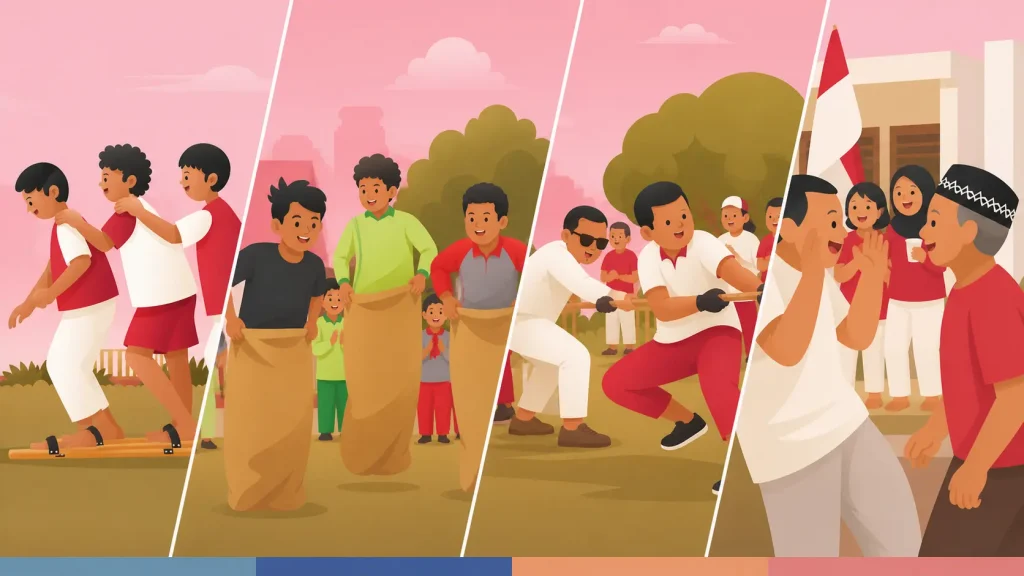
Home Services Our Works Gamification 101 Gamification Case Studies Turnkey Product Game Based Assessment Potentia Level Up RCD Contact English Bahasa Indonesia English Home Services Our Works Gamification 101 Gamification Case Studies Turnkey Product Game Based Assessment Potentia Level Up RCD Contact English Bahasa Indonesia English Home Services Our Works Gamification 101 Gamification Case Studies Turnkey Product Game Based Assessment Potentia Level Up RCD Contact English Bahasa Indonesia English Home Services Our Works Gamification 101 Gamification Case Studies Turnkey Product Game Based Assessment Potentia Level Up RCD Contact English Bahasa Indonesia English Edit Template Level Up 17-an: Turning Independence Spirit into a More Interactive Experience Every August 17th, various environments ranging from schools, offices, communities, to residential areas usually hold competitions to celebrate Indonesia’s Independence Day. Sack races, tug of war, marble relay races, to pole climbing become part of the traditions that are always anticipated. But what if that competitive spirit was brought into a digital experience? This is where gamification can be applied. It is not just about making an activity into a game; gamification utilizes elements that make games engaging, such as challenges, points, competition, rewards, and leaderboards, to increase participation in an activity. In the context of the August 17th celebration, gamification can be a new way to present the spirit of independence through a more interactive experience. Why is Gamification Suitable for the August 17th Celebration? The essence of various August 17th competitions actually already has many gamification elements. There are participants who have targets to achieve, challenges to complete, competition between individuals or groups, a winner system, and prizes as a form of appreciation. Gamification simply brings these concepts into a format that is more flexible and can be adapted to the needs of the organizer. For example, a company can create a “August 17th Challenge” program for employees. Each participant earns points by completing various activities, such as taking independence quizzes, answering Indonesian history trivia, following certain challenges, or participating in social activities. The more activities completed, the higher the score obtained. That way, the celebration is not just a one-day event, but can evolve into an experience that drives engagement over several days or even several weeks. From Traditional Competitions to Digital Experiences 1. Sack Race: Challenge and Competition The sack race is synonymous with speed and competition. In the digital version, this concept can be applied through a speed challenge. Participants can be given a series of tasks or mini-games that must be completed within a certain time limit. Participants with the fastest time or highest score can occupy the top positions on the leaderboard. This mechanism does not always have to be in the form of a game. In a corporate context, for example, challenges can be linked to learning activities, teamwork, or internal campaigns. 2. Tug of War: Teamwork and Collaboration Tug of war is not just about who is the strongest, but also how a team works together. This concept can be translated into gamification based on team competition. For example, employees are divided into several groups. Each group collects points from various activities during the August 17th celebration period. The more active team members participate, the greater their contribution to the group score. The final result can be visualized through a leaderboard that shows competition between teams in real-time. With such a mechanism, simple activities can encourage interaction, collaboration, and a sense of togetherness. 3. Independence Quiz: Points and Rewards Quizzes are one of the easiest forms of gamification to apply. Questions can discuss Indonesian history, national figures, unique facts about independence, to knowledge about Indonesian culture. Each correct answer can yield points. Participants can also earn bonus points for answering quickly or completing a number of questions consecutively correctly. To make it even more interesting, organizers can provide rewards to participants with the highest scores or to those who manage to reach certain milestones. Leaderboards Can Make the Celebration More Competitive One of the most effective gamification elements to increase engagement is the leaderboard. A leaderboard provides an overview of a participant’s position compared to other participants. In the context of August 17th, leaderboards can be used to display: Individuals with the highest score Teams with the most points Participants with the most challenges completed Winners of every competition category However, leaderboards should not only be used to create competition. Organizers can also use a milestone system so that participants still feel a sense of achievement even if they are not in first place. For example, participants who manage to collect 100 points get a “Independence Fighter” badge, while participants who reach 500 points get a special reward. In this way, motivation comes not only from the desire to defeat other participants, but also from the desire to reach personal targets. Gamification Does Not Always Have to Be Digital An important thing to understand is that gamification is not the same as making a game. Gamification can be applied to both offline and digital activities. In an August 17th event in an office environment, for example, the committee can create a passport challenge system. Each participant receives a card containing several missions. After completing a competition or certain activity, they get a stamp or points. Participants who manage to collect a certain number of stamps can exchange them for rewards. Meanwhile, the digital version can use QR codes, online leaderboards, digital badges, or a point system that can be monitored in real-time. So, technology is just a tool. What matters most is how the mechanism is designed so that participants are encouraged to participate. Don’t Just Add Points Although it looks simple, applying gamification is not enough just by adding points and a leaderboard. Effective gamification needs to have clear goals. Is the goal to increase engagement? Encourage teamwork? Increase participation in events? Or provide a more engaging learning experience? Once goals are determined, gamification mechanisms can be designed to support those goals. Because of that, it doesn’t mean that the more game elements used,
Event Recap: How Level Up powered by Agate Showcased Gamification Across Indonesia’s Business and Technology Events
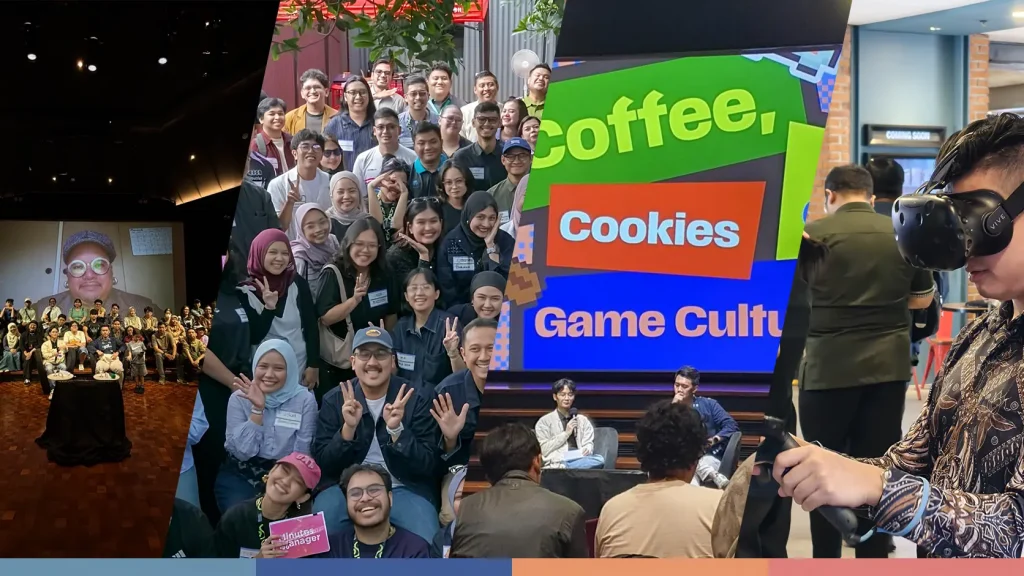
Home Services Our Works Gamification 101 Gamification Case Studies Turnkey Product Game Based Assessment Potentia Level Up RCD Contact English Bahasa Indonesia English Home Services Our Works Gamification 101 Gamification Case Studies Turnkey Product Game Based Assessment Potentia Level Up RCD Contact English Bahasa Indonesia English Home Services Our Works Gamification 101 Gamification Case Studies Turnkey Product Game Based Assessment Potentia Level Up RCD Contact English Bahasa Indonesia English Home Services Our Works Gamification 101 Gamification Case Studies Turnkey Product Game Based Assessment Potentia Level Up RCD Contact English Bahasa Indonesia English Home Services Our Works Gamification 101 Gamification Case Studies Turnkey Product Game Based Assessment Potentia Level Up RCD Contact English Bahasa Indonesia English Home Services Our Works Gamification 101 Gamification Case Studies Turnkey Product Game Based Assessment Potentia Level Up RCD Contact English Bahasa Indonesia English Edit Template Event Recap: How Level Up powered by Agate Showcased Gamification Across Indonesia’s Business and Technology Events As organizations continue exploring new ways to improve engagement, learning, and customer experiences, gamification has become one of the most promising approaches to achieve these goals. Throughout 2026, Level Up powered by Agate participated in several major events to demonstrate how game design can create meaningful business impact. From technology exhibitions and international discussions to local community meetups, each event provided a unique opportunity to introduce gamification to different audiences while encouraging conversations about its practical applications beyond entertainment. Tech for Business 2026: Demonstrating Gamification Through Interactive Booths Tech for Business 2026 brought together companies, innovators, and business leaders looking for technology-driven solutions to accelerate digital transformation. As one of the exhibitors, Level Up powered by Agate participated by creating two interactive booths designed to let visitors experience gamification instead of simply learning about it through presentations. The first booth featured an immersive Virtual Reality experience, demonstrating how VR can be utilized for employee training, simulation-based learning, and experiential engagement. Visitors were able to experience firsthand how immersive environments improve focus, knowledge retention, and participation compared to traditional learning methods. The second booth introduced interactive hand gesture technology, allowing participants to control games using body movement instead of conventional controllers. Beyond being entertaining, this experience showcased how interactive technologies can be integrated into exhibitions, marketing campaigns, corporate events, and customer engagement initiatives to create memorable brand experiences. https://youtu.be/Ll7kBC8fp_oExamples of gamification that we encounter in daily life Throughout the exhibition, the Level Up team also engaged directly with visitors, discussing how gamification can be adapted to various business challenges, including recruitment, onboarding, learning and development, employee engagement, and marketing activation. Rather than promoting a one-size-fits-all solution, these conversations focused on understanding each organization’s objectives before recommending suitable gamification strategies. Clogs, Tulips and Video Games at Erasmus Huis: Sharing Business Perspectives on Gamification Unlike Tech for Business, which emphasized hands-on experiences, Clogs, Tulips and Video Games at Erasmus Huis focused on knowledge sharing and industry discussion. The event brought together professionals from Indonesia and the Netherlands to explore the growing role of the gaming industry, not only in entertainment but also in education, business, and technology. As one of the featured speakers, Junialdi Dwijaputra, Head of Level Up powered by Agate, shared how game design principles can solve real organizational challenges. During the session, participants learned the differences between gamification, game-based learning, and game-based assessment, concepts that are often misunderstood or used interchangeably. The discussion also introduced the Level Up Gamification Framework, explaining how organizations can identify business objectives, design meaningful player experiences, and measure outcomes that align with company goals. The session generated valuable discussions on how businesses should approach gamification strategically rather than treating it as a collection of game elements. By emphasizing measurable outcomes and user-centered design, the presentation reinforced that successful gamification begins with understanding human behavior and organizational needs. Minutes Meetup Bandung #7: Building Connections Through Interactive Community Engagement Minutes Meetup Bandung #7 offered a different atmosphere from the previous events. As a community gathering for creative and technology professionals, the meetup emphasized networking, collaboration, and the exchange of ideas in a more casual setting. To support this environment, Level Up powered by Agate once again presented interactive booths that encouraged participants to engage directly with gamified experiences. Instead of acting as passive visitors, attendees became active participants, allowing them to better understand how game mechanics influence motivation, collaboration, and user engagement. The meetup also created opportunities for meaningful conversations between the Level Up team and professionals from various industries. Many discussions revolved around practical business applications of gamification, ranging from employee learning programs and recruitment processes to marketing campaigns and event activations. https://youtu.be/39aJfbccHYo Participating in community-driven events like Minutes Meetup demonstrates that increasing awareness of gamification does not only happen at large conferences. Smaller gatherings provide valuable opportunities to exchange ideas, gather feedback, and connect with organizations that are beginning to explore innovative approaches to engagement. One Mission Across Different Events Although each event had a different format and audience, they all reflected the same objective: helping businesses understand that gamification is more than adding points or rewards. At Tech for Business 2026, visitors experienced gamification through immersive technology. At Erasmus Huis, industry professionals explored the strategic thinking behind game-based solutions. At Minutes Meetup Bandung #7, communities and businesses connected through interactive experiences and open discussions. Together, these events demonstrate how Level Up powered by Agate continues to expand awareness of gamification across different industries while encouraging organizations to view game design as a practical business strategy capable of improving engagement, learning, and organizational performance. As interest in gamification continues to grow, Level Up remains committed to collaborating with businesses, communities, and industry partners to develop solutions that create measurable impact through meaningful interactive experiences. About Level Up powered by Agate Level Up powered by Agate is Agate’s gamification division, dedicated to helping organizations transform business challenges into engaging and impactful experiences through game design. Backed by over 15 years of experience in the gaming industry, Level Up specializes in gamification solutions for employee learning, recruitment, customer engagement, marketing
Gamification vs Game: What is the Difference?
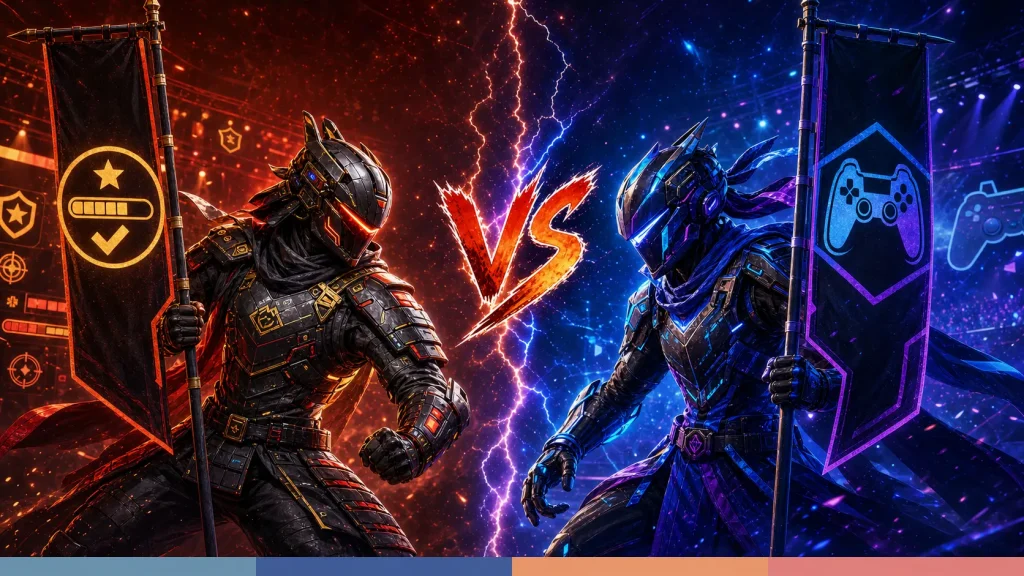
Home Services Our Works Gamification 101 Gamification Case Studies Turnkey Product Game Based Assessment Potentia Level Up RCD Contact English Bahasa Indonesia English Home Services Our Works Gamification 101 Gamification Case Studies Turnkey Product Game Based Assessment Potentia Level Up RCD Contact English Bahasa Indonesia English Home Services Our Works Gamification 101 Gamification Case Studies Turnkey Product Game Based Assessment Potentia Level Up RCD Contact English Bahasa Indonesia English Home Services Our Works Gamification 101 Gamification Case Studies Turnkey Product Game Based Assessment Potentia Level Up RCD Contact English Bahasa Indonesia English Home Services Our Works Gamification 101 Gamification Case Studies Turnkey Product Game Based Assessment Potentia Level Up RCD Contact English Bahasa Indonesia English Home Services Our Works Gamification 101 Gamification Case Studies Turnkey Product Game Based Assessment Potentia Level Up RCD Contact English Bahasa Indonesia English Edit Template Gamification vs Game: What is the Difference? Many people still consider gamification and games to be the same thing. In fact, both have different goals and ways of working. Understanding the difference is important so that organizations can choose the right approach to increase user and employee engagement. What Is a Game? A game is a product designed to provide a playing experience and entertainment. Players have specific goals, face challenges, follow rules, and gain satisfaction from the playing process. Examples include Mobile Legends, Minecraft, or FIFA. The main goal of a game is to create an enjoyable experience and make players want to keep playing. Mainstream video game characters that we often encounter What Is Gamification? Gamification is the application of elements commonly found in games into non-game activities. The goal is not to entertain, but to encourage certain behaviors so that someone is more motivated, consistent, and involved in a process. Some commonly used gamification elements include: Points Badges Leaderboard Progress bar Levels Missions or challenges Rewards By utilizing these elements, gamification helps improve the user experience without turning the main activity into a game. Examples of gamification that we encounter in daily life Differences Between Gamification and Game Aspect Game Gamification Goal Entertainment Encourage behavioral change Focus Playing experience Engagement and goal achievement Form Product or game application Features applied to real activities Users Play for fun Completing activities with additional motivation Examples Minecraft, FIFA, Mobile Legends Loyalty programs, learning apps, employee training Examples in Daily Life Suppose a company wants to increase the completion rate of employee training. If using a game, the company creates an educational game that must be played by all participants. If using gamification, the training material remains the same, but points, progress bars, badges, weekly challenges, and rewards are added as participants complete each module. In other words, gamification does not turn an activity into a game. It only makes that activity more interesting and motivating. Why Do Companies Use Gamification More? Developing a game requires a large investment of time, cost, and resources. In contrast, gamification can be applied to existing systems, making it easier to implement. Some examples of its application include: Employee onboarding Learning & Development Employee wellness Sales incentive Customer loyalty Employee engagement Because it is flexible, gamification can be applied in various industries, from education, healthcare, technology, to corporate firms. Gamification Is Not Just Points and Badges One of the biggest misconceptions is thinking that gamification is only about giving points or prizes. In fact, effective gamification is designed based on principles of behavioral design. Elements such as clear goals, fast feedback, a sense of achievement, visible progress, and appropriate challenges often have a much larger impact than the rewards themselves. When well-designed, gamification can help build positive habits and increase user engagement in the long term. Frequently Asked Questions What is the main difference between a game and gamification? Games are made to provide a playing experience and entertainment, while gamification applies game elements into real activities to increase motivation, engagement, and behavioral change. Does gamification only use points and badges? No. Gamification also utilizes various other elements such as progress bars, levels, challenges, feedback, leaderboards, and reward systems designed to create a more engaging experience. Where can gamification be applied? Gamification can be applied in various fields, such as employee onboarding, employee training, employee wellness programs, sales incentives, customer loyalty, education, to health applications. Why is gamification important for companies? Gamification helps increase engagement, encourage participation, build positive habits, and motivate users or employees to achieve business goals more effectively. Design Gamification Solutions for Your Organization Effective gamification not only makes activities more interesting, but also produces a real impact on engagement, productivity, and behavioral change. Level Up powered by Agate helps organizations design gamification solutions tailored to business goals and user needs. Consult your needs with the Level Up team and start building experiences capable of creating sustainable results. Author Related Article All Posts Service Highlight-EN News-EN Education-EN All-EN Gamification vs Game: What is the Difference? July 31, 2026/ Why is the Feedback Loop a Critical Element in Game-Based Assessment? July 30, 2026/ Behavioral Wellness Gamification: HR Strategy for Building Employee Behavior Change July 29, 2026/ AI Gamification: Turning Data Into Business Insights July 24, 2026/ Gamification Learning: The Future of Corporate Training July 23, 2026/ Everyone Is Using Gamification. But, Does Your Company Need the Same? July 22, 2026/ Why Are More Companies Switching to Game-Based Assessment? July 17, 2026/ Gamification is More Than Just Points and Badges July 16, 2026/ Level Up powered by Agate Presents Interactive Booths at Minutes Meetup Bandung #7 July 15, 2026/ Load More End of Content. All company names, brand names, trademarks, logos, illustrations, videos and any other intellectual property (Intellectual Property) published on this website are the property of their respective owners. Any non-authorized usage of Intellectual Property is strictly prohibited and any violation will be prosecuted under the law. © 2023 Agate. All rights reserved. Home Services Our Works Contact Gamification 101 Case Studies Instagram Linkedin Youtube Edit Template
Why is the Feedback Loop a Critical Element in Game-Based Assessment?
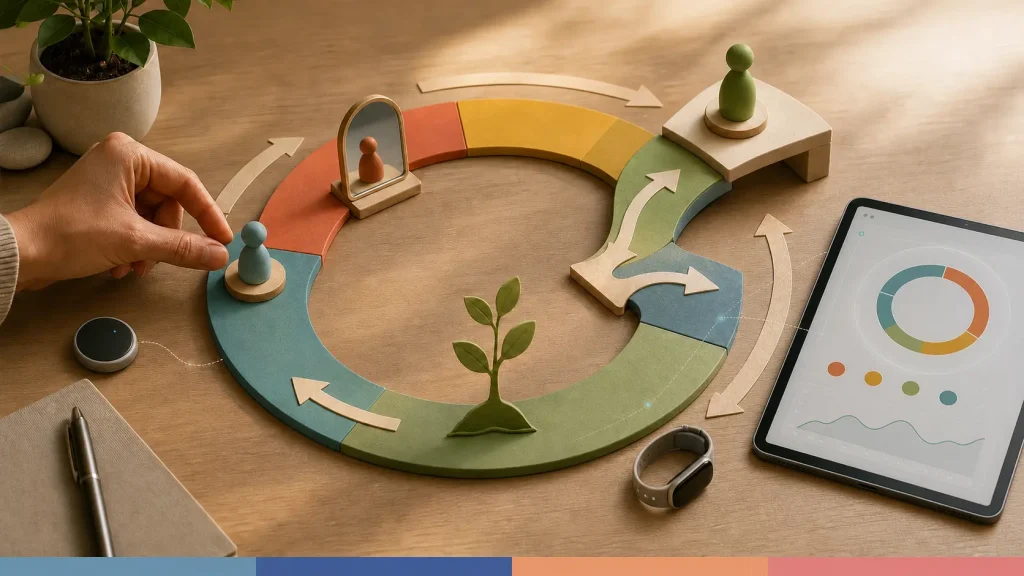
Home Services Our Works Gamification 101 Gamification Case Studies Turnkey Product Game Based Assessment Potentia Level Up RCD Contact English Bahasa Indonesia English Home Services Our Works Gamification 101 Gamification Case Studies Turnkey Product Game Based Assessment Potentia Level Up RCD Contact English Bahasa Indonesia English Home Services Our Works Gamification 101 Gamification Case Studies Turnkey Product Game Based Assessment Potentia Level Up RCD Contact English Bahasa Indonesia English Home Services Our Works Gamification 101 Gamification Case Studies Turnkey Product Game Based Assessment Potentia Level Up RCD Contact English Bahasa Indonesia English Home Services Our Works Gamification 101 Gamification Case Studies Turnkey Product Game Based Assessment Potentia Level Up RCD Contact English Bahasa Indonesia English Home Services Our Works Gamification 101 Gamification Case Studies Turnkey Product Game Based Assessment Potentia Level Up RCD Contact English Bahasa Indonesia English Edit Template Why is the Feedback Loop a Critical Element in Game-Based Assessment? Game-Based Assessment: Not Just Measuring, But Shaping Performance Many organizations are beginning to adopt Game-Based Assessment (GBA) as a more modern method to evaluate the capabilities of candidates and employees. Compared to conventional tests that only produce a score at the end of the process, GBA is able to capture patterns of decision-making, thinking strategies, adaptability, and the participant’s behavior throughout the process. However, the success of a Game-Based Assessment is not only determined by the game design or the level of difficulty. One of the most decisive elements for the quality of the experience as well as data accuracy is the feedback loop. The feedback loop ensures that every participant action receives a relevant response from the system. These responses are not always a matter of right or wrong but are signals that help participants understand the consequences of every decision they make. In this way, the assessment does not feel like a passive exam but becomes an interactive experience that can depict behavior more authentically. Through the cycle of Act → Instant Result → Progress → Repeat, Game-Based Assessment is able to present an evaluation experience that is more interactive while producing deeper behavioral insights. This is what makes the feedback loop one of the main elements in creating assessments that are accurate, engaging, and based on behavioral science. This is what makes the feedback loop one of the primary foundations of behavioral design in Game-Based Assessment. From Conventional Testing Toward Adaptive Assessment In traditional assessment, participants usually complete all the questions first and then receive results days or even weeks later. During the process, there is almost no interaction to help participants understand how their decisions affect the course of the assessment. On the contrary, Game-Based Assessment is designed as a continuous series of actions and responses. Every participant decision generates a reaction from the system. These reactions can be in the form of changes in game conditions, the appearance of new challenges, adjustments in difficulty levels, or consequences for subsequent scenarios. Through this mechanism, the assessment is able to capture how a person: takes decisions under pressure, develops strategies, learns from consequences, adapts to changes, maintains consistency in behavior. Rather than just producing a final score, GBA provides an overview of the thinking process that occurs during the assessment. Illustration of employees using game-based assessment Why is the Feedback Loop Important in Game-Based Assessment? The feedback loop is not intended to tell participants whether they succeeded or failed. Its main goal is to keep the connection between actions and consequences clear. When that relationship feels real, participants will remain engaged in the assessment and display more natural behavior. Conversely, if the system’s response is late or not felt, the assessment experience becomes passive. Participants tend to just guess answers or complete tasks without truly being involved in the decision-making process. In the context of behavioral assessment, such conditions can reduce the quality of the data obtained. Three Feedback Gaps Frequently Found in Digital Assessments Assessments That Only Show the Final Score Many assessment platforms still only provide results after the entire test is completed. Participants never feel how every decision affects the course of the assessment. As a result, the experience becomes flat and less capable of bringing out genuine behavior. Simulations That Do Not Provide Real Consequences In sub-optimal simulations, participants can make any decision without seeing its impact on the next situation. In fact, in the workplace, every decision always has a consequence. A good Game-Based Assessment must be able to represent that cause-and-effect relationship through a clear feedback loop. Challenges That Do Not Adapt Assessments that provide the same level of difficulty to all participants often fail to measure ability optimally. With a strong feedback loop, the system can adjust challenges based on participant behavior patterns so the assessment becomes more accurate and remains engaging to complete. Designing an Effective Feedback Loop in Game-Based Assessment HR and employees collaborating in game-based assessment Connect Every Decision with a Consequence Every choice made by a participant should ideally affect game conditions or the course of the assessment. In this way, participants are encouraged to think strategically because every decision has meaning. Build Visible Progress Participants need to feel that every action brings them toward a certain development. Progress does not have to be in the form of points or badges. Changes in the situation, the opening of new challenges, or the evolution of the scenario can be indicators of progress that are far more meaningful. Use Feedback to Collect Behavioral Data In Game-Based Assessment, feedback is not only beneficial for participants. The system’s response also serves as a tool to observe how someone reacts to pressure, change, failure, or success. The richer the interactions that occur, the more comprehensive the behavioral insights that organizations can obtain. Align Mechanics with the Competencies Measured Every game mechanic must have a clear objective. If an organization wants to measure problem-solving ability, then the feedback loop must encourage participants to try various problem-solving strategies. If the competency to be measured is collaboration or leadership, then the entire
Behavioral Wellness Gamification: HR Strategy for Building Employee Behavior Change
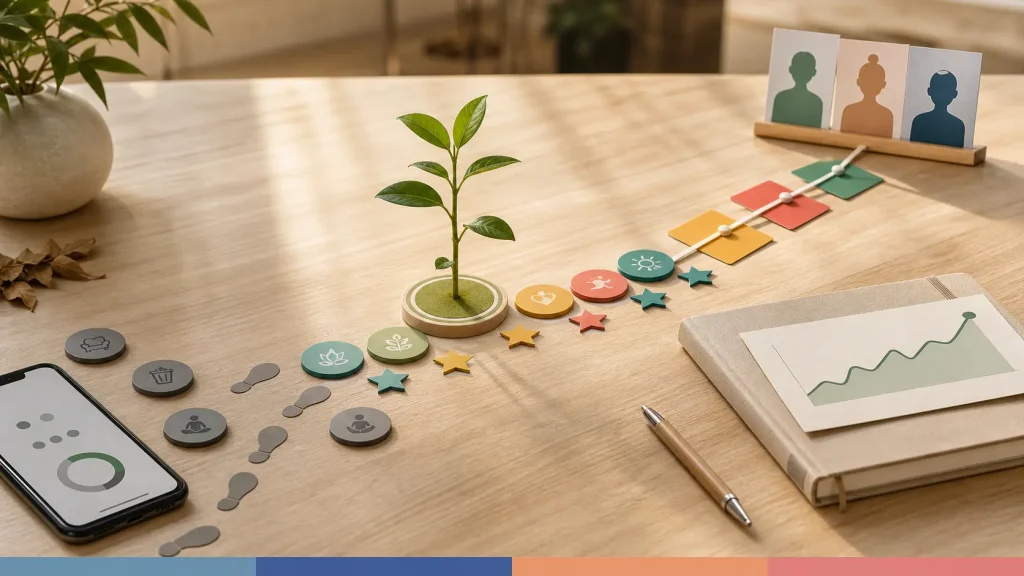
Home Services Our Works Gamification 101 Gamification Case Studies Turnkey Product Game Based Assessment Potentia Level Up RCD Contact English Bahasa Indonesia English Home Services Our Works Gamification 101 Gamification Case Studies Turnkey Product Game Based Assessment Potentia Level Up RCD Contact English Bahasa Indonesia English Home Services Our Works Gamification 101 Gamification Case Studies Turnkey Product Game Based Assessment Potentia Level Up RCD Contact English Bahasa Indonesia English Home Services Our Works Gamification 101 Gamification Case Studies Turnkey Product Game Based Assessment Potentia Level Up RCD Contact English Bahasa Indonesia English Home Services Our Works Gamification 101 Gamification Case Studies Turnkey Product Game Based Assessment Potentia Level Up RCD Contact English Bahasa Indonesia English Home Services Our Works Gamification 101 Gamification Case Studies Turnkey Product Game Based Assessment Potentia Level Up RCD Contact English Bahasa Indonesia English Edit Template Behavioral Wellness Gamification: HR Strategy for Building Employee Behavior Change Why is Behavioral Wellness Gamification Becoming a New Trend for HR? In the digital era, companies no longer focus solely on improving employee skills through training. A greater challenge is ensuring that behavior change actually occurs after the learning process is complete. This is why Behavioral Wellness Gamification is starting to become a strategy widely implemented by HR and Talent Acquisition teams. Many organizations have invested time and budget in training, workshops, and employee engagement programs. However, without a mechanism capable of consistently encouraging new habits, participants often return to old behavior patterns. Behavioral Wellness is an approach that focuses on forming positive habits, better decision-making, and work behaviors aligned with the company culture. The goal is not merely to increase knowledge but to create sustainable behavior change. Three employees interact using VR and digital devices in a Behavioral Wellness gamification program at the office This is where Behavioral Wellness Gamification provides a different approach. By utilizing behavioral psychology principles and gamification elements, companies can create a more interactive learning experience while simultaneously producing measurable behavior changes. From Employee Engagement Toward Behavioral Wellness Gamification For the past few years, gamification has been synonymous with leaderboards, badges, rewards, or point systems aimed at increasing participation. Now, this function is evolving into something much more strategic. Behavioral Wellness Gamification utilizes game mechanisms to help individuals build positive behavior through challenges, simulations, direct feedback, and progress systems that encourage consistency. The primary focus is not to make work feel like a game, but to create an experience that motivates someone to continue performing the expected behaviors. As an example, rather than just providing modules on company culture, organizations can present interactive simulations that invite participants to make decisions in various work situations. Every decision results in consequences, learning, and feedback that helps participants understand how company values are applied in daily work. Such an approach makes the learning process more contextual, personal, and much easier to remember compared to conventional methods. Why is Behavioral Wellness Gamification Effective for HR? Behavior change requires more than just knowledge. There are at least three main factors that determine its success. Motivation to start the change. Opportunity to practice new behaviors. Consistent reinforcement until it becomes a habit. Gamification is able to combine these three components into a single learning experience. When participants complete challenges, receive feedback in real-time, unlock new levels, or see their own development, the brain receives positive reinforcement that increases the likelihood of that behavior being repeated. In addition to increasing employee engagement, this approach also produces behavioral data that is much richer than just post-test scores. HR can understand how someone makes decisions, solves problems, and see behavioral patterns that emerge during the learning process. For companies, this data becomes a more accurate basis for formulating HR development strategies and recruitment processes. Case Study: Behavioral Wellness Gamification – Telkomsel Working Culture Assessment One of the best implementations of Behavioral Wellness Gamification in Indonesia is the collaboration between Level Up powered by Agate and Telkomsel through the Working Culture Assessment program. This program was designed to measure candidates’ suitability with Telkomsel’s working culture using a much more interactive approach compared to conventional assessments. Objective The main objective of this program is to measure the extent to which candidates have a fit with Telkomsel’s working culture. To achieve this, Telkomsel’s 12 Working Principles were integrated into a gamification-based assessment experience. Instead of just testing knowledge, this program evaluates how candidates make decisions based on company values. Thus, Telkomsel can ensure that the candidates who pass truly have a culture fit that matches the organization. Telkomsel’s 12 Working Principles are integrated into a gamification-based assessment experience. Solution To realize this goal, Level Up powered by Agate developed an assessment platform that presents 12 mini-games, each representing one Working Principle. Through various work situation simulations, candidates are asked to complete challenges that resemble real conditions in a professional environment. Each choice made provides a picture of the candidate’s way of thinking, decision-making patterns, and alignment with the company culture. This approach makes the assessment process feel more engaging while providing more comprehensive behavioral data for HR and Talent Acquisition teams. One of the mini-games that each represents one Working Principle Result The implementation of Behavioral Wellness Gamification resulted in a very positive impact. More than 30,000 candidates took the Working Culture Assessment. 95% of more than 3,000 participants gave a rating of 3 to 4 on a scale of 4, showing a very high level of satisfaction with the assessment experience. The program helped Telkomsel simplify the recruitment process while identifying candidates who were truly aligned with the company culture. This success shows that gamification not only improves the candidate experience but also provides more accurate behavioral insights than traditional assessment methods. By understanding how candidates think and make decisions, companies can make more objective and effective recruitment decisions. This case study proves that Behavioral Wellness Gamification can be a bridge between an engaging candidate experience and the organization’s need to build a strong work culture from the selection process. The Future of HR with
AI Gamification: Turning Data Into Business Insights
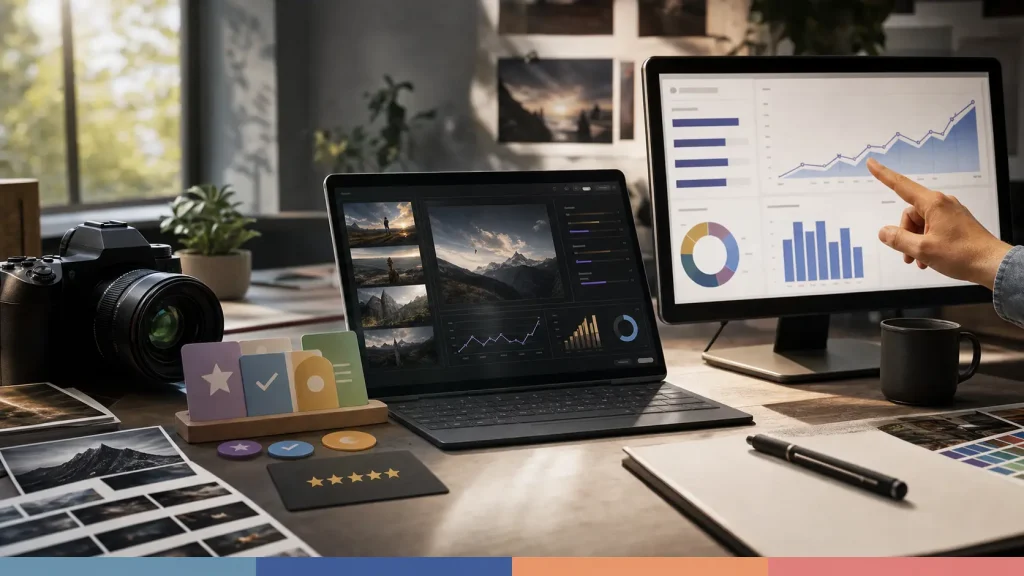
Home Services Our Works Gamification 101 Gamification Case Studies Turnkey Product Game Based Assessment Potentia Level Up RCD Contact English Bahasa Indonesia English Home Services Our Works Gamification 101 Gamification Case Studies Turnkey Product Game Based Assessment Potentia Level Up RCD Contact English Bahasa Indonesia English Home Services Our Works Gamification 101 Gamification Case Studies Turnkey Product Game Based Assessment Potentia Level Up RCD Contact English Bahasa Indonesia English Home Services Our Works Gamification 101 Gamification Case Studies Turnkey Product Game Based Assessment Potentia Level Up RCD Contact English Bahasa Indonesia English Home Services Our Works Gamification 101 Gamification Case Studies Turnkey Product Game Based Assessment Potentia Level Up RCD Contact English Bahasa Indonesia English Home Services Our Works Gamification 101 Gamification Case Studies Turnkey Product Game Based Assessment Potentia Level Up RCD Contact English Bahasa Indonesia English Edit Template AI Gamification: Turning Data Into Business Insights Artificial Intelligence (AI) has become one of the biggest drivers of digital transformation. Organizations are using AI to automate processes, analyze information, and support better decision making. However, AI is only as powerful as the data behind it. Many companies already have access to large amounts of information, but most of this data only shows final outcomes. It explains what happened, but not why it happened. This is where AI gamification creates a new opportunity. By combining game design principles with artificial intelligence, AI gamification allows organizations to create interactive experiences while collecting valuable behavioral data. This data can then be analyzed to generate deeper insights about user motivation, engagement, and decision-making patterns. For businesses looking to improve learning, employee experience, and performance, AI gamification provides a smarter way to understand and engage people. Why AI Gamification Needs Behavioral Data Traditional business data often focuses on measurable outcomes. Examples include: Training completion rates. Assessment scores. Employee satisfaction surveys. Performance indicators. Attendance records. While these metrics are useful, they do not provide a complete picture of user behavior. For example, a company may know that an employee completed a training program with a high score. However, the organization may not know: Which activities helped the employee learn faster. When engagement started to decrease. Which challenges created motivation. What type of feedback improved performance. AI gamification solves this limitation by capturing behavioral data throughout the entire experience. Professionals using VR headsets to experience AI-powered gamified learning simulations at an exhibition. How AI Gamification Captures Real User Behavior Gamification creates multiple interaction points where organizations can understand how users behave. Through AI gamification, companies can analyze: Time spent completing challenges. User decision patterns. Learning preferences. Engagement levels. Progress behavior. Collaboration patterns. Response to rewards and feedback. This information provides a more complete understanding of users. Instead of only measuring the final result, organizations can see the journey behind that result. The difference is similar to knowing someone’s final score versus understanding how they approached every challenge along the way. How AI Gamification Turns Data Into Insights Collecting data is only the first step. The true value comes when AI analyzes behavioral data and identifies patterns that humans may overlook. For example, AI gamification can help organizations discover: Which learning methods create better retention. Which challenges increase participation. Which employees need additional support. Which reward systems improve motivation. Which experiences create higher engagement. These insights allow companies to continuously improve their programs based on real user behavior instead of assumptions. AI Gamification Creates Personalized Experiences One of the biggest advantages of AI gamification is personalization. Every individual has different learning preferences and motivation triggers. Some participants are motivated by competition. Others prefer collaboration. Some enjoy complex challenges, while others perform better through smaller achievable goals. By analyzing behavioral data, AI can help organizations create personalized experiences through: Adaptive learning paths. Relevant challenges. Customized feedback. Individual recommendations. Personalized progress tracking. This creates an experience that feels more relevant for each participant. The Business Impact of AI Gamification Although commonly associated with learning and development, AI gamification can support various business objectives. Organizations can implement it for: Employee onboarding. Leadership development. Recruitment assessment. Sales enablement. Employee engagement. Innovation programs. Customer loyalty initiatives. Every interaction becomes a valuable source of insight that helps organizations make better decisions. A person taking notes next to a laptop displaying a mind map of gamification concepts. The Future of Intelligent Experiences The future of business transformation is not only about collecting more data. It is about understanding people better. AI gamification combines engaging experiences with intelligent analysis, allowing companies to understand user behavior, improve experiences, and create measurable impact. Organizations that successfully combine behavioral data with AI capabilities will have stronger opportunities to build better employee experiences and achieve better business outcomes. Children and a teacher collaboratively interacting with a digital gamified board game on a tablet. Frequently Asked Questions What is AI gamification? AI gamification combines artificial intelligence with game design principles to create engaging experiences while collecting behavioral data that can be analyzed for business insights. Why is behavioral data important for AI? Behavioral data provides context about how and why users interact with a system, allowing AI to generate more accurate insights and recommendations. Can AI gamification improve employee learning? Yes. AI gamification can personalize learning experiences, increase engagement, and help organizations understand employee learning behavior. Is AI gamification only used for training? No. AI gamification can support onboarding, recruitment, engagement programs, sales, innovation initiatives, and customer experiences. Ready to Unlock Smarter Business Insights? Through Level Up powered by Agate, we help companies design customized AI gamification solutions that transform user interactions into meaningful business insights. From employee learning to engagement programs, our team helps organizations create experiences that are engaging, measurable, and aligned with business goals. Visit our Contact Us page to discuss how AI gamification can support your organization’s digital transformation. Author Related Article All Posts Service Highlight-EN News-EN Education-EN All-EN AI Gamification: Turning Data Into Business Insights July 24, 2026/ Pembelajaran Gamifikasi: Masa Depan Pelatihan Perusahaan July 23, 2026/ Gamification Learning: The Future of Corporate Training July
Gamification Learning: The Future of Corporate Training
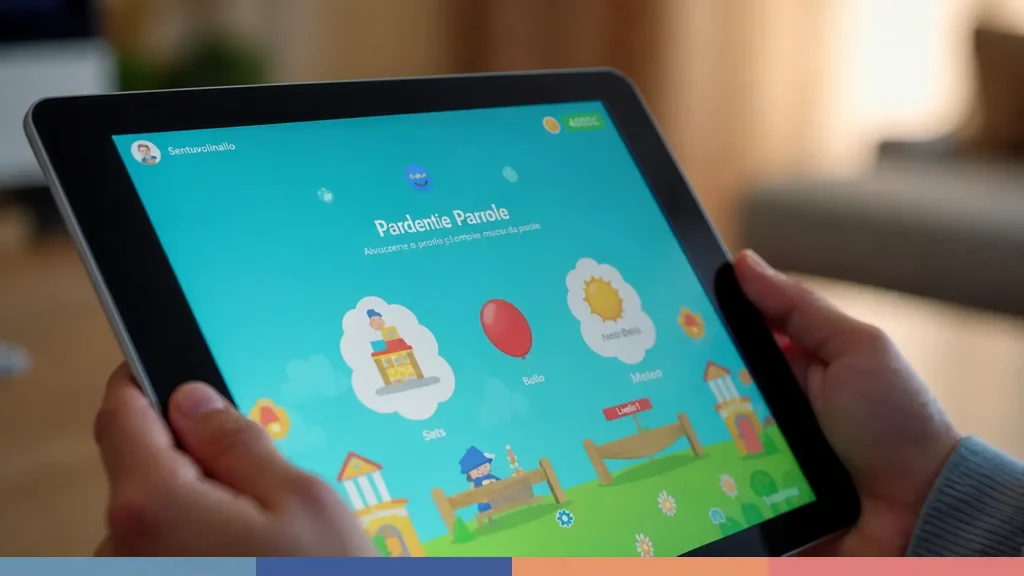
Home Services Our Works Gamification 101 Gamification Case Studies Turnkey Product Game Based Assessment Potentia Level Up RCD Contact English Bahasa Indonesia English Home Services Our Works Gamification 101 Gamification Case Studies Turnkey Product Game Based Assessment Potentia Level Up RCD Contact English Bahasa Indonesia English Home Services Our Works Gamification 101 Gamification Case Studies Turnkey Product Game Based Assessment Potentia Level Up RCD Contact English Bahasa Indonesia English Home Services Our Works Gamification 101 Gamification Case Studies Turnkey Product Game Based Assessment Potentia Level Up RCD Contact English Bahasa Indonesia English Home Services Our Works Gamification 101 Gamification Case Studies Turnkey Product Game Based Assessment Potentia Level Up RCD Contact English Bahasa Indonesia English Home Services Our Works Gamification 101 Gamification Case Studies Turnkey Product Game Based Assessment Potentia Level Up RCD Contact English Bahasa Indonesia English Edit Template Gamification Learning: The Future of Corporate Training For decades, corporate training followed a familiar approach. Employees attended presentations, watched training videos, read materials, and completed assessments at the end of the session. While this method can deliver information, it does not always create engagement, motivation, or long-term behavioral change. The problem is not that people no longer want to learn. The problem is that the learning experience has not evolved. A person holding a tablet displaying an interactive gamified learning application interface. Today’s workforce expects learning experiences that are interactive, personalized, and meaningful. This is why gamification learning is becoming an increasingly important approach for organizations that want to improve employee development. Why Gamification Learning Changes Modern Learning A common misconception is that younger employees are not interested in learning. In reality, people continue learning every day through digital platforms, online communities, tutorials, and interactive applications. The difference is the experience. Modern learners are more engaged when learning provides: Clear goals. Immediate feedback. Visible progress. Practical challenges. Opportunities to apply knowledge. Gamification learning applies these principles to workplace development by transforming passive learning into an active experience. Why Traditional Training Starts Losing Engagement Many conventional training programs focus on information delivery. Participants listen. They take notes. They complete a test. However, information alone does not guarantee understanding. Without interaction and feedback, participants may quickly lose motivation. Retro video game pixel art illustration with the text “Gamification in Education” and interactive buttons for Learn, Engage, and Achieve. Gamification learning introduces mechanics that encourage continuous participation, such as challenges, progress tracking, achievements, and interactive scenarios. How Gamification Learning Improves Engagement Games are effective because they are designed around human motivation. They provide: Clear objectives. Gradual challenges. Feedback. Achievement. Progress visibility. These same principles can improve workplace learning. Through gamification learning, employees are encouraged to actively participate instead of simply consuming information. They solve problems, make decisions, and experience the consequences of their choices. Gamification Learning Supports Personalized Development Every employee has different learning styles and motivations. Some people prefer competition. Some prefer teamwork. Some learn better through practice rather than theory. Modern gamification learning enables organizations to create more flexible experiences by adapting challenges, feedback, and learning paths based on participant behavior. This creates a more relevant learning journey for every employee. How Gamification Learning Supports Business Goals Beyond employee training, gamification learning can support multiple organizational needs, including: Employee onboarding. Leadership development. Compliance training. Product education. Sales training. Internal communication programs. Change management initiatives. By increasing engagement and participation, organizations can create stronger learning cultures. Learning Experience as a Competitive Advantage Companies today compete not only for customers but also for talent. Employees expect organizations to provide development opportunities that match the quality of digital experiences they use every day. Organizations that invest in gamification learning can create training experiences that employees genuinely want to complete. The future of learning is not only about delivering more content. It is about creating better experiences. Two young children happily focused on playing with colorful shape puzzles at a table. Frequently Asked Questions What is gamification learning? Gamification learning is an approach that applies game design elements such as challenges, progress tracking, feedback, and rewards to improve learning experiences. Does gamification learning replace traditional training? No. It enhances existing training methods by making learning more interactive, engaging, and effective. Is gamification learning only suitable for Gen Z? No. Gamification learning is based on universal motivation principles that can benefit employees across different generations. How can companies measure gamification learning success? Organizations can measure success through engagement rates, completion rates, knowledge retention, behavioral changes, and business performance improvements. Ready to Transform Your Learning Experience? Through Level Up powered by Agate, we help organizations design customized gamification learning solutions that improve employee engagement and create more effective learning experiences. Whether for onboarding, training, or internal development programs, our team helps businesses build interactive experiences that deliver measurable results. Visit our Contact Us page to explore how gamification learning can support your organization’s growth. Author Related Article All Posts Service Highlight-EN News-EN Education-EN All-EN Gamification Learning: The Future of Corporate Training July 23, 2026/ Everyone Is Using Gamification. But, Does Your Company Need the Same? July 23, 2026/ Why Are More Companies Switching to Game-Based Assessment? July 23, 2026/ Gamification is More Than Just Points and Badges July 16, 2026/ Level Up powered by Agate Presents Interactive Booths at Minutes Meetup Bandung #7 July 15, 2026/ Game-Based Assessment vs Traditional Psychometric Tests July 10, 2026/ Gamification Trends in Movies Promotion July 10, 2026/ The World Cup and Gamification: Why Do Billions of People Always Come Back to Watch July 10, 2026/ Progress Bar, Leaderboard, Badge, and Quest in Gamification: Which One Is Most Effective? July 9, 2026/ Load More End of Content. All company names, brand names, trademarks, logos, illustrations, videos and any other intellectual property (Intellectual Property) published on this website are the property of their respective owners. Any non-authorized usage of Intellectual Property is strictly prohibited and any violation will be prosecuted under the law. © 2023 Agate. All rights reserved. Home Services Our Works Contact Gamification 101 Case Studies Instagram Linkedin Youtube Edit
Everyone Is Using Gamification. But, Does Your Company Need the Same?
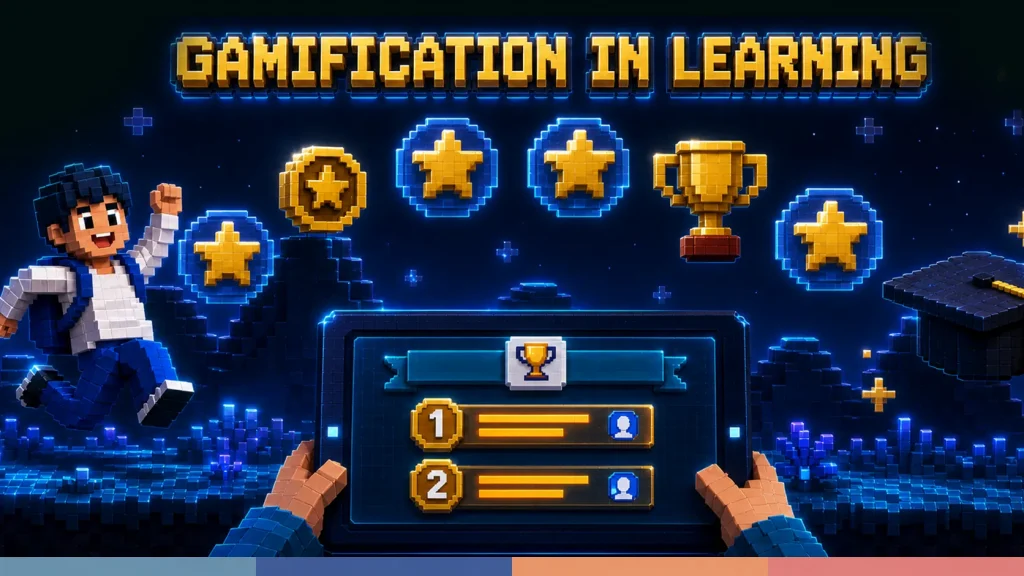
Home Services Our Works Gamification 101 Gamification Case Studies Turnkey Product Game Based Assessment Potentia Level Up RCD Contact English Bahasa Indonesia English Home Services Our Works Gamification 101 Gamification Case Studies Turnkey Product Game Based Assessment Potentia Level Up RCD Contact English Bahasa Indonesia English Home Services Our Works Gamification 101 Gamification Case Studies Turnkey Product Game Based Assessment Potentia Level Up RCD Contact English Bahasa Indonesia English Home Services Our Works Gamification 101 Gamification Case Studies Turnkey Product Game Based Assessment Potentia Level Up RCD Contact English Bahasa Indonesia English Home Services Our Works Gamification 101 Gamification Case Studies Turnkey Product Game Based Assessment Potentia Level Up RCD Contact English Bahasa Indonesia English Home Services Our Works Gamification 101 Gamification Case Studies Turnkey Product Game Based Assessment Potentia Level Up RCD Contact English Bahasa Indonesia English Edit Template Everyone Is Using Gamification. But, Does Your Company Need the Same? Gamification is increasingly popular as a strategy to boost employee engagement, training effectiveness, and work productivity. Various companies are starting to implement point systems, badges, leaderboards, and interactive missions because they are proven to make the learning and working experience more engaging. However, one mistake still often occurs. Many companies implement gamification simply because it is trending. They see competitors using leaderboards, and then they follow suit. They add badges to their learning platforms because they are considered attractive, without truly understanding whether these elements align with the organization’s needs. In reality, gamification is not about adding game features, but about designing experiences that can encourage behavior aligned with business goals. Why Is Following the Gamification Trend Alone Not Enough? Every organization has different business objectives, work culture, and employee characteristics. Therefore, a gamification approach that succeeds in one company may not yield the same results in another. For example, a sales team might be more motivated by a competition system through a leaderboard because their targets are individual. Conversely, a customer service team or operational division might need an approach that encourages collaboration more than competition. The same applies to the onboarding process. New employees generally need a gradual learning experience through progress bars or quests, rather than being immediately compared to their colleagues. The most important thing to understand is that gamification should be designed based on the behavior you want to instill. If the main goal is to increase training completion, then progress tracking will be more effective than a leaderboard. If the target is to boost sales performance, healthy competition might be a better choice. How to Choose Gamification That Suits Your Company Before deciding on the gamification elements to use, companies should answer the following questions. Determine business objectives first Gamification must support company objectives, not be merely an added feature. Some common objectives include: increasing employee engagement; accelerating the onboarding process; increasing training completion; boosting sales performance; or forming specific work habits. By understanding these objectives, companies can choose a truly relevant gamification approach. By understanding these objectives, companies can choose a truly relevant gamification approach. Identify the desired behavior to be built Good gamification focuses on behavior change. For example, a company wants to encourage employees to be more active in completing learning modules, collaborating across divisions, providing innovative ideas, or being more disciplined in following work procedures. This behavior is the basis for determining the gamification design. Adjust to company culture Organizational culture also has a major influence on the success of gamification implementation. Companies with a competitive culture are usually suitable for using a ranking system or leaderboard. Conversely, organizations that prioritize cooperation will achieve better results through group challenges or collaborative missions. Common Types of Gamification Used Not all gamification serves the same function. Here are some types of gamification most frequently implemented in the workplace. Achievement-Based Gamification Achievement-Based Gamification focuses on individual accomplishments through the granting of rewards. Common elements used include badges, points, levels, achievements, and certificates. This approach is suitable for onboarding programs, Learning & Development, internal certifications, and competency development because it provides a sense of accomplishment every time participants successfully complete a certain target. Competition-Based Gamification This type of gamification utilizes competition as a source of motivation. Elements frequently used include leaderboards, rankings, individual competitions, and inter-team competitions. Competition-Based Gamification is widely applied in sales incentive programs, internal campaigns, or productivity improvement challenges. Although effective, competition still needs to be designed in a healthy way so as not to reduce the spirit of collaboration within the organization. Collaboration-Based Gamification In contrast to the competitive approach, Collaboration-Based Gamification encourages participants to work together to achieve a shared goal. Examples include team quests, group missions, collaborative challenges, and shared progress. This type is suitable for team building programs, employee engagement, and cross-divisional projects that require cooperation among employees. Narrative-Based Gamification Narrative-Based Gamification utilizes storytelling as part of the learning experience. Participants not only complete learning modules but also follow a storyline with various interconnected challenges. This approach is often used in leadership training, customer service training, compliance training, and soft skill development because it can make the material feel more contextual and easy to remember. Progress-Based Gamification Progress-Based Gamification helps participants visualize their development. Common elements used include progress bars, checklists, milestones, level progression, and quests. This approach is highly effective for long-term activities because participants can know how far the progress they have achieved is, while also understanding the next steps that need to be completed. Effective Gamification Usually Combines Several Approaches In practice, companies rarely use only one type of gamification. An onboarding program can combine a progress bar to show development, badges as a form of appreciation, storytelling to make the learning experience more engaging, and team challenges to build collaboration among employees. The right approach is not choosing the most popular element, but combining various mechanisms according to the organization’s needs. Focus on the Goal, Not Just Following the Trend Gamification is not about making activities feel like playing a game. Its core value lies in the ability to create an